


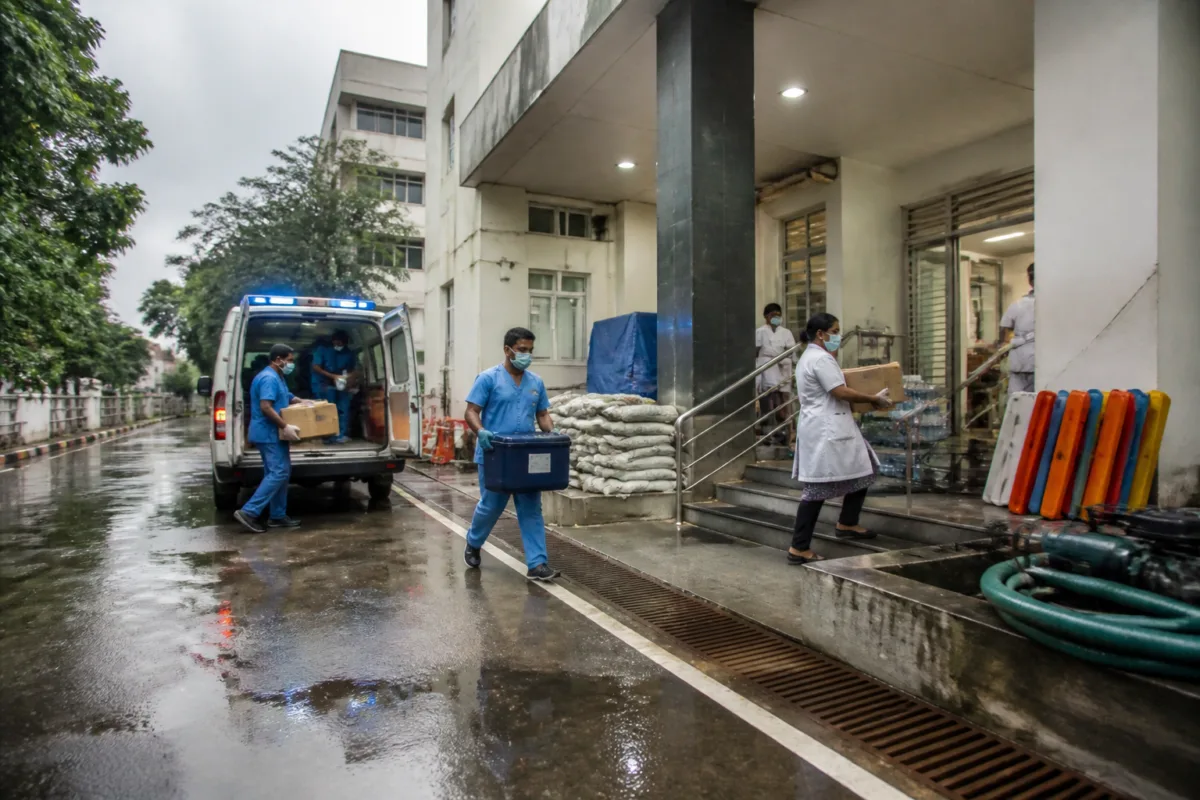
Tamil Nadu Health Minister K.G. Arunraj has directed health officials across the State to strengthen hospital preparedness, maintain uninterrupted medical services and keep at least seven days of emergency supplies ready as the Northeast monsoon sets in.
The instructions cover government hospitals, primary health centres, urban primary health centres, health sub-centres and vaccine cold chain centres, with priority given to vulnerable areas in Chennai, Tiruvallur, Kancheepuram, Chengalpattu, Villupuram, Cuddalore, Nagapattinam, Mayiladuthurai, Thanjavur, Tiruvarur, Pudukottai, Ramanathapuram, Thoothukudi, Tirunelveli and Kanniyakumari.
According to an official communication cited by the Health Department, the preparedness plan has three objectives: preventing the spread of diseases during the monsoon, preventing deaths and ensuring that medical services continue during floods and cyclones. Officials have been asked to prepare advance evacuation plans for healthcare facilities in low-lying, riverbank and coastal areas, including arrangements to shift patients to safer hospitals.
The Minister directed authorities to ensure that blood banks, vaccination facilities, drug warehouses and critical electrical infrastructure are located at elevated sites protected from flooding. Medical camps are to be organised in flood- and cyclone-affected areas in coordination with district administrations and local bodies. Medical teams, mobile medical units and ambulances are to be stationed in advance at flood relief centres.
The Health Department has also been asked to coordinate with the Tamil Nadu Electricity Board and the Public Works Department to ensure that transformers serving health facilities are placed at elevated locations, protected from floodwater and supported by adequate fuel supplies. Government and private hospitals have been told to maintain uninterrupted oxygen supplies and emergency stocks sufficient for at least seven days.
The list of required supplies includes essential medicines, intravenous fluids, disinfectants, oral rehydration solution, anti-snake venom, chlorine tablets and other medical consumables. Ventilators, ambu bags and other life-saving equipment are to be kept ready, while ambulances must have sufficient fuel, medicines and trained personnel for deployment. The Tamil Nadu Medical Services Corporation has been directed to ensure timely delivery of essential medicines to drug warehouses in coastal and flood-prone districts.
Operational preparedness extends beyond clinical supplies. Hospitals have been instructed to engage electricians, plumbers, lift operators and sanitation workers around the clock during emergencies. Lifts and firefighting equipment must be maintained and kept ready for use. Hospital campuses are to be inspected for waterlogging risks, with drains, sewage pipelines, manual openings and toilets cleaned and blockages removed. Pumps must be available to drain water from low-lying areas.
The Minister also directed officials to strengthen disease surveillance after rainfall, with early detection of dengue, leptospirosis, chikungunya, acute diarrhoeal diseases and other water-borne illnesses. Pregnant women nearing their delivery dates were advised to avoid staying in flood-prone areas and seek medical advice. The directions apply as the State faces periods of heavy rainfall, with the Regional Meteorological Centre issuing orange alerts for some southern districts for October 21 and 22.

