


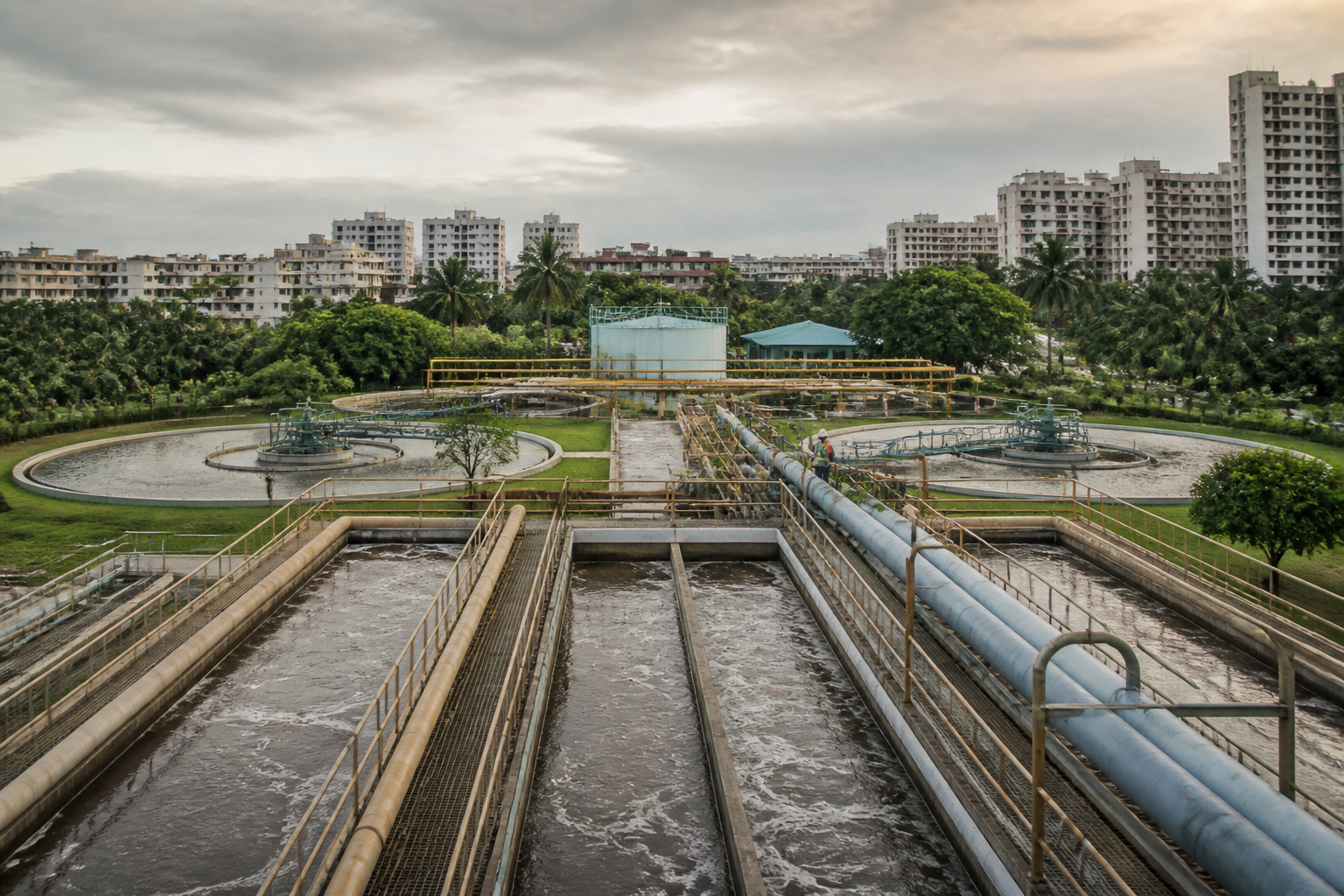
Bengaluru will accelerate the construction and expansion of sewage treatment plants (STPs) to prevent untreated and partially treated wastewater from polluting the city’s water bodies, Karnataka Forest, Ecology and Environment Minister Ramalinga Reddy said on September 12.
The announcement was made at a meeting held at the Karnataka State Pollution Control Board’s Environment Bhavan. The Bengaluru Water Supply and Sewerage Board (BWSSB) briefed the minister on the city’s water supply, sewage generation and existing treatment capacity.
Bengaluru currently receives 2,825 million litres of water per day (MLD), including Cauvery water and groundwater, according to the briefing. The city generates around 2,580 MLD of sewage, while the BWSSB operates 37 STPs with a combined treatment capacity of 1,364.5 MLD. This leaves a reported capacity shortfall of 1,215.5 MLD.
Another 42 STPs with a combined capacity of 1,147 MLD are under construction or being implemented under various projects. Of these, plants with a total capacity of 51 MLD are scheduled for completion this year. Seventeen STPs with a combined capacity of 413 MLD are expected to be completed next year, while nine plants with a capacity of 148 MLD are targeted for completion by the end of 2028. A further nine STPs with a combined capacity of 535 MLD are scheduled to be completed by the end of 2029.
Reddy directed the BWSSB to ensure that all STPs operate according to standards prescribed by the National Green Tribunal and the Karnataka State Pollution Control Board. Officials have identified some plants that are not currently operating in line with the prescribed standards and have been instructed to take corrective action within 30 days.
The minister also directed KSPCB officials to inspect private STPs operated by apartment complexes, educational institutions, commercial buildings, hospitals and office buildings in Bengaluru. The inspections are intended to verify whether these facilities are functioning effectively and complying with KSPCB standards.
The BWSSB was asked to complete pending sewerage connections, described as “missing bits”, wherever sewage is flowing into stormwater drains instead of reaching treatment plants. Damaged manholes must be repaired or reconstructed urgently so that sewage can flow properly to STPs, be treated and be safely disposed of, officials were told.
The directions also cover industrial areas. KSPCB and BWSSB officials have been asked to conduct joint inspections in Peenya, Jigani and other industrial areas to examine the management of liquid and solid waste generated by industries.
The meeting further identified a gap in household connections. Some residents in areas where BWSSB sewerage networks are available have not yet obtained sewer connections. Officials were instructed to identify such areas, investigate illegal connections, conduct site inspections and provide authorised sewer connections wherever required.
The construction schedule for all STPs currently under implementation is to be completed within the specified timelines. The 30-day compliance direction for identified plants and the phased completion targets through 2029 are the next stated milestones in the city’s sewage treatment expansion programme.
