


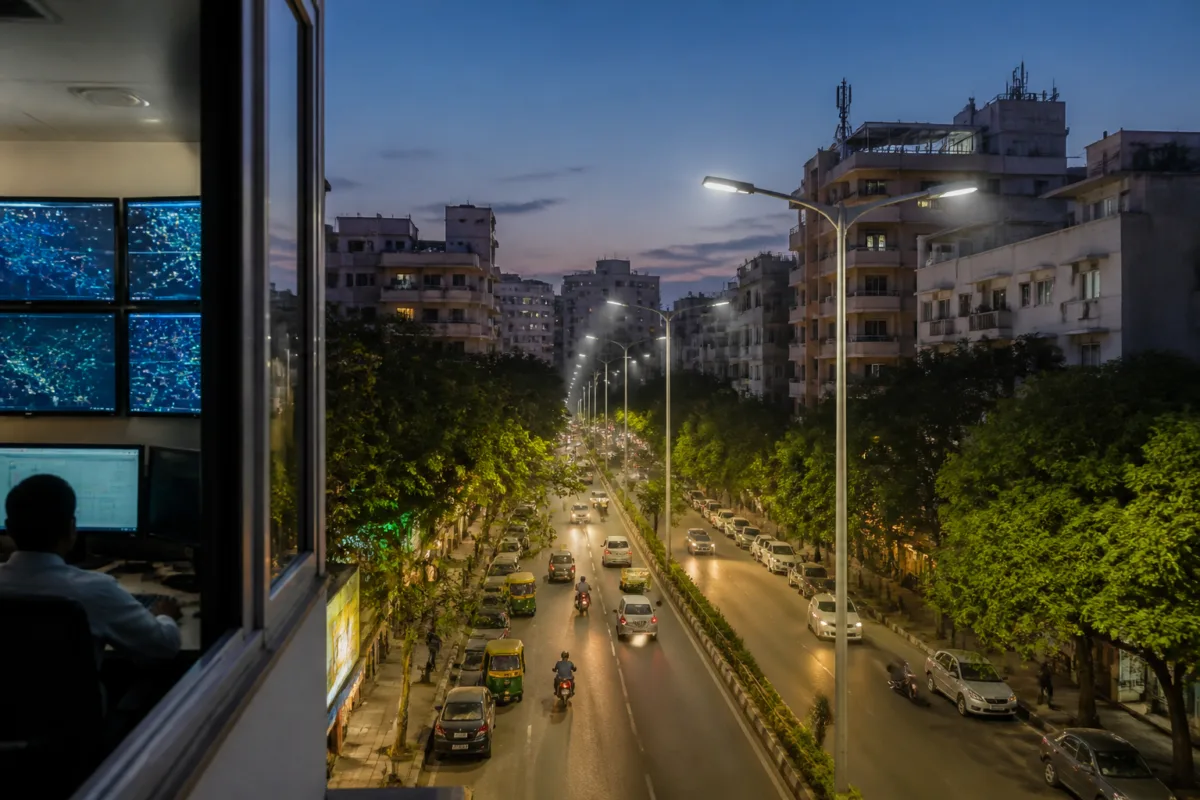
Bengaluru’s smart street lighting project will bring 5,00,381 LED lights under a centralised monitoring network and is expected to reduce electricity consumption by more than 54%, Greater Bengaluru Development Minister Krishna Byre Gowda said after visiting the first control and monitoring system installed in Jayanagar.
The project combines energy-efficient LED lighting with a centralised control and monitoring system, or CCMS, to improve the operation, maintenance and response time of the city’s streetlights. The minister said the initiative is expected to save about Rs 100 crore in electricity costs.
The system is designed to identify faulty or non-functioning lights before residents report them. Digital dashboards will continuously track streetlight performance, electricity consumption and fault alerts, allowing technical teams to respond to failures without waiting for individual complaints.
According to the details shared in the report, four separate centralised streetlight control rooms are being established across the Greater Bengaluru Authority’s area. These centres will monitor the network, while dedicated field maintenance teams will address faults identified automatically or reported by residents.
The project provides for repairs within 24 to 48 hours after a fault is detected or a complaint is registered. Maintenance contractors will face automatic penalties if they fail to resolve faults within the stipulated period. The system is intended to create a measurable service standard for a civic function that has generated a high volume of complaints in Bengaluru.
The rollout includes the installation of 3,02,919 new LED lights and the integration of 1,97,432 existing LED lights with the CCMS network. It also includes the installation of 24,677 CCMS units. The figures were provided as part of the project details shared by the minister and the civic authorities.
The CCMS platform will allow individual lights to be monitored remotely. Its listed features include automatic switching at scheduled times, GPS-based identification and location tracking of assets, real-time monitoring of electricity use, and automatic detection of lights that are off, flickering or only partially illuminated.
The project also connects already-installed LED lights to GSM-enabled, Internet of Things-based monitoring infrastructure. This allows the authority to shift from a complaint-led maintenance model towards continuous monitoring of the lighting network.
The first centralised control and monitoring system has been established in Jayanagar by the Bengaluru South City Corporation as the initial milestone of the citywide implementation. The authority said the project is intended to improve the quality of public lighting, reduce energy waste and strengthen the delivery of basic civic services.
The minister said improved street lighting would support public safety and security in addition to lowering operating costs. The next phase of implementation will involve extending the monitoring and maintenance framework across the Greater Bengaluru Authority’s jurisdiction.

