


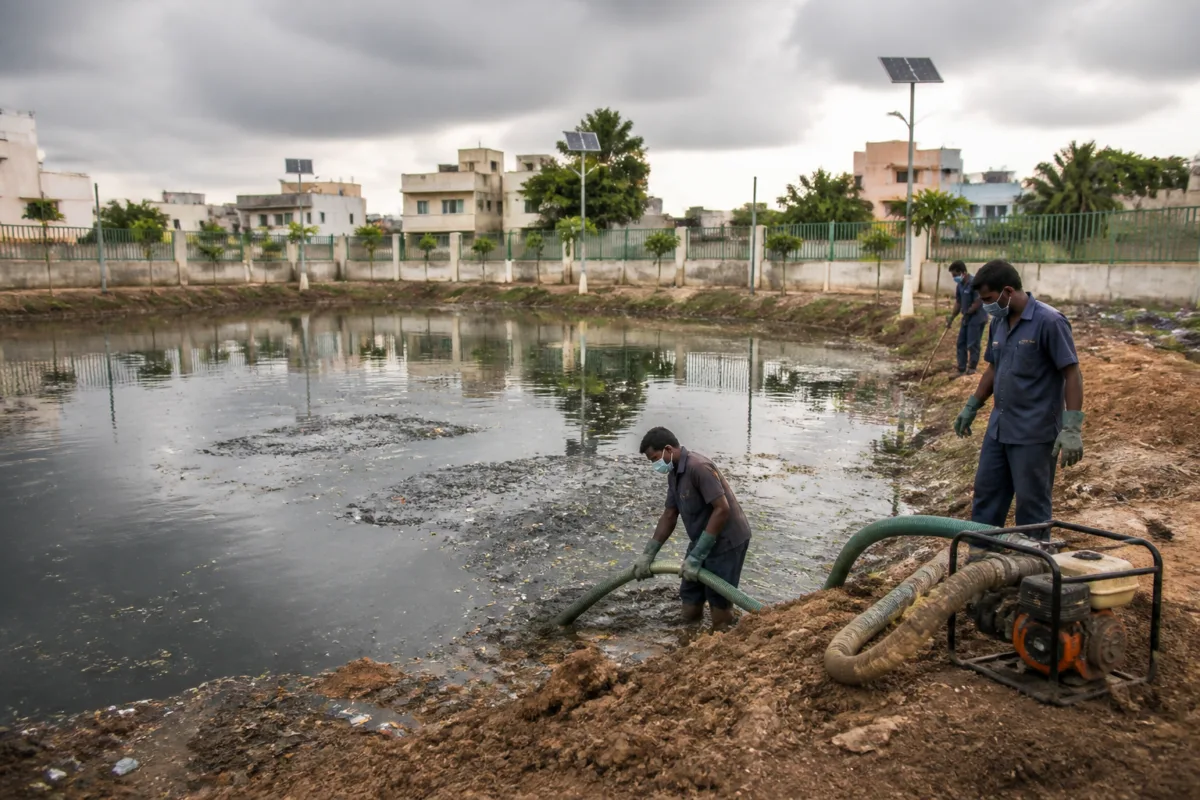
Sewage discharged into a restored waterbody in Adirampattinam municipality in Thanjavur district was removed after volunteers protested and Water Resources Minister Anand directed municipal officials to act, according to a report by Dinamalar. The incident has raised concerns about the protection of urban ponds restored through community effort and the absence of a separate channel for municipal wastewater.
The 1.88-acre Anaivilunthan pond in the Chairmanvadi area had reportedly been used for nearly 40 years as a dumping ground for sewage and solid waste. Dinamalar reported that the condition had severely affected groundwater in the surrounding areas.
Local volunteers and young residents later decided to restore the pond. With arrangements by waterbody conservationist Nimal Raghavan, Khalid Ahmed of Uravugal Trust and Gnan Foundation, the pond was desilted on September 13 after obtaining government permission. The restoration included removing waste, strengthening the banks, installing fencing and planting saplings.
Nimal Raghavan said 250 tonnes of waste had been removed from the pond and that solar lights, fencing and trees had been added as part of the restoration. He said the volunteers had spent about one and a half years seeking permission for the work, after the site had remained a waste dump for four decades.
The dispute began when municipal authorities allegedly started discharging sewage into the restored pond again over several days. The sewage accumulated inside the waterbody, prompting Raghavan to release a video protesting the discharge. Other volunteers also objected to the municipality’s action, the report said.
Following the protests, Minister Anand contacted the municipal administration and instructed officials to remove the sewage. Municipal personnel subsequently used a motor to pump the wastewater out of the pond.
The episode highlights a practical problem that often follows urban waterbody restoration: cleaning and fencing a pond does not protect it if wastewater continues to enter through municipal drains. A restored waterbody can remain vulnerable when sewage networks, stormwater channels and waste-disposal systems are not addressed alongside desilting and landscaping.
Raghavan questioned why a separate channel had not been created to divert sewage away from the pond and whether municipal officials were aware that the waterbody had been restored. The report did not provide details on the sewage’s source, the destination to which it was pumped or any permanent plan announced by the municipality to prevent further discharge.
The immediate municipal action removed the accumulated sewage, but the longer-term protection of the pond remains dependent on identifying and closing the wastewater inflow. The next step reported is the municipal administration’s implementation of the minister’s direction and resolution of the drainage problem around the restored waterbody.

