


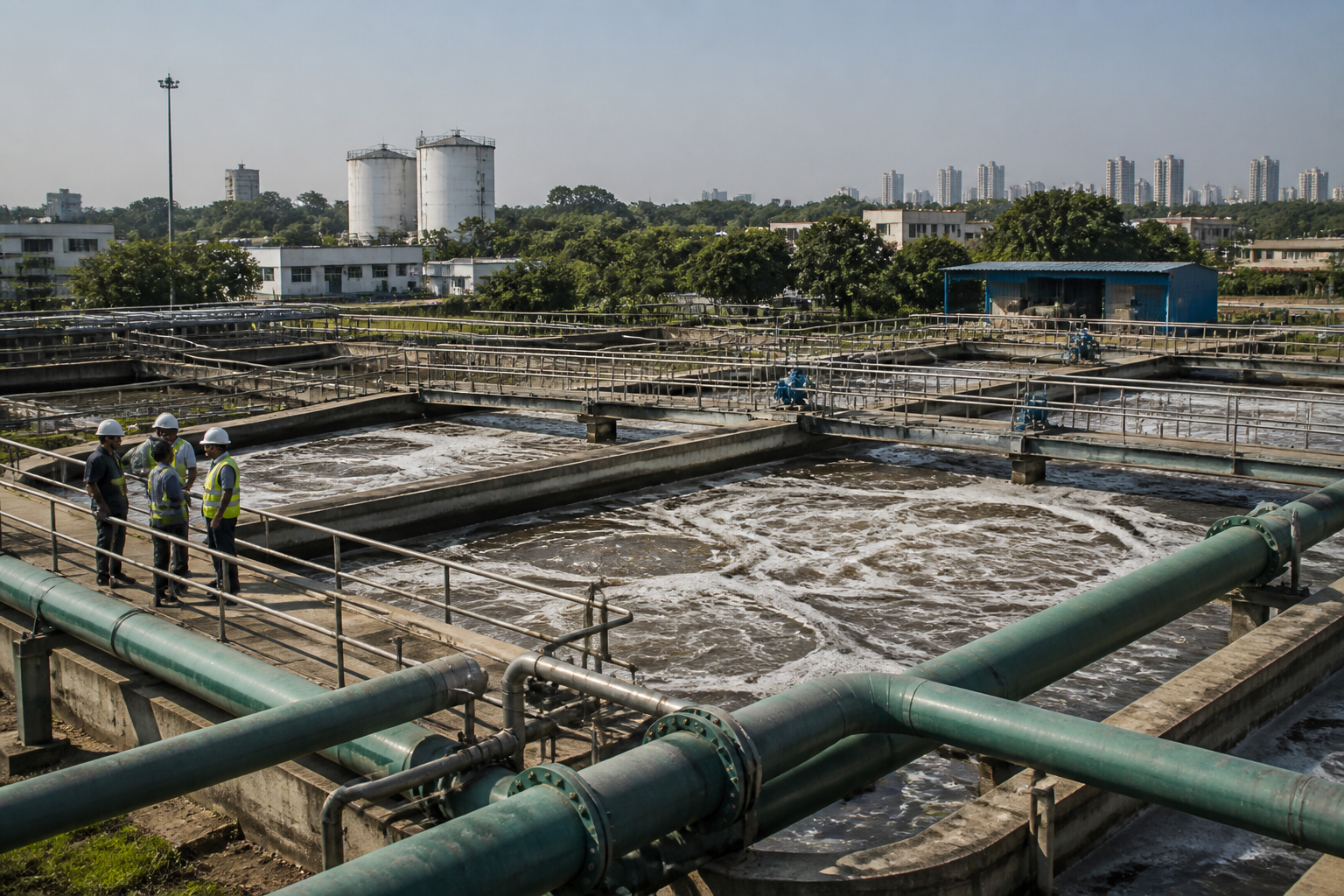
Karnataka Forest, Ecology and Environment Minister Ramalinga Reddy has directed the Bangalore Water Supply and Sewerage Board (BWSSB) to ensure that Bengaluru’s sewage treatment plants comply with standards prescribed by the National Green Tribunal and the Karnataka State Pollution Control Board (KSPCB), according to a report by Bangalore Mirror published on September 11, 2026.
The minister has instructed sewage treatment plants that do not meet the prescribed standards to become compliant within 30 days. He has also ordered the KSPCB to inspect private sewage treatment plants across Bengaluru and verify whether they are operating according to regulatory requirements.
The inspection order covers private plants at apartment complexes, educational institutions, commercial developments, hospitals and office buildings. These facilities treat sewage generated within their premises, making their operating standards relevant to the quality of treated wastewater released into the city’s drainage and sewerage systems.
The directions come as Bengaluru generates an estimated 2,580 million litres of sewage per day, while the city’s sewage treatment capacity is reported at 1,364.5 million litres per day. This leaves a treatment gap of 1,215.5 million litres per day, based on figures cited in the report.
According to the report, ongoing projects are expected to reduce the gap to 8.5 million litres per day by 2029. The figures indicate the scale of the challenge facing the city’s sewerage network, alongside the separate task of ensuring that existing treatment plants operate within prescribed standards.
Reddy has also asked BWSSB to divert sewage away from stormwater drains, repair damaged manholes and complete pending sewer connections. The directions place immediate emphasis not only on treatment-plant compliance but also on the condition and functioning of the network that carries sewage through the city.
Stormwater drains and sewerage systems serve different purposes. Diverting sewage from stormwater drains is intended to prevent wastewater from entering channels designed primarily to carry rainwater. The report does not provide details of the locations of the affected drains, the number of damaged manholes or the pending connections covered by the directive.
The KSPCB and BWSSB will also jointly inspect industrial waste, with particular attention to Peenya and Jigani. Both areas contain industrial activity, and the joint inspection will examine industrial waste management alongside the wider review of sewage treatment plants.
The 30-day deadline applies to STPs that are not meeting the standards identified by the National Green Tribunal and the KSPCB. The report does not specify the number of plants currently found to be non-compliant, the penalties that may follow missed deadlines or the detailed inspection schedule for private facilities.
The next steps are the inspections by the KSPCB, the joint review of industrial waste by the KSPCB and BWSSB, and BWSSB’s work on sewage diversion, damaged manholes and pending sewer connections. Ongoing projects aimed at narrowing Bengaluru’s treatment-capacity gap are expected to continue through 2029.
