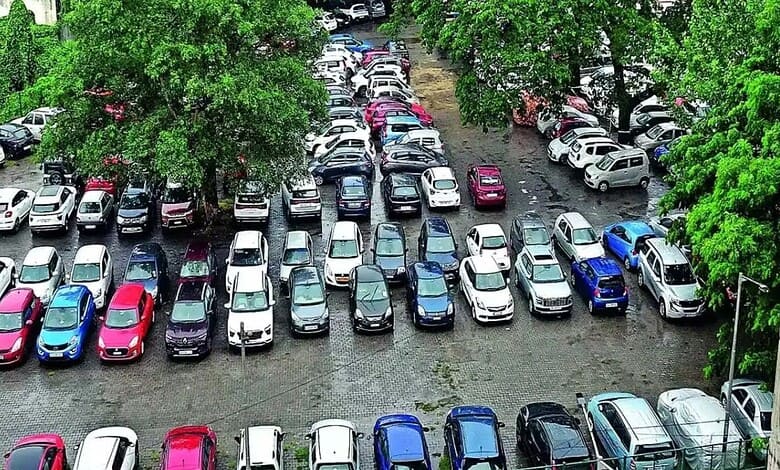
Bengaluru’s proposed residential parking charges have triggered fresh scrutiny after a Karnataka minister asked the state government to reconsider annual fees of up to ₹25,000. The draft policy seeks to regulate roadside parking and encourage off-street alternatives, but the debate is exposing a harder urban question: who should pay when homes were built without adequate parking and public roads have become an extension of private storage?
Under the draft Greater Bengaluru Area Parking Rules, residential permits would cost ₹15,000 annually for hatchbacks, ₹20,000 for sedans and ₹25,000 for SUVs. The proposed framework is intended to reduce unrestricted roadside parking and make better use of public road space. The minister has not rejected parking regulation itself. Instead, he has argued that the proposed charges could disproportionately affect middle-class households living in older neighbourhoods and buildings where providing additional parking within private premises is difficult. He has sought a review and wider consultation before the rules are finalised. That distinction is important for Bengaluru. Parking occupies valuable public land that could otherwise support movement, footpaths, cycling infrastructure, trees or public transport facilities. Leaving streets permanently occupied by private vehicles can reduce road capacity and make walking less comfortable and safe. At the same time, simply imposing a fee does not create parking capacity. Many older neighbourhoods were developed before car ownership reached current levels, while some apartment buildings have limited parking. Residents who cannot realistically shift vehicles into private spaces could face a recurring cost without having an immediate alternative.
The draft rules envisage greater use of organised off-street parking, including facilities on suitable public land and potentially vacant private plots. The policy direction therefore has potential to change how Bengaluru values road space, but its success will depend on whether convenient alternatives become available alongside enforcement. The issue also extends into the housing market. Homes with assured parking could become more attractive, potentially increasing demand and affecting rents or prices in locations where parking is scarce. That could make well-connected housing even less accessible to households that cannot afford a premium for dedicated parking. A more balanced approach could distinguish between deliberate long-term occupation of high-demand streets and residents who lack feasible alternatives. Clear exemptions, location-based pricing, time restrictions and investment in affordable off-street facilities could make the transition less disruptive while still discouraging excessive car storage on public land.
Bengaluru’s parking problem ultimately reflects a deeper mismatch between vehicle ownership, housing design and limited urban space. The final policy will need to manage that scarcity without shifting the entire cost onto households. Its strongest measure of success should be whether streets become more usable while residents gain practical alternatives to storing cars on them.