


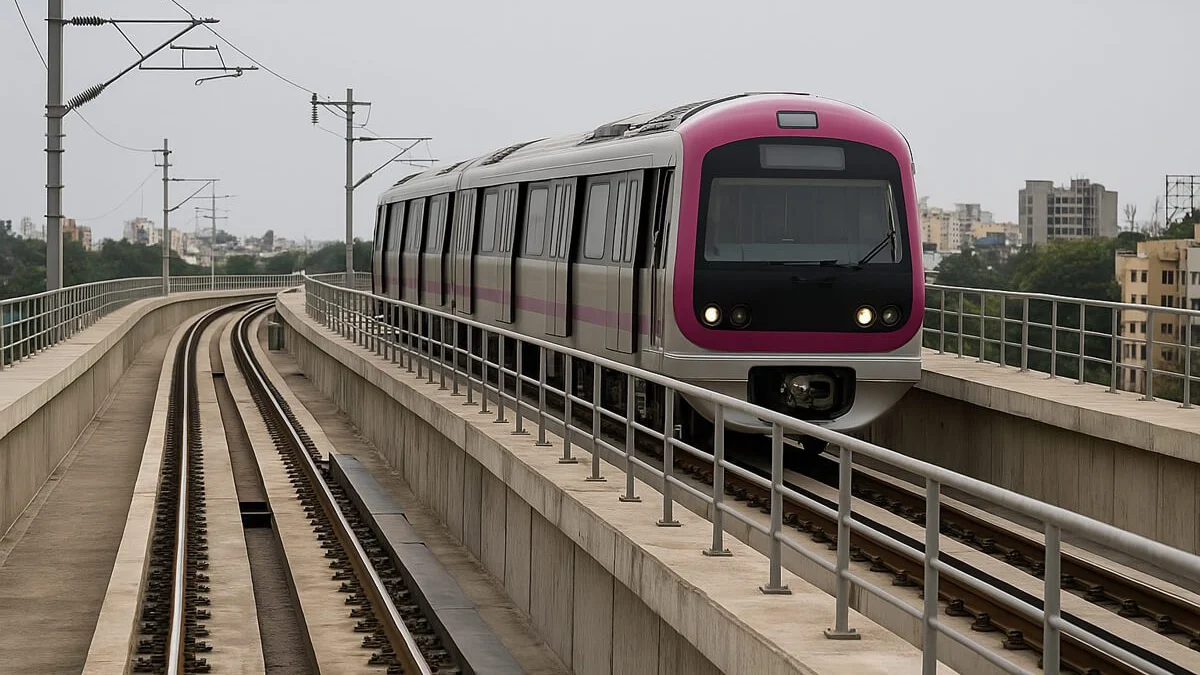
Bengaluru’s metro network is set to take a significant step forward as trial runs begin on the Pink Line, marking progress in the city’s efforts to expand mass transit capacity and ease growing mobility pressures. The testing phase, which starts this week, is a crucial milestone before the corridor becomes operational for public use.
The Pink Line, part of the city’s broader metro expansion plan, is expected to connect key residential and commercial zones, improving accessibility across densely populated areas.The rollout of Bengaluru Metro Pink Line trials reflects a strategic push to strengthen public transport infrastructure in a city grappling with chronic traffic congestion and rapid urban growth.Officials indicate that the trial phase will focus on evaluating system performance, safety protocols, signalling integration, and overall operational readiness. These assessments are essential to ensure reliability before passenger services begin.Metro expansions in Bengaluru have historically faced delays, making the commencement of trials a notable step towards completion.Urban mobility experts view the development as critical to shifting travel patterns away from private vehicles. The Bengaluru Metro Pink Line is expected to reduce dependence on road-based transport, offering a faster and more predictable commuting option.
This transition is particularly important in corridors where traffic congestion has significantly impacted travel time and productivity.The expansion also aligns with broader sustainability goals. Public transport systems such as metro rail networks contribute to lower per capita emissions by reducing the number of vehicles on the road. As Bengaluru continues to face air quality challenges and rising fuel consumption, strengthening metro connectivity is seen as a key component of climate-resilient urban planning.However, the effectiveness of the new line will depend on last-mile connectivity and integration with other transport modes.Experts emphasise the need for seamless links between metro stations, bus services, and non-motorised transport options such as cycling and walking. Without these connections, the full potential of the metro system may not be realised.There are also implications for urban development. Metro corridors often influence real estate trends, driving demand for residential and commercial spaces near stations. While this can support economic growth, it also requires careful planning to prevent unregulated development and ensure equitable access to transit-oriented benefits.From a commuter perspective, the Pink Line promises improved convenience, but expectations will hinge on service frequency, affordability, and network integration.Ensuring that the metro remains accessible to a broad segment of the population will be critical for its long-term success.
As trials progress, authorities will monitor system performance and address operational challenges before opening the line to the public. The advancement of the Bengaluru Metro Pink Line underscores the city’s ongoing efforts to build a more efficient, sustainable, and inclusive urban transport system capable of supporting its expanding population.
Also Read:Bengaluru Cauvery Stage V Faces Last Mile Connection Delays
