


The seizure of medical devices worth Rs 13.8 lakh from two Bengaluru establishments is more than a local enforcement action. It exposes how a basic compliance failure—missing batch numbers, expiry dates, manufacturer details, licence numbers and maximum retail prices—can make it harder for patients, hospitals and regulators to establish whether products entering the healthcare system are safe and traceable.
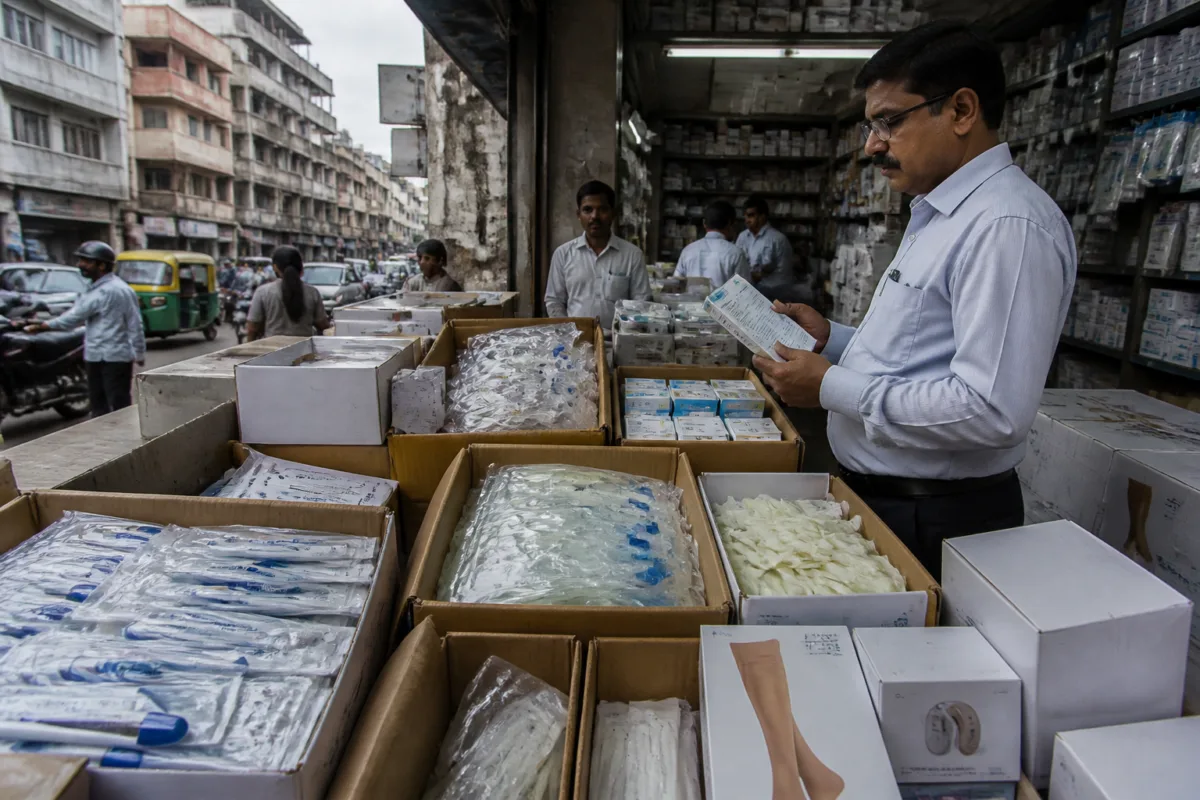
The Food Safety and Drugs Administration seized the products from Mandev Surgipharma Pvt Ltd and Shree Mandev Surgicals in Cottonpet during a special drive conducted on November 11 and 12. According to the report, the department recovered products worth Rs 6.6 lakh from the first establishment and Rs 7.2 lakh from the second. The seized items included hearing aids, clinical thermometers, surgical gloves, urine bags and compression stockings.
The products have been sent for testing. That step is important because labelling is not only a retail or packaging requirement. It is part of the information chain that allows a product to be identified, checked and, if necessary, withdrawn. When a device lacks a batch number or manufacturing and expiry dates, tracing the product becomes more difficult. Missing manufacturer and licence details can also make it harder for buyers and enforcement agencies to establish accountability.
The Bengaluru action therefore points to a problem that sits between public health, urban commerce and administrative capacity. Medical devices are sold through a range of establishments serving a dense city and its surrounding healthcare market. The report does not establish how many patients purchased or used the seized products, nor does it say that any device caused harm. But the absence of those findings does not remove the significance of the compliance failure identified during inspection.
The two seizures were almost evenly divided in value. The products recovered from Mandev Surgipharma were valued at Rs 6.6 lakh, while those from Shree Mandev Surgicals were valued at Rs 7.2 lakh. Together, the seizures amount to Rs 13.8 lakh. The value indicates the scale of stock removed during this drive, although the supplied report does not provide information on the total inventory inspected, the duration for which the products had been held, or whether the establishments had previously faced action.
That missing information matters because the public-health meaning of an enforcement drive depends not only on the value of seized goods but also on what happens before and after seizure. An inspection identifies a point of non-compliance. Testing can establish whether the products meet the applicable safety and quality requirements. Further regulatory action, if any, would determine whether the issue was limited to labelling or extended to the devices themselves. The current report confirms that samples have been sent for testing but does not disclose the results.
The episode also shows why traceability is a central administrative concern in healthcare markets. A patient buying a clinical thermometer or a hearing aid needs more than the product’s visible function. Basic information about who made it, when it was manufactured, how long it can be used and under which licence it entered the market helps connect the product to a responsible entity. For items such as surgical gloves and urine bags, expiry and manufacturer details are especially relevant to institutions and consumers making decisions about use in medical settings. The report does not indicate whether the seized products were counterfeit, substandard or unsafe in performance; it identifies the absence of mandatory labelling details as the enforcement finding.
This distinction is important. A seizure for missing information should not automatically be presented as proof that every product was dangerous. At the same time, incomplete labelling is not a harmless technical defect when the goods are intended for healthcare use. It can limit the ability of users and authorities to verify a product before use and can complicate action after a problem is reported. The regulatory concern is therefore both immediate and systemic: whether products can be assessed before they reach patients and whether they can be traced if a concern emerges later.
The enforcement action followed a stated tightening of scrutiny by the Bengaluru FDA. The report says the department had been intensifying action against food-safety violations before turning its attention to medical devices and consumables. This suggests a wider enforcement approach across products that affect public health, although the supplied material does not provide the number of inspections, earlier seizures or comparative figures for medical-device enforcement.
Health minister U T Khader described patient safety as non-negotiable and said every medical device entering the market must meet prescribed safety, quality and labelling standards. He also urged consumers to buy devices only from authorised sellers and check product details before purchasing. These statements place responsibility on both the enforcement system and the point of sale. Consumers are expected to examine the product, but that expectation can only work when the information is clearly available and when buyers have a practical way to distinguish an authorised seller from an unauthorised one.
The case also raises a question about how urban healthcare supply chains are monitored. Bengaluru’s healthcare economy depends on the movement of products through manufacturers, distributors, medical suppliers, retailers and institutions. The supplied report identifies two Cottonpet establishments but does not map where the products came from or where they were intended to go. Without that information, it is not possible to determine whether the action reflects an isolated problem at two premises or a wider weakness in the supply chain. The testing results and any subsequent regulatory announcements will be important in establishing that distinction.
For municipal and state administrators, the practical challenge is not simply conducting a seizure. It is maintaining a system in which inspection, sampling, testing, documentation and follow-up are connected. A product can be removed from one shop while similar stock remains elsewhere if enforcement is not supported by traceable records and continued inspections. The minister’s statement that enforcement drives will continue indicates that the department intends to extend the exercise, but the report does not specify the next locations, inspection targets or timetable.
The incident also illustrates the limits of public information during an active enforcement process. The value of the seized goods and the categories of products are known. The names of the two establishments are known. The reasons for seizure have been reported in detail. However, the test results, the regulatory status of the establishments, the source of the products and any penalties or prosecution are not yet available in the supplied material. Those facts will determine whether the case remains a labelling-compliance matter or develops into a broader product-safety finding.
For consumers, the immediate message is straightforward but not sufficient on its own: check batch numbers, manufacturing and expiry dates, manufacturer details, licence information and MRP, and purchase from authorised sellers. The deeper issue is whether all buyers have the knowledge, time and information needed to perform those checks, particularly when devices are purchased during urgent medical situations or through intermediaries. Effective regulation must therefore reduce the burden on individuals rather than rely only on consumer vigilance.
The Bengaluru seizure confirms that medical-device compliance is an urban governance issue, not merely a technical matter for suppliers. Products used in homes, clinics and hospitals move through commercial networks that require oversight, documentation and testing. The FDA’s next enforcement steps and the results of the samples taken from the seized stock will show whether the November action identified a limited breach or a more significant weakness in the city’s medical-device market. Until those findings are released, the evidence establishes a serious traceability and labelling concern, but not that the seized products were unsafe in performance.

