


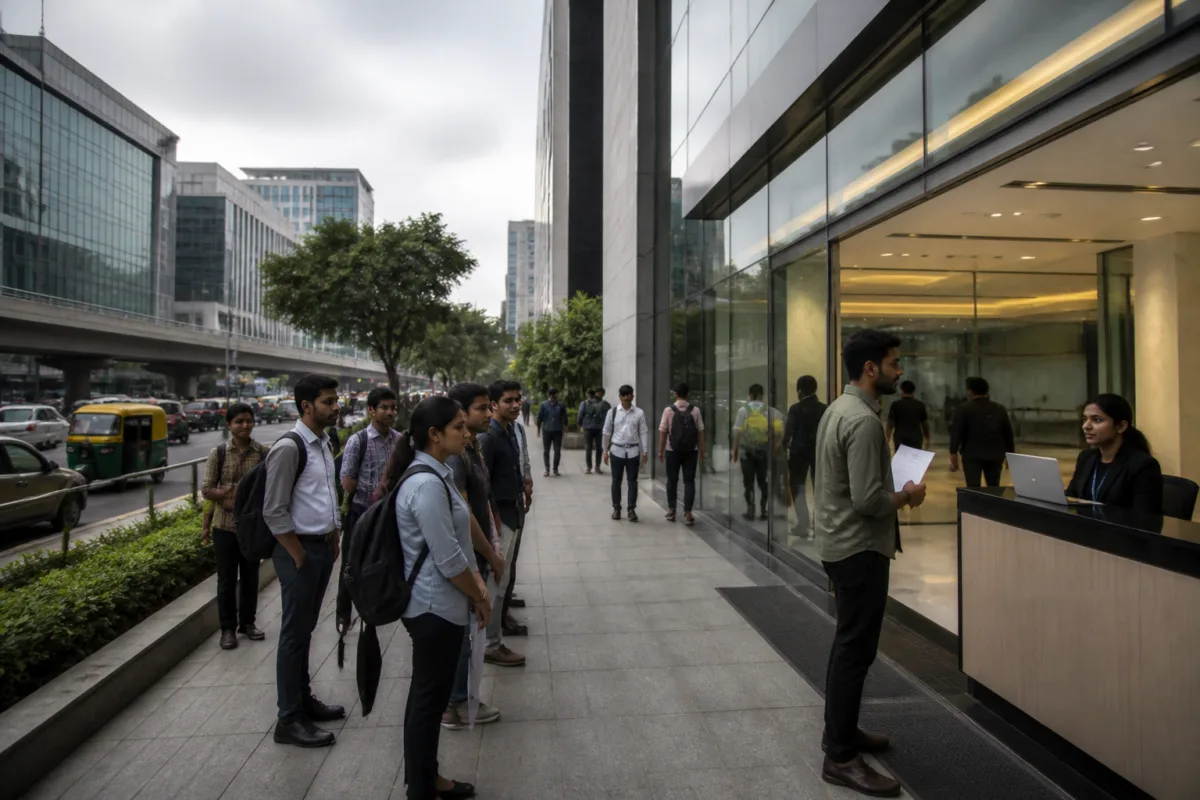
A viral video has renewed allegations that Kannadigas face discrimination in Bengaluru’s information technology companies, including claims that candidates identifying Kannada as their mother tongue on resumes are rejected during interviews. The allegations were published by Vijay Karnataka on October 26, but the report does not provide independent confirmation, documentary evidence or responses from companies named in the video.
The young woman featured in the video claimed that local candidates were being overlooked in recruitment and that companies were increasingly bringing employees from other states into Bengaluru. She alleged that companies often avoided campus recruitment at colleges in Karnataka or Bengaluru and instead hired from institutions in other states.
According to the report, the woman further claimed that some of the recruits were selected because they were willing to work for lower salaries and could be trained after joining. She also alleged that language ability and local identity were influencing recruitment decisions, although the report does not identify specific companies, hiring managers or recruitment campaigns where this allegedly occurred.
The video also made broader claims about the composition of IT workplaces. The speaker said that in a company with 100 employees, only three or four might be Kannadigas. She additionally alleged that employees in leadership positions sometimes helped recruit members of their own communities, describing this as a form of favouritism. These claims remain unverified in the material supplied for publication.
The allegations connect a workplace dispute to a wider question facing Bengaluru: how the city’s dependence on a nationally mobile technology workforce affects local access to employment. Bengaluru attracts workers from across India because of its concentration of technology companies, start-ups, educational institutions and support services. However, the supplied report does not include data comparing the regional composition of the city’s workforce, hiring patterns across companies or the share of local candidates selected through campus recruitment.
The speaker also claimed that the Karnataka Labour Department was aware of the alleged discrimination but had been unable to act. No statement from the department is included in the report, and there is no information on whether a formal complaint has been filed, whether an inquiry has been opened or which legal or administrative mechanism would apply to the alleged conduct.
At the end of the video, the woman appealed to D.K. Shivakumar, referring to plans to create a township in Bidadi and increase employment opportunities for local residents. She argued that new projects would not benefit Kannadigas if alleged hiring practices in existing companies remained unchanged. The report does not include a response from Shivakumar, the Karnataka government or any employer association.
The viral video therefore establishes that the allegations are being publicly circulated, not that the claims have been proven. Verification would require identifiable evidence such as recruitment records, documented complaints, company hiring policies, labour department findings or responses from the organisations concerned. Until such material is available, the scale and prevalence of alleged discrimination in Bengaluru’s IT sector cannot be established from the supplied report alone.

