


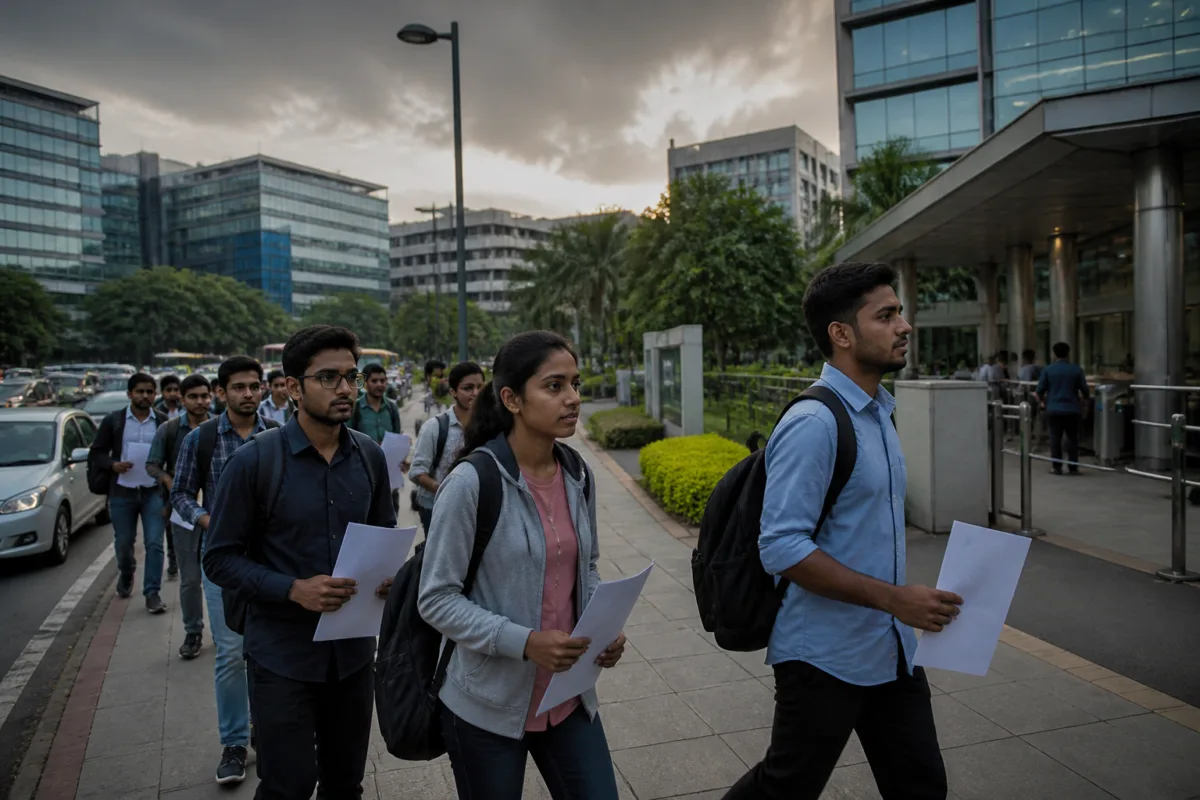
A social-media video alleging that Kannada-speaking applicants are being denied jobs by IT companies in Bengaluru has triggered public debate over hiring practices, campus recruitment and the state’s stalled proposal to increase employment opportunities for Kannadigas. The allegation has not been independently established in the report, and no company response or documentary evidence from the applicant has been provided.
According to Prajavani, a young woman claimed in the video that applicants who identified Kannada as their mother tongue in their resumes were being rejected without being considered for direct interviews. She also alleged that IT companies based in Bengaluru were giving preference to Telugu- and Tamil-speaking applicants during recruitment.
The woman further claimed that companies were not conducting campus interviews at colleges in Bengaluru and were instead hiring workers from elsewhere at lower salaries. She appealed to Chief Minister D.K. Shivakumar to address what she described as a lack of opportunities for Kannada-speaking candidates.
The video has led to discussion on social media, with some users questioning whether local residents are being excluded from employment in the city’s technology sector. Kannada-language activists have also criticised what they described as discrimination against Kannada in private companies.
Activist Rupesh Rajanna, quoted in the report, alleged that non-Kannada speakers occupy a substantial share of human resources and decision-making positions in private companies. He called for a government audit of recruitment practices and demanded legislation to increase employment opportunities for Kannadigas. These are the activist’s claims and demands; the report does not cite an audit or independent study confirming the alleged pattern.
The controversy comes against the background of a proposed state bill concerning employment reservations or preferences for Kannadigas in private-sector jobs. The report says the draft included provisions under which companies that failed to honour written commitments on employment opportunities could lose tax concessions, tax deferments, subsidies and other government benefits. It also said the draft contemplated penalties.
The proposal was reportedly held back after differences emerged among ministers. According to government sources cited by Prajavani, discussions were held in January with the intention of placing the bill before both Houses of the state legislature, while the draft is currently with the Labour Department. The report does not provide the text of the bill, its latest official status, the proposed definition of a Kannadiga, or details of how compliance would be assessed.
Those omissions are important because Bengaluru’s employment market brings together local residents, migrants and companies operating across state and national boundaries. Any policy that links public incentives to private-sector hiring would require clearly defined eligibility rules, transparent records and an administrative mechanism capable of examining recruitment decisions without compromising legitimate business requirements.
At present, the supplied report establishes that an allegation has circulated and that it has revived demands for government intervention. It does not establish how widespread the alleged discrimination is, whether any company rejected applicants for identifying Kannada as their mother tongue, or whether campus recruitment practices have changed for the reasons claimed. Confirmation from the Labour Department, the state government, affected companies and the applicant would be needed to determine the scope of the issue and the status of the proposed legislation.

