


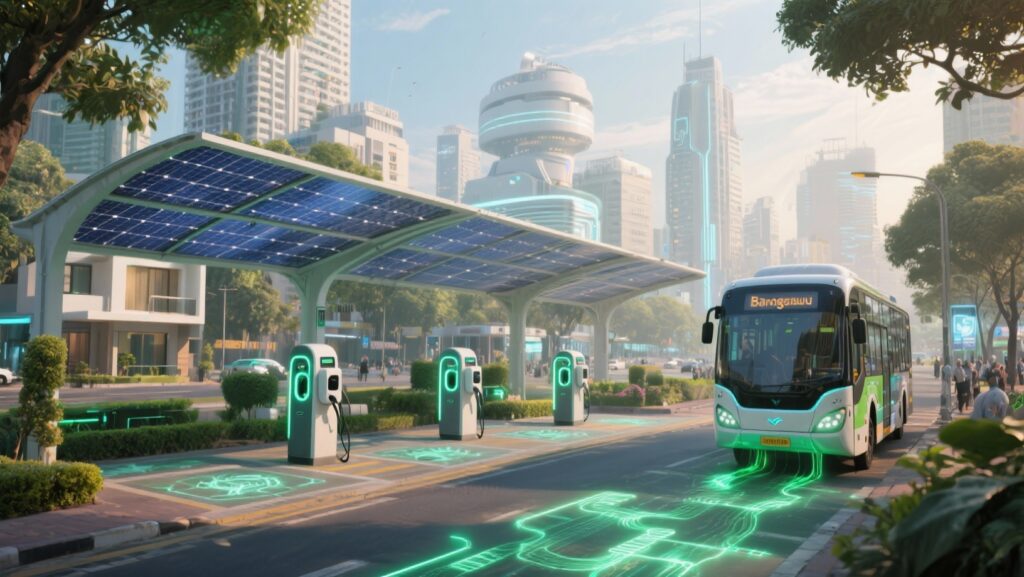
Bengaluru is poised to witness a significant boost to its electric mobility infrastructure as global automakers plan to expand fast-charging networks across major Indian cities. The move is expected to strengthen the city’s transition towards cleaner transport by addressing one of the key barriers to electric vehicle (EV) adoption—accessible and reliable charging infrastructure.
As one of India’s leading technology and innovation hubs, Bengaluru has seen a steady rise in EV adoption, particularly in the two-wheeler and ride-hailing segments. However, the availability of high-speed charging points has remained uneven, often concentrated in select commercial areas. The planned rollout of advanced charging stations could help bridge this gap, enabling faster turnaround times and greater convenience for users.Urban mobility experts note that a robust charging network is essential for scaling EV adoption in dense cities. Range anxiety and charging delays continue to deter potential buyers, despite growing awareness of environmental benefits. By introducing high-capacity chargers capable of significantly reducing charging time, the new infrastructure could make EV ownership more practical for daily use.The development also aligns with Bengaluru’s broader climate and sustainability goals. Transport emissions are a major contributor to urban air pollution and greenhouse gas output. Expanding EV infrastructure is seen as a critical step in reducing the city’s carbon footprint while supporting cleaner mobility alternatives.From an economic perspective, the expansion of charging infrastructure could stimulate investment across the EV ecosystem.
Opportunities are likely to emerge in areas such as equipment manufacturing, installation services and energy management solutions.For the city’s startup ecosystem, this presents a chance to innovate around smart charging, grid integration and user experience.However, experts caution that infrastructure rollout must be carefully integrated with existing urban systems. Issues such as grid capacity, land availability and standardisation of charging protocols need to be addressed to ensure seamless operation. Without coordinated planning, the rapid expansion of charging stations could strain power distribution networks or lead to uneven accessibility.There is also a need to ensure equitable distribution of charging points across the city.Concentrating infrastructure in high-income or commercial zones may limit access for a broader user base, particularly in residential areas where EV adoption is gradually increasing. Inclusive planning will be key to ensuring that the benefits of electric mobility are widely shared.For residents, the availability of faster and more reliable charging options could enhance confidence in transitioning to electric vehicles.Reduced charging times and improved accessibility are likely to make EVs a more viable alternative to conventional vehicles, particularly for daily commuting.
As Bengaluru continues to evolve as a centre for sustainable innovation, the expansion of EV charging infrastructure represents a crucial step towards cleaner, more efficient urban mobility. The success of this initiative will depend on how well it is integrated into the city’s broader transport and energy systems, shaping the pace of its transition to a low-carbon future.
Also Read:Bengaluru sanitation workers unpaid for months
