


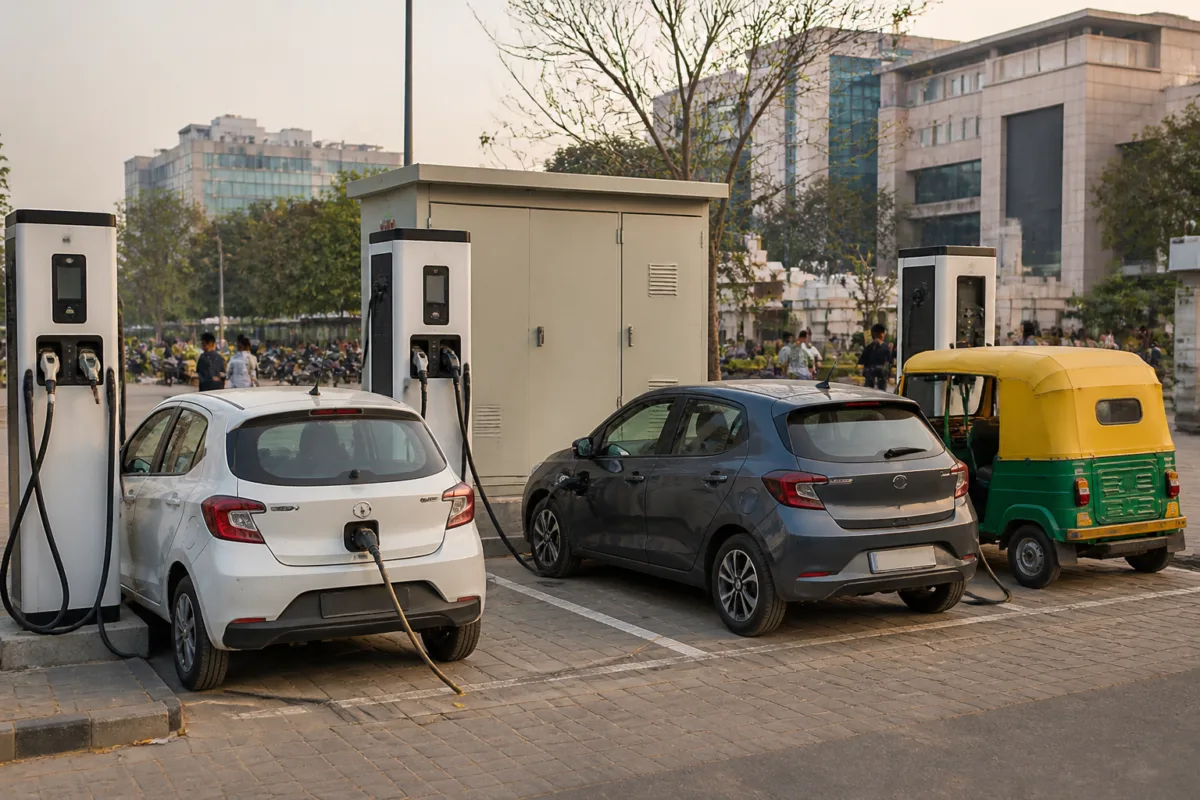
India’s effort to expand electric vehicle charging infrastructure is facing delays and higher project costs because of difficulties in securing cooperation from electricity distribution companies, Tarun Kapoor, advisor to the Prime Minister, said in New Delhi on Friday.
Speaking at the Society of Indian Automobile Manufacturers’ first Growth and Readiness for EV Infrastructure Dialogue, Kapoor said distribution companies sometimes demand substantial payments for the electricity connection and related work needed for charging stations. The issue is particularly significant for high-capacity facilities, he said.
“The cost of putting up a charging station as you all know the higher part of the cost is behind the metre where sometimes the distribution companies demand a huge amount of money,” Kapoor said, according to PTI. He added that stations requiring capacity of 100 kilowatts or more could face particularly high demands.
Kapoor said each distribution company should have a dedicated officer to address charging-infrastructure-related issues. The proposed coordination mechanism could help operators navigate connection requirements and reduce delays, although he did not specify a national implementation framework or deadline.
He also said electric vehicles would become an important source of electricity demand and a significant business opportunity for distribution companies. India was entering a phase of surplus power availability, he said, and DISCOMs should recognise electric mobility as a future consumption sector.
The government is seeking to encourage daytime charging rather than relying entirely on overnight charging at homes. Kapoor said charging facilities should increasingly be located at offices, workplaces, marketplaces and parking areas. Such locations could support charging during the day while integrating the infrastructure into places where vehicles are already parked, although the report did not provide details of specific urban programmes.
Utilisation is another challenge for public charging operators. Kapoor said some existing stations recorded utilisation of less than 1 per cent, making maintenance and long-term operation difficult. Low usage can weaken the financial case for stations even after they have been installed, adding to the importance of selecting locations and capacities carefully.
Electric vehicle adoption in India remains at an early stage, with faster uptake in the two- and three-wheeler segments, Kapoor said. Limited charging infrastructure is among the key constraints on wider adoption.
Under the Rs 11,900 crore PM E-Drive scheme, the government has allocated Rs 2,000 crore to subsidise charging infrastructure. The allocation is intended to support up to 72,300 new public electric vehicle charging stations, battery-swapping stations and battery-charging stations.
Kapoor said the government was open to providing additional funding if required. The remarks place the expansion challenge across three linked areas: the upfront cost of electricity connections, coordination between charging operators and DISCOMs, and the viability of stations with very low utilisation. The report did not identify individual distribution companies or quantify the number of projects affected by these issues.

