


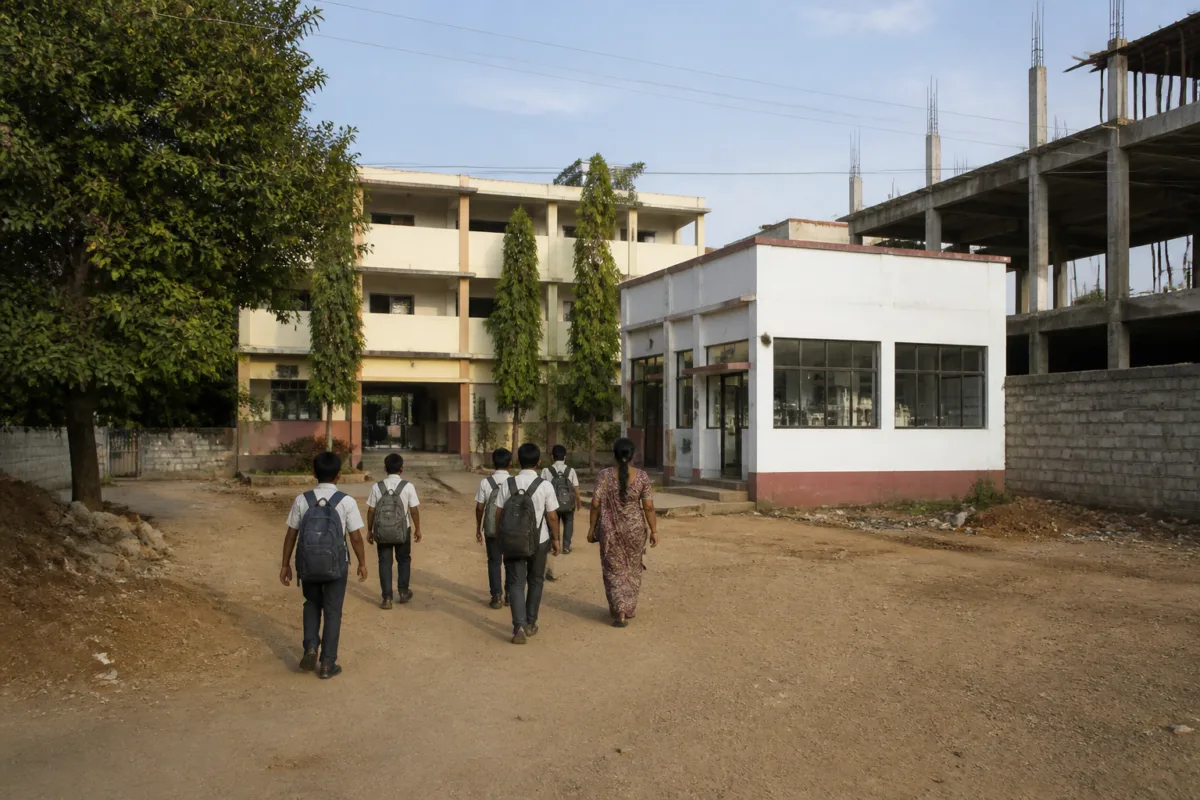
The proposed merger of Telangana’s Secondary School Certificate and Intermediate systems is facing questions over whether existing schools have the laboratories, libraries, classrooms, lecturers and financial capacity needed to add Classes XI and XII.
Akunuri Murali, former chairman of the Telangana Education Commission (TEC), said a school could not become a higher secondary institution simply by adding two classes. He said schools would need adequate infrastructure, qualified human resources, libraries and other essential facilities, while cautioning that the government had not yet clarified the precise structure of the proposed reform.
The TEC had recommended merging the SSC and Intermediate boards into a Telangana School Education Board, bringing both under a single department and integrating their administrative structures. The proposal also included discontinuing the first-year Intermediate public examination. Murali said that without administrative integration, the reform could create logistical and implementation problems.
The infrastructure question is particularly significant because the proposal would potentially expand the role of existing schools rather than create an entirely separate network for senior-secondary education. Murali advised against upgrading all schools at once. He suggested that schools should be assessed individually and expanded gradually, with no more than one being upgraded each month, as enrolment in government schools improves.
The report said no official restructuring document had been released so far. That leaves unresolved how facilities would be assessed, which institutions would be eligible, how recognition and affiliation would work, and whether additional classrooms, laboratories and teaching staff would be funded by the government, institutions or families.
Private school managements have also sought clarity on the proposed expansion. The Telangana Recognised School Managements Association supported the introduction of Classes XI and XII in existing schools but opposed allowing junior colleges to establish institutions offering only Classes IX to XII.
Its president, Sadula Madhusudhan, said such a structure could extend competitive-examination coaching to younger students. He argued that many corporate junior colleges already focus heavily on preparation for examinations such as NEET and JEE, and that bringing Classes IX and X into similar institutions could shift coaching pressure to an earlier stage.
The association has instead sought compulsory vocational education from Classes IX to XII, including industry exposure, internships, entrepreneurship, financial literacy and practical projects. It has also called for the draft policy to be published for public comments before the rules are finalised.
The TEC report proposed transferring specialised Intermediate vocational courses to industrial training institutes and polytechnics. That recommendation would place greater importance on the capacity of those institutions to absorb additional learners and deliver practical training, although the report does not provide details in the material available on infrastructure, funding or implementation arrangements.
Financial concerns have been raised by budget private schools and minority institutions. The All India Muslim Educational Society and the Confederation of Minority Institutions said many institutions were already managing salaries, rent, electricity and maintenance costs. Their representative, M.S. Farooq, sought clarity on fee collection, recognition and affiliation before schools were required to invest in additional classrooms, laboratories and lecturers.
The organisations also questioned whether new school permissions would be issued without assessing their effect on established institutions, particularly in Hyderabad and Secunderabad. They have sought phased implementation, protection for existing junior colleges and minority institutions, and representation in future Education Department consultations.
Teachers, lecturers, unions and educational institutions have also been identified as groups that should be consulted. Murali described such consultation as necessary for a reform that would alter school administration, staffing, infrastructure requirements and the transition between secondary and higher-secondary education.
The immediate issue, therefore, is not only whether the two examination systems should be merged. It is whether Telangana can define enforceable standards and a workable transition plan before schools are permitted to offer senior-secondary education. Until the government releases the proposed restructuring document, questions over infrastructure assessments, staffing, fees, institutional recognition and public consultation remain open.

