Bengaluru Art Exhibition Captures India Wrestling Culture
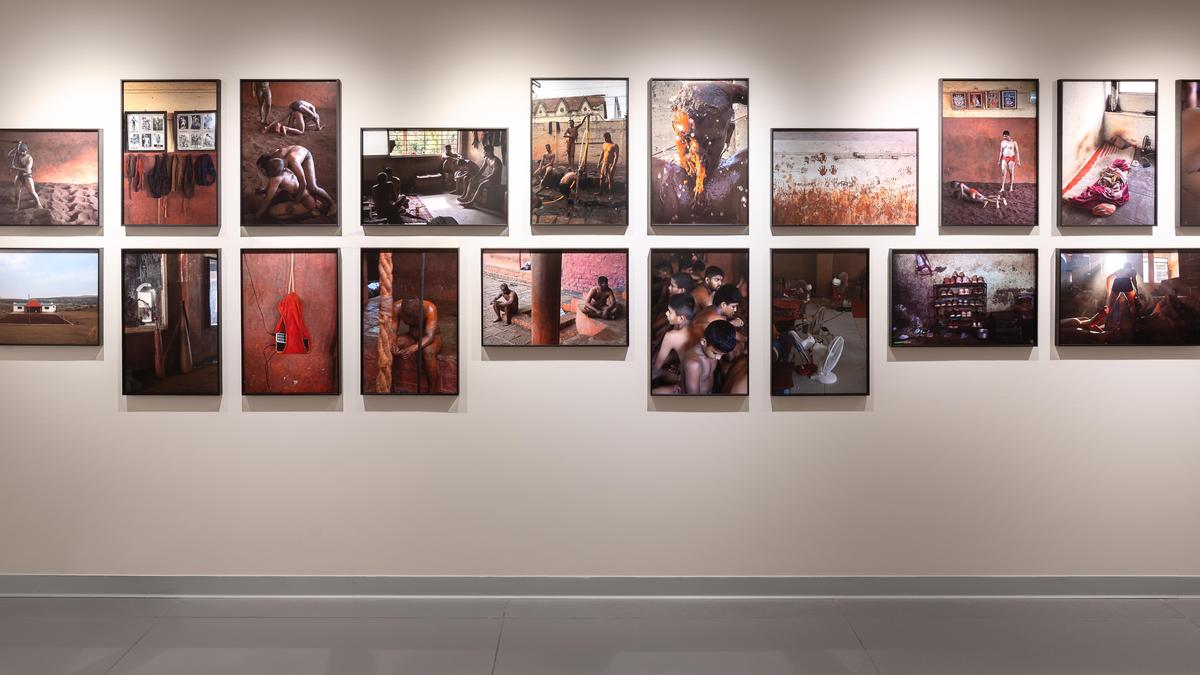
A photography exhibition in Bengaluru is documenting the everyday realities of Indian wrestling, moving beyond competition arenas to examine the spaces, routines and communities that sustain the sport. The exhibition offers a visual account of wrestling as a social and cultural institution, while drawing attention to the changing relationship between traditional sporting spaces and the rapidly transforming city.
The exhibition is being presented at the Museum of Art & Photography (MAP) in Bengaluru and features photographic work documenting wrestling communities across India. Rather than focusing exclusively on professional bouts, the collection examines training spaces, wrestlers, coaches and the environments in which the sport continues to be practised. A central theme is the traditional akhara, a wrestling training ground that has historically functioned as more than a place for physical preparation. Such spaces can serve as community institutions where younger participants learn discipline, physical training and social practices alongside wrestling techniques. The photographs provide a view of these spaces at a time when India’s sporting landscape is becoming increasingly commercialised. Modern gyms, professional leagues and televised competitions have expanded the visibility of sport, while older training traditions continue to operate within neighbourhoods and smaller towns. For Bengaluru, the exhibition carries a wider urban relevance. The city has experienced rapid redevelopment, with land increasingly competing between housing, commercial projects, transport infrastructure and public amenities. Traditional sporting spaces, community grounds and informal recreation areas can become vulnerable when neighbourhoods undergo intensive development.
Preserving such spaces is not simply a heritage concern. Accessible local sports facilities provide opportunities for physical activity, particularly for children and young people who may not have access to expensive private gyms or specialised academies. Their value therefore extends into public health, social inclusion and community life. The exhibition also highlights the people behind the sport. Wrestlers often train for years before reaching professional competition, relying on coaches, peers and local communities. By documenting these relationships, photography can reveal the social infrastructure supporting a sport that is frequently reduced to its most visible competitive moments. There is an economic dimension too. India’s growing sports ecosystem is creating new opportunities in coaching, fitness, media, equipment and event management. Traditional sporting communities could participate in this expansion if investment reaches grassroots facilities rather than remaining concentrated around professional competitions. At the same time, modernisation does not necessarily require replacing traditional spaces. Upgrading sanitation, safety, accessibility and training facilities could allow older sporting institutions to adapt while retaining their community character. The Bengaluru exhibition consequently serves as both a cultural record and a reminder of the physical spaces that allow sporting traditions to survive. As cities become denser and land values rise, retaining accessible community infrastructure becomes increasingly important.
By placing wrestling communities within a museum setting, the exhibition invites viewers to look beyond medals and matches towards the everyday environments that sustain sport. Its wider message is relevant to Bengaluru’s own development: a liveable city needs not only offices, homes and transport networks, but also places where communities can gather, train and build shared identities.