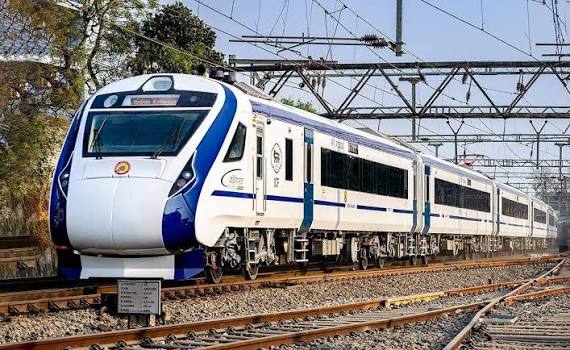
Passengers travelling between Bengaluru and Kerala are facing disruptions on the Vande Bharat service to Ernakulam, with delays affecting journeys during the busy Onam travel period. The disruption highlights the capacity pressures facing one of the key rail links between Karnataka and Kerala, where strong seasonal demand places additional strain on an already busy network.
The Bengaluru–Ernakulam Vande Bharat Express has experienced delays during the Onam travel period, when passenger movement between Bengaluru and Kerala typically increases significantly. The service is an important premium rail option for people travelling between the two regions, particularly during holiday periods. The delays point to a broader challenge for intercity rail: faster trains can shorten journeys only when the wider railway network has sufficient capacity to maintain their schedules. Vande Bharat services share sections of the network with passenger, freight and other express trains, meaning congestion or operational constraints elsewhere can affect punctuality.
For passengers, reliability can matter as much as speed. Delays become particularly consequential during festivals, when travellers often have fixed plans involving onward buses, local trains, accommodation and family gatherings. A service marketed around shorter journey times must therefore be supported by dependable scheduling across the entire route. The Bengaluru–Kerala corridor also carries wider economic importance. Bengaluru is a major employment centre for workers from across southern India, while Kerala generates substantial passenger movement linked to tourism, education, healthcare and employment.
Reliable rail connectivity supports this two-way movement while offering a lower-carbon alternative to some road and air journeys. Rail can play a larger role in sustainable intercity mobility if services are frequent, dependable and competitively priced. Improving punctuality, increasing network capacity and strengthening connections to local public transport can make rail a more practical option for longer journeys. The current disruption also illustrates the importance of planning for predictable seasonal peaks. Holiday demand can create sudden increases in passenger volumes that existing services may struggle to absorb. Additional trains, better timetable coordination and improved crowd-management measures can help reduce pressure during major festivals. There is also a need to consider passenger information. When delays occur, timely updates about revised arrival times and onward connections can help travellers make alternative arrangements and reduce uncertainty. For Bengaluru, stronger rail connectivity with Kerala is part of a wider shift towards regional transport integration. The city’s growing population and economic links with neighbouring states make dependable intercity connections increasingly important.
The immediate priority for railway operators will be restoring punctuality and managing the remaining seasonal demand. Over the longer term, the experience reinforces the need to expand railway capacity alongside new services so that faster trains can deliver the reliability passengers expect. As travel demand between Bengaluru and Kerala continues to grow, strengthening the underlying rail network could provide benefits well beyond the festival season, supporting regional mobility while reducing dependence on more carbon-intensive modes of transport.