


The Bengal government plans to establish a cinema hall in every subdivision and require theatres to reserve at least one prime-time slot for Bengali films, according to assurances given by chief minister Suvendu Adhikari at a meeting with representatives of the film industry on Tuesday.
Saumitra Mohan, principal secretary of the information and cultural affairs department, said the proposed Bengali-film slot would fall between 3pm and 9pm. He also said a committee headed by actor Mithun Chakraborty would examine ways to secure more screening time for Bengali films.
The delegation that met the chief minister at Nabanna included producers Srikant Mohta, Atanu Raychaudhuri, Firdausaul Hasan and Himanshu Dhanuka; filmmakers Shiboprosad Mukherjee, Kaushik Ganguly and Srijit Mukherji; and actor-MLAs Rudranil Ghosh, Papiya Adhikari and Roopa Ganguly. Mithun Chakraborty and actor Prosenjit Chatterjee joined the meeting virtually.
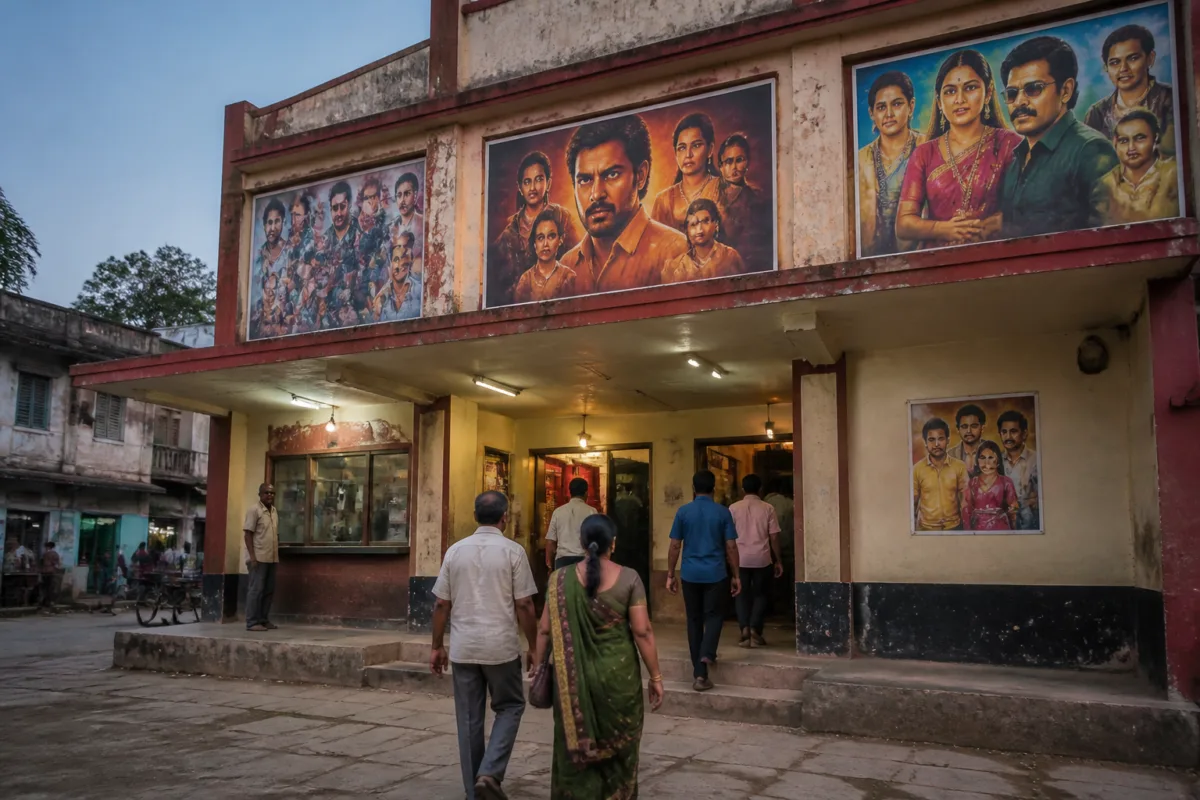
The proposals come as Bengal’s cinema exhibition network has contracted sharply. Industry sources cited in the report estimated that the number of single-screen theatres had fallen from about 800 before the Covid pandemic to fewer than 100. The report did not provide an independently verified theatre count or details of the proposed halls’ financing, locations or construction timelines.
The proposed policy is expected to have its greatest effect on single-screen theatres, while multiplexes with multiple screens may find it easier to accommodate the requirement. Industry representatives have alleged that distributors of large-budget Hindi films sometimes pressure exhibitors to allocate all available slots to one release, leaving fewer opportunities for Bengali films.
Sayantan Ghoshal, director of Sadhak Bamakhyapa, told Metro that the film had been released on Friday but was reportedly due to be removed after about a week to make way for a Bollywood release. The report did not include a response from the distributor or theatre involved.
Ghoshal said the chief minister had promised action against hall owners that failed to screen Bengali films, including possible cancellation of their licences. Kaushik Ganguly welcomed the assurance and linked the expansion of the theatre network to better access for Bengali films.
Exhibitors at the meeting reportedly argued that the government and producers should provide subsidies when a Bengali film performs poorly, saying theatre owners would otherwise bear the losses. One exhibitor was quoted as saying that the business had no objection to screening Bengali films but required protection against weak box-office returns.
The proposal follows an earlier effort to address the issue. In August last year, film-industry figures wrote to the then chief minister alleging discrimination in the allocation of screening slots. A subsequent meeting involving actors, filmmakers, producers, distributors and exhibitors decided that 50 per cent or more of prime-time slots would be allocated to Bengali films, but industry sources said the arrangement was barely implemented.
Papiya Adhikari said government auditoriums in districts would be converted into single-screen theatres. The report did not specify which auditoriums would be considered, how conversions would be funded or when the proposed facilities would open. Those implementation details will determine whether the latest assurances expand cinema access or remain an unenforced exhibition policy.

