


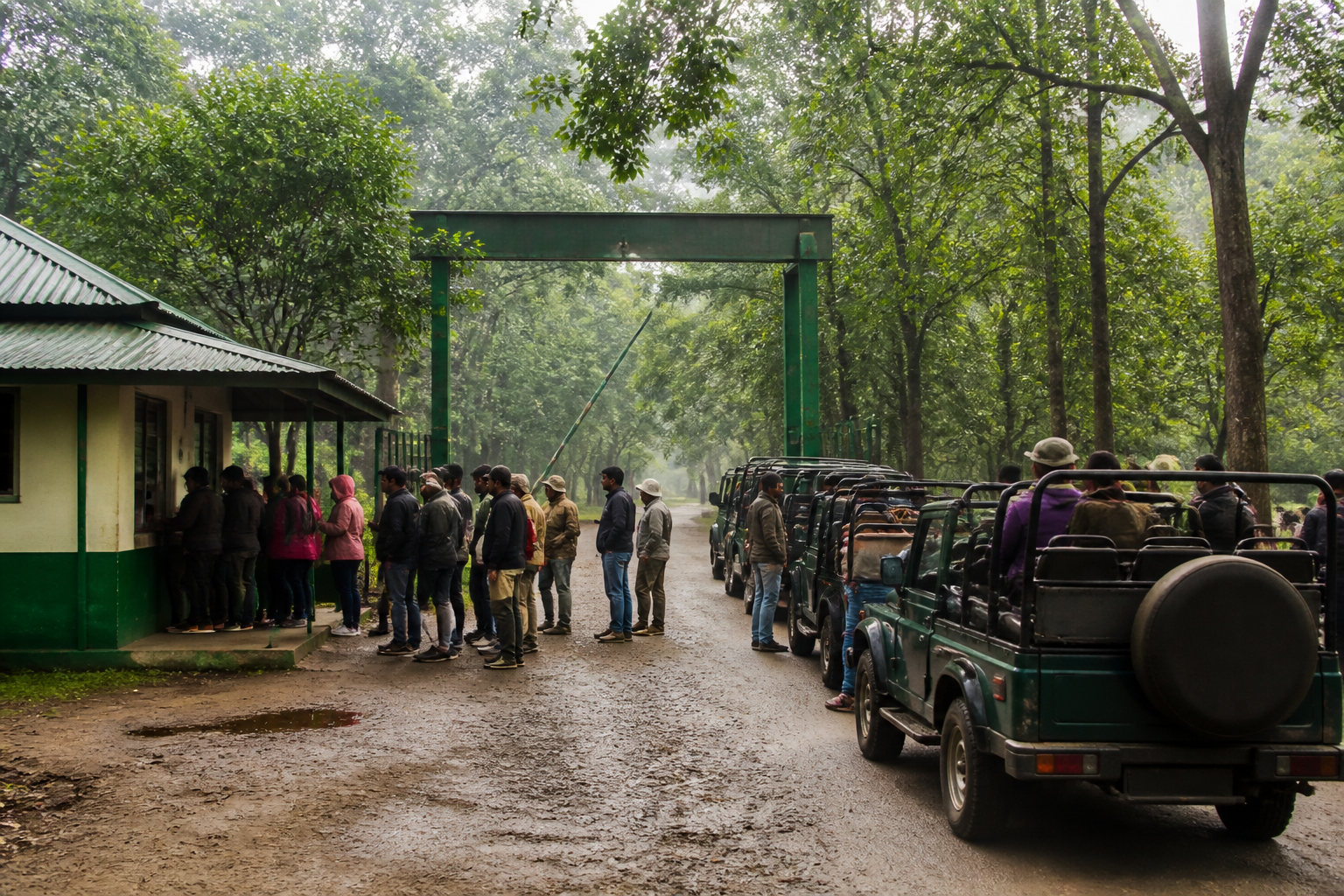
Bengal forest entry fees have resumed at national parks and wildlife sanctuaries across the state, restoring a revenue-sharing mechanism that forest-fringe communities say is essential for local infrastructure and development works. The decision followed the reopening of the protected areas on September 16 after a three-month closure.
Residents living near the forests, particularly members of Joint Forest Management Committees (JFMCs), depend partly on a share of visitor revenue for projects in their villages. JFMC members said around 40 per cent of the forest department’s revenue was allocated to them in previous years.
The money was used for small but essential works, including the construction of culverts, road repairs, installation of deep tube wells and procurement of solar lights for street lighting. According to residents, several of these activities had to be halted after entry-fee collection was stopped in January last year following a directive by former chief minister Mamata Banerjee.
The suspension had drawn criticism from tourism operators and communities located along the forest boundary. Bijoy Sharma, president of the Garo Pampoo Busti Joint Forest Management Committee, said the resumption had brought relief to residents who expect to receive funds again at the end of the year.
“We are very happy that entry fee collection has resumed. At the end of the year, we expect to receive funds as in previous years, except for the period when collection remained suspended. The fund is very useful for us as we can undertake development works with it,” Sharma said.
The scale of the local institutional network is significant. There are 64 JFMCs on the fringes of Buxa Tiger Reserve in Alipurduar, representing around 10,000 people. On the fringes of Jaldapara, 72 JFMCs work with around 20,000 people, according to a source cited in the report.
The restart of collections has also exposed operational pressure at entry points. Tourists have faced long queues to obtain tickets, with many visitors choosing vehicle safaris because elephant safaris at Gorumara and Jaldapara National Parks have limited capacity. Elephant safaris can be booked online, but vehicle safari and forest-entry tickets are not yet available through the same system, according to tourists and industry stakeholders.
“Entry tickets and tickets for vehicles should also be sold online. It would reduce the uncertainty over tickets, and we would no longer have to stand in long queues to collect those at the entry points,” a tourist visiting Jaldapara National Park said.
A resort owner based in Madarihat said industry stakeholders expect announcements on online booking for vehicle safaris and forest entry tickets during chief minister Suvendu Adhikari’s scheduled visit to Alipurduar on September 22 for World Rhino Day. Any changes to the booking system and the revenue-sharing process will determine how quickly tourism activity translates into village-level works.
