


The West Bengal forest department is preparing to destroy nearly 1,000 seized or recovered wildlife body parts at Jaldapara National Park on September 22, an exercise planned to coincide with a World Rhino Day event and intended to reinforce the state’s anti-poaching message.a
The proposed destruction will cover material held by forest and wildlife divisions across North Bengal, including rhinoceros horns and teeth, deer antlers, and deer and leopard skins. The final list has not yet been prepared, and officials are still cataloguing and verifying the items.
The stock has been assembled from anti-smuggling operations and from body parts recovered after wild animals died from various causes. Material held by Jaldapara, Gorumara and Neora Valley national parks, Chapramari Wildlife Sanctuary, Buxa Tiger Reserve, Baikunthapur and Mahananda forest divisions, and the Singalila and Senchal areas is being considered for inclusion.
Chief minister Suvendu Adhikari is scheduled to attend the World Rhino Day programme at Jaldapara. A forest department source said the proposed disposal would be the first large-scale exercise of its kind in North Bengal in nearly 25 years. A similar exercise was conducted during the 2000-01 financial year, when wildlife body parts were burnt in a riverbed area adjoining the Chilapata forest.
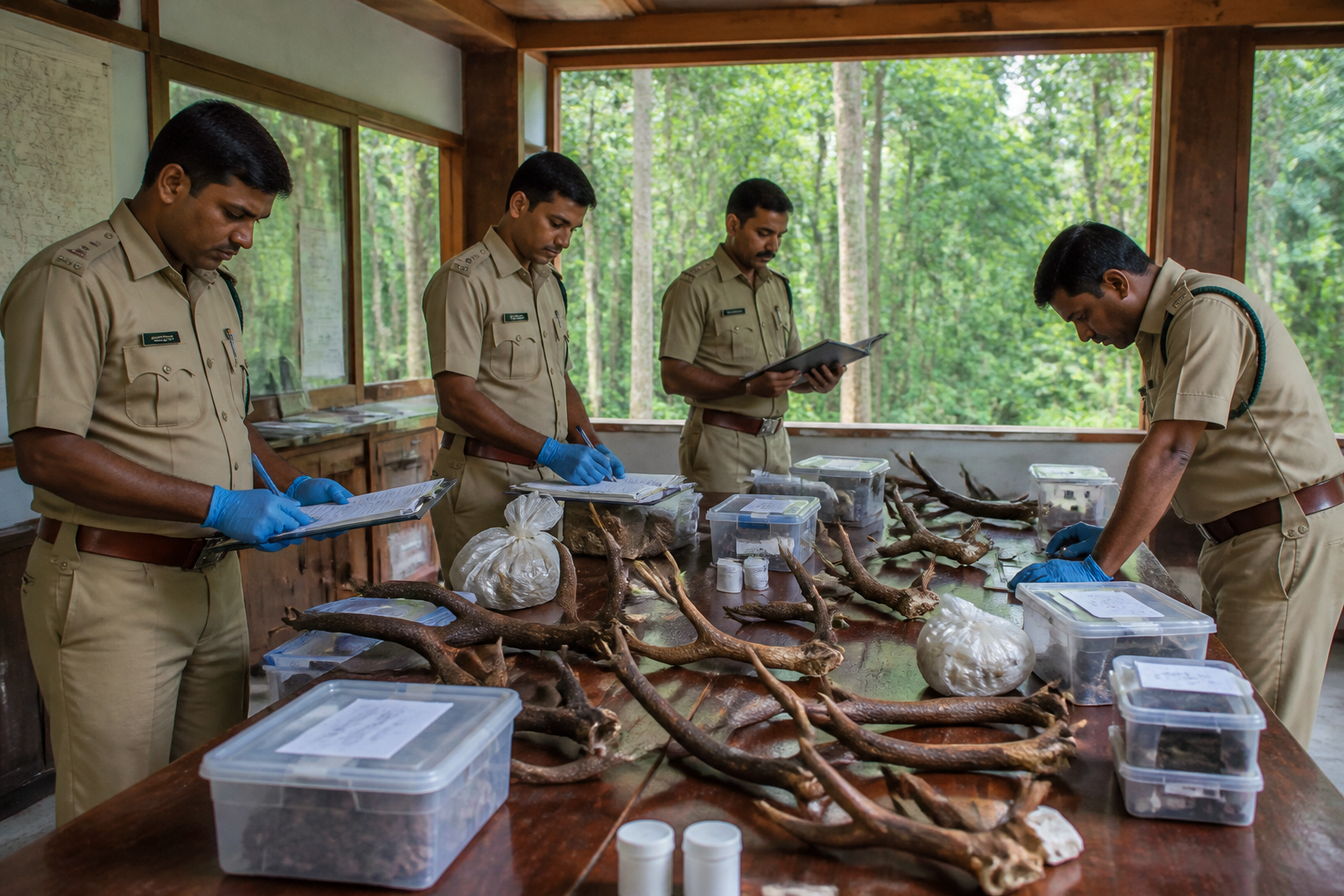
The department’s immediate task is to establish an inventory and verify the origin of each item. Officials from the Gorumara wildlife division recently examined material recovered from Gorumara and Neora Valley national parks and Chapramari Wildlife Sanctuary at the south forest range office. Body parts collected from forests and adjoining areas after the deaths of wild animals are also being recorded.
“Cataloguing of recovered wildlife body parts and those collected from animals that had died is underway. The next steps will be taken after the catalogue is prepared,” Dwijpratim Sen, divisional forest officer of the Gorumara wildlife division, said.
The selected items are expected to be transported to Jaldapara for destruction. The process is intended to send a message against poaching and encourage wildlife conservation, according to a forest department source. The exercise also places emphasis on the chain of custody of seized and recovered material, since officials are documenting where the items came from before finalising the list.
Some exceptionally large elephant tusks in the custody of the Gorumara wildlife division have raised a separate operational concern. According to a forest department source, some measure between four feet and eight-and-a-half feet in length. Their reported weights range from 15kg and 25kg to one tusk estimated at around 38kg.
An official said completely burning the largest tusks could take two to three days and may create logistical and air-pollution concerns in the surrounding area. The department is awaiting instructions from higher authorities on how those items should be handled. The final catalogue and subsequent directions will determine the material transported to Jaldapara and the method used for its disposal.
