


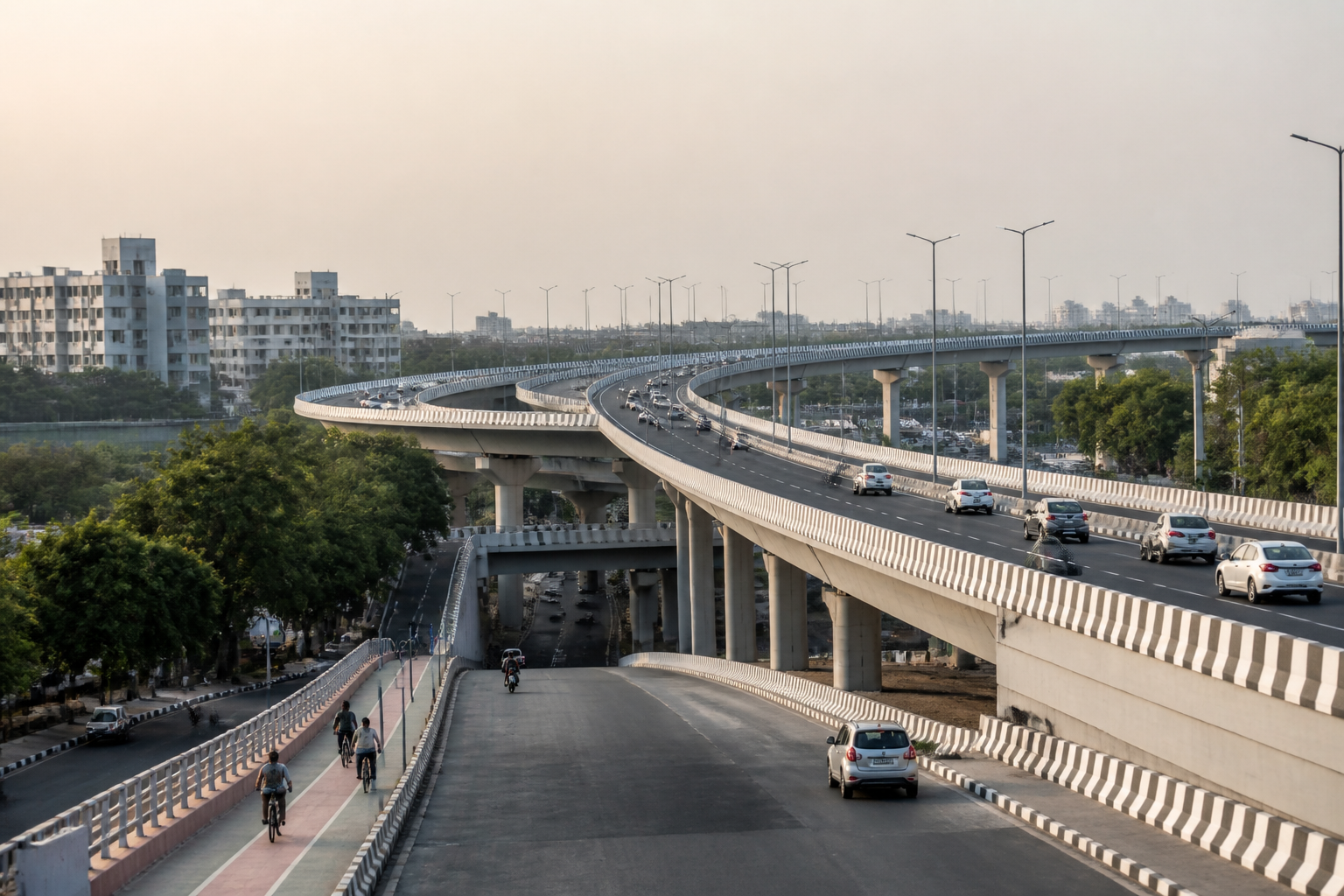
Delhi’s Barapullah Phase III elevated corridor is scheduled to open to traffic on 29 September, creating a 3.5-kilometre, four-lane connection between eastern and southern parts of the city after years of delay and a rise in project costs.
The corridor has been built at an expenditure of Rs 1,635 crore and is designed to provide signal-free movement across a congested part of Delhi. Its opening is expected to give motorists an alternative to routes affected by repeated traffic queues and signal delays. The project’s operational impact will become clearer once regular traffic begins using the new link.
A key feature of Barapullah Phase III is its network of nine loops. These loops are intended to connect vehicles approaching from different directions and distribute traffic across the corridor rather than concentrating movement at one or two junctions. The elevated alignment is expected to improve links for commuters travelling between eastern Delhi and southern Delhi, although the source report does not provide projected traffic volumes or travel-time savings.
The project also includes a dedicated cycle track and footpaths. Their inclusion gives the corridor facilities for cyclists and pedestrians in addition to vehicle lanes. The available report does not specify the length, design standards or access arrangements for these facilities, but their presence indicates that the project was not planned solely as a motor-traffic connection.
Barapullah Phase III was approved in 2014, with completion originally targeted for 2017. The project missed that deadline after difficulties involving land acquisition, environmental clearances and construction. The prolonged implementation period illustrates how urban transport projects can remain incomplete even after administrative approval, particularly when construction depends on multiple permissions and access to land.
The delay was accompanied by a cost increase. The initial estimated budget was Rs 1,261 crore, while the reported expenditure rose to Rs 1,635 crore—an increase of about Rs 375 crore. The figures point to a wider implementation issue in large city infrastructure projects: the financial commitment made at approval can change substantially before the asset becomes operational. The source report does not provide a year-wise account of the increase or identify how much was attributable to each delay or construction-related factor.
Once opened, the corridor will become one of Delhi’s important road connections across the Yamuna and is expected to serve people travelling between the eastern and southern parts of the capital. Its performance will depend on how effectively the nine loops connect with surrounding roads and how traffic is distributed at entry and exit points. The immediate test will be whether the new link reduces congestion on existing routes without shifting queues to its approaches.
Traffic operations are scheduled to begin on 29 September. The project’s actual effect on daily congestion, journey times and the use of its pedestrian and cycling facilities will be assessed after the corridor enters regular service.
