


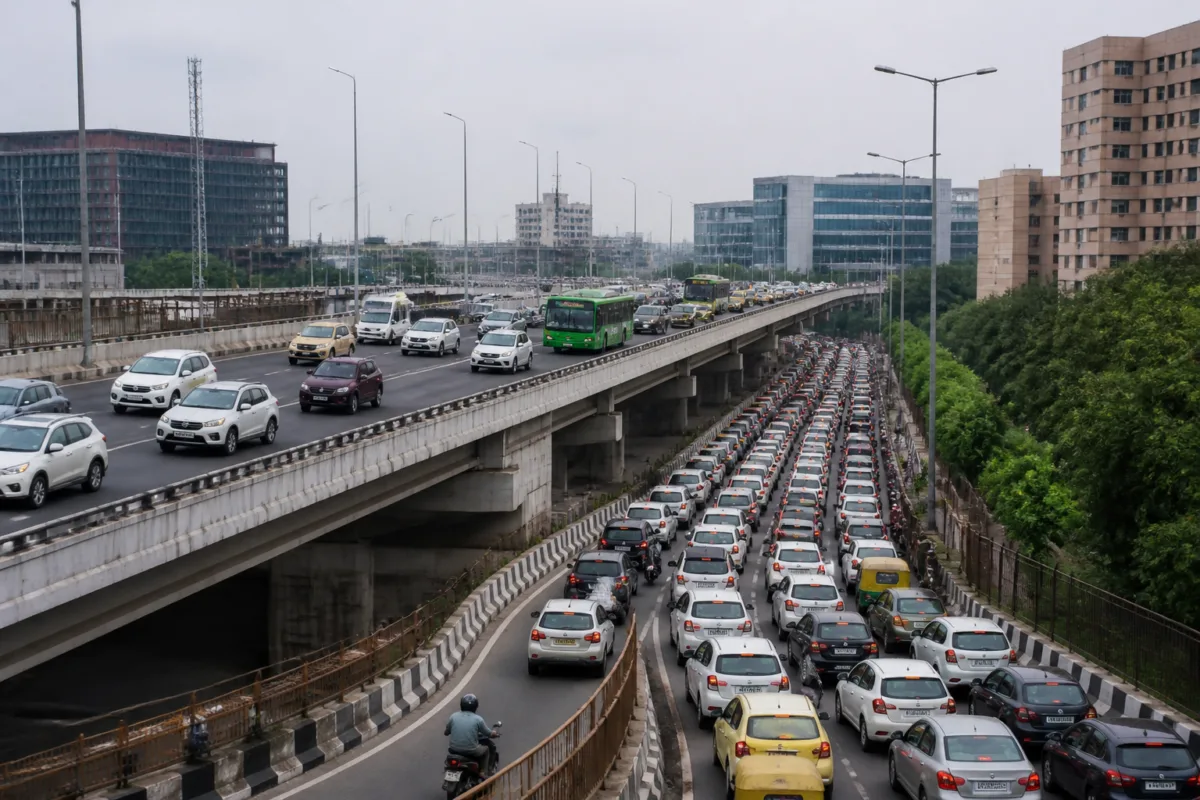
Barapullah flyover traffic has eased between Mayur Vihar and Sarai Kale Khan after Google Maps began displaying live congestion on the AIIMS-bound lane of Barapullah Phase-3, although severe queuing continues near the slip road leading towards AIIMS, according to a report by Jagran.
The updated traffic information is allowing motorists to see congestion near Sarai Kale Khan in real time and choose alternatives such as NH-24 and other connecting routes. The improvement has been reported across the approximately 3.5-kilometre stretch linking eastern and southern Delhi.
Before the map update, Google Maps continued to show the flyover as clear even during peak congestion between 9 am and 1 pm. Drivers therefore reached the corridor expecting an unobstructed journey and became trapped in queues. Vehicles approaching from the Mayur Vihar red light and finding the route blocked would sometimes turn back towards Mayur Vihar, worsening congestion on the approach road.
The traffic problem has not ended across the wider corridor. Motorists travelling towards AIIMS from the DND, Delhi-Mumbai Expressway, Ashram Extension flyover and Maharani Bagh sides are still facing heavy traffic while attempting to enter the slip road near Sarai Kale Khan. Vehicles travelling from Sarai Kale Khan through the Sundial Loop towards Barapullah flyover are also being affected, the report said.
According to the traffic police, vehicles arriving from the Noida Link Road, including the Mayur Vihar side, were being diverted towards NH-24, or the DND route, during congestion on Barapullah Phase-3. The Google Maps update now provides drivers with alternative-route suggestions when traffic builds up, helping reduce the concentration of vehicles on the flyover section between Mayur Vihar and Sarai Kale Khan.
The corridor is part of Barapullah Phase-3 and connects eastern Delhi with southern Delhi. The 3.5-kilometre section was inaugurated on September 29 by Union Home Minister Amit Shah, as reported by Jagran. Its traffic performance has remained a concern, with earlier congestion affecting motorists travelling between Mayur Vihar and AIIMS.
The latest change also highlights the operational importance of accurate digital traffic information on newly opened or altered road corridors. When map services do not reflect actual traffic conditions, drivers can be directed towards roads that are already saturated, increasing pressure on junctions, slip roads and return routes. In this case, the updated live information is helping motorists make route decisions before reaching the worst-affected section.
Traffic management work is also continuing on the corridor. Earlier reports cited by Jagran said that traffic signals were being installed on Barapullah Phase-3, with the stated objective of improving movement between Mayur Vihar and AIIMS. The immediate traffic relief reported on the flyover follows the Google Maps update, while congestion near the AIIMS-bound slip road remains unresolved.

