


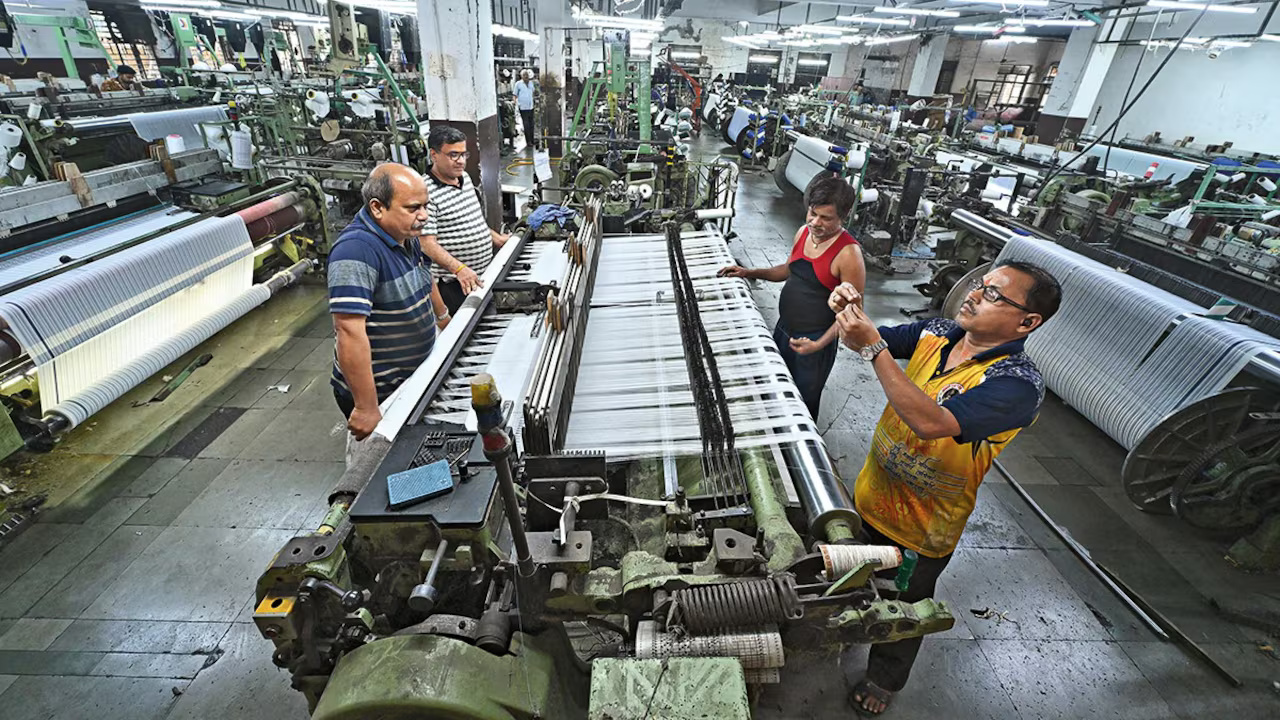
The latest disruption in the apparel supply chain is not beginning in retail stores. It is appearing first on factory floors, where orders are being paused, sewing machines are standing idle and manufacturers are absorbing higher costs that they cannot easily pass on. A Bloomberg report published by Economic Times shows how the conflict in Iran is combining with fragile demand, volatile commodity markets and expensive freight to put pressure on garment-producing hubs across Asia, including India.
At Plummy Fashions on the outskirts of Dhaka, one production hall was operating on orders for women’s black T-shirts destined for Zara stores in Europe while another had remained silent for three months. Managing Director Fazlul Hoque told Bloomberg that one buyer had put polyester orders on hold in the hope that prices would fall. The contrast between the active and dormant sections of the factory captures the uneven way a global supply-chain shock reaches manufacturing centres: production has not stopped everywhere, but purchasing decisions are being delayed and capacity is becoming harder to use.
The immediate pressure is coming from several directions at once. Energy and freight costs have risen, while the prices of the two principal fibres used in clothing—polyester and cotton—have also moved higher. Polyester is derived from fossil fuels, making it sensitive to crude oil markets. Cotton prices have risen amid supply concerns, fertilizer shortages and the possibility that a strong El Niño could affect harvests later in the year, according to the report.
This matters because garment production is not a single industrial process located in one place. A basic item of clothing can pass through multiple countries and dozens of steps, from fibre and yarn production to dyeing, fabric-making, stitching, finishing and transport. Costs can therefore accumulate at every stage. When fuel, chemicals, yarn, freight and labour-related operating expenses rise together, manufacturers have few areas left in which to absorb the increase.
The current shock is also different from a normal shift between raw materials. Polyester and cotton often give brands and manufacturers some ability to substitute one fibre for another. Julian Hügl, a partner at McKinsey & Co., told Bloomberg that both major fibres are facing cost pressure at the same time, removing that usual flexibility. The result is a supply chain with less room to adjust without changing the product, the price or the supplier.
The numbers cited in the report show how quickly the pressure has reached factories. Plummy, which supplies Inditex brands including Zara and Pull&Bear, saw polyester yarn prices rise by as much as 25% within weeks of the war starting. Polyester in China reached a near four-year price peak after crude markets surged. Cotton prices rose to a two-year high as buyers looked for alternatives and supplies tightened, while cotton futures recently reached their highest level since March 2024.
For fabric makers, the increase is spreading beyond fibres. Kettelhack, a German fabric manufacturer whose products largely use a polyester-cotton blend, reported cost increases of between 5% and 8%. Mohit Jain, executive vice chairman of Indian textile producer Indo Count Industries, said during an earnings call that every major input cost had risen, including polyester yarns, cotton yarns, dyes, chemicals, oil and gas.
That broad-based inflation is especially difficult for manufacturers because raw materials already account for a large share of a garment’s cost. Hoque said raw materials represent roughly 60% of the cost of a basic T-shirt, while factory margins generally average only 2% to 3%. With demand still weak, Plummy has been absorbing the additional expenses rather than passing them on. The company’s position illustrates the imbalance between factories and large buyers: manufacturers are dependent on a limited number of customers, while brands can compare suppliers across several countries.
The pressure is visible in India’s export data cited by Bloomberg. India accounts for about 4% of global textile and clothing trade and is one of the world’s largest apparel-sourcing centres. Yet its ready-made garment exports fell 4.5% in July from a year earlier. Shipments were down 10.5% in the first four months of the fiscal year, extending a period of decline for a sector that links export earnings with employment across manufacturing clusters.
Bangladesh faces a different but related disruption. The country exports roughly $800 million of garments annually to the Middle East, but that trade has been almost entirely suspended for now, according to the report. The impact is therefore not limited to the price of imported inputs. Conflict-related disruption can also remove markets, interrupt shipping routes and leave factories with capacity but no immediate orders.
For cities built around manufacturing, these pressures extend beyond individual companies. Apparel clusters depend on a dense network of factories, workers, transport operators, material suppliers, warehouses, exporters and local service businesses. When buyers delay orders or factories operate below capacity, the consequences can move through that network even if no single facility closes permanently. The report does not quantify employment losses, but the dormant production floor at Plummy shows how quickly uncertainty can translate into underused industrial space and reduced work opportunities.
Brands have more options than manufacturers when costs rise. They can negotiate harder with suppliers, change the product, shift sourcing, accept lower margins or increase prices. Swedish clothing brand ASKET chose to raise prices rather than maintain them by sourcing elsewhere or reducing quality. Its co-founder Jakob Dworsky said the company could not absorb sustained cost increases while operating with slim margins.
Other adjustments could be less visible to consumers. Manufacturers and consultants cited in the report said brands may reduce fabric weights, simplify designs, alter material blends or remove product features to offset higher production costs. These changes would allow retailers to protect prices or margins, but they would also demonstrate that supply-chain inflation can affect the physical characteristics of a product, not just its price tag.
Inditex said disruptions in the Middle East had increased transport and input costs and would continue to weigh on gross margins in the second half of the year. The company said it had adapted transportation methods and sourcing while relying on a supply network spread across dozens of countries. Diversification can reduce dependence on one route or supplier, but it cannot eliminate exposure to global commodity prices when the underlying fibres and energy inputs are affected across markets.
The timing of the impact on consumers is another important feature of the apparel supply chain. Brands often place orders as much as a year in advance. This means the cost increase may not appear immediately in shops. Retailers cited in the report expect consumers to feel more of the impact in autumn, while higher costs could reach store shelves more strongly in the following spring and summer. McKinsey’s Hügl estimated that price increases in basic apparel categories could eventually reach 10% to 20%, although the full effect could take up to a year.
That delay makes the industry difficult to read through retail prices alone. A stable price today may reflect an earlier order, an existing inventory position or a supplier absorbing the increase. It does not necessarily mean that the supply chain has stabilised. Manufacturers are instead watching commodity markets, freight routes and consumer spending for signs of whether the pressure will ease or deepen.
The demand side is already weak. Retailers are concerned that higher grocery and energy bills will leave households with less money for discretionary purchases such as clothing. Fritz Grobien, president of the Bremen Cotton Exchange, described the textile value chain as highly dependent on consumer confidence and available cash. At the manufacturing end, Hoque said revenue had fallen and that some consumers could simply postpone buying a shirt and continue wearing what they already own.
This creates a structural squeeze. Factories face higher input costs but have limited bargaining power; brands face pressure on margins but can shift suppliers or modify products; consumers face the possibility of higher prices while household budgets are already constrained. Each part of the chain has a different ability to respond, and the least flexible actors are often the manufacturers that provide the physical capacity on which the system depends.
For India’s textile hubs, the evidence points to a challenge larger than one commodity cycle. Export declines, rising inputs and weak demand are arriving together, while competing production centres are also dealing with disrupted trade routes and uncertain orders. The report does not establish how long the conflict-related disruption will last or whether the additional costs will ultimately be absorbed by factories, brands or consumers. The indicators to monitor are clearer: Indian garment exports, polyester and cotton prices, factory utilisation, freight conditions, retailer margins and the timing of price changes in stores.
The apparel supply chain therefore offers a wider lesson about urban manufacturing economies. Global shocks do not reach cities only through headline events or final retail prices. They travel through industrial floors, supplier contracts, transport routes and household spending decisions. In the current episode, the evidence shows that the system is still operating, but with less flexibility, thinner margins and a growing risk that the cost of keeping production moving will be distributed unevenly across manufacturers, workers, brands and consumers.

