


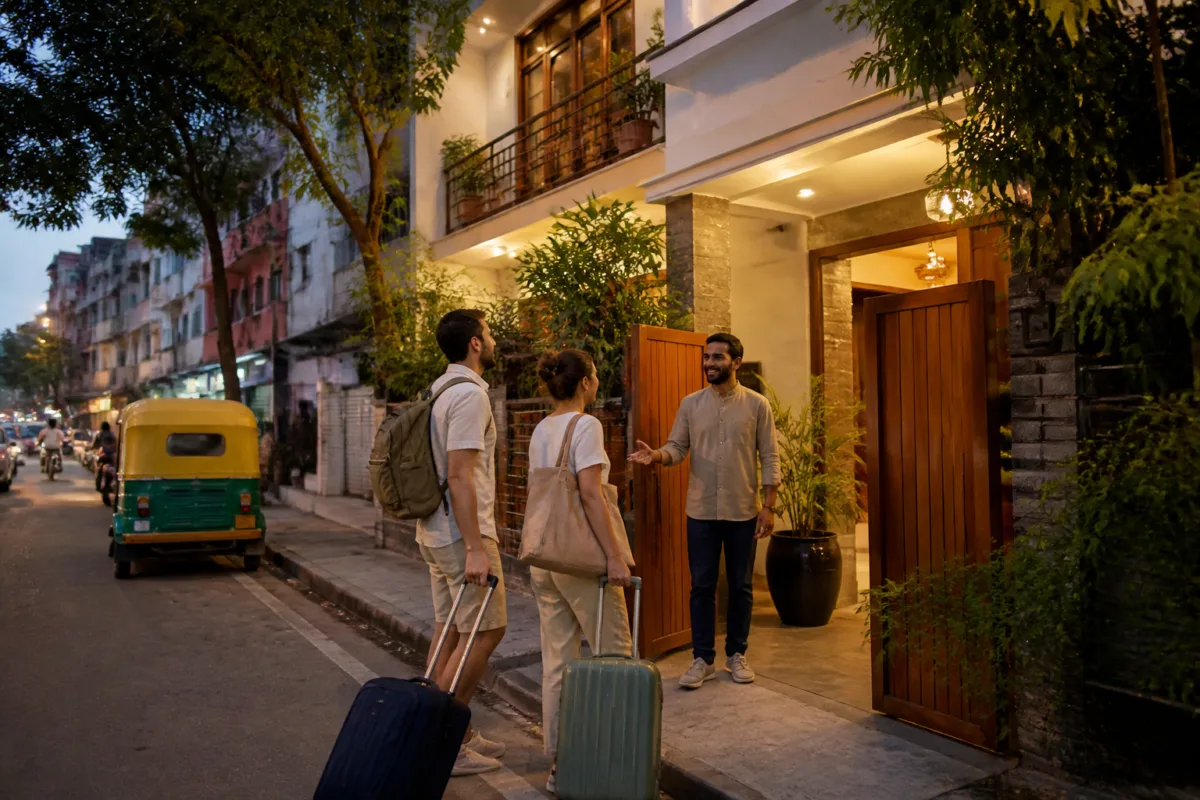
Booking.com’s renewed focus on alternative accommodation in India points to a shift in how travellers use the country’s cities and destinations, but the company’s own comments also show that digital choice cannot substitute for the physical systems that make travel work. The platform is seeking long-term growth through stronger relationships with accommodation providers, deeper inventory across price points and continued investment in technology. At the same time, it identifies international air connectivity, visa processes and last-mile infrastructure as conditions for India to realise its inbound tourism potential.
The significance of this strategy extends beyond the expansion plans of one travel platform. It reflects the growing importance of a fragmented accommodation market in which hotels operate alongside homestays, holiday homes, villas, apartments and guest houses. These properties serve travellers who may be looking for more space, flexibility or a destination-based experience rather than a conventional hotel stay. Their growth also raises questions about how tourism is distributed across urban neighbourhoods, smaller destinations and areas where formal hospitality infrastructure remains limited.
Santosh Kumar, Regional Manager, South Asia at Booking.com, told PTI that the company’s approach is centred on “long-term growth through stronger partner relationships, greater inventory depth and continued investment in technology”. He said Booking.com wanted to support evolving travel needs while helping accommodation partners connect with more travellers. The emphasis places the platform’s partner network at the centre of its India strategy rather than treating accommodation supply as a passive catalogue of rooms.
That distinction matters because alternative accommodation is more dispersed than conventional hotel capacity. A hotel is generally visible as a defined property with established operating systems, while homestays, villas and guest houses can be spread across residential areas, tourist destinations and smaller towns. A platform that aggregates these properties performs a coordination function: it makes dispersed supply searchable, comparable and bookable for consumers, while giving property owners access to demand beyond their immediate markets.
The available evidence suggests that this supply is no longer being treated as a marginal category. Booking.com’s How India Travels 2026: The Homes Edit research, launched with travel advisory and research firm VIDEC Consultants, found that 94 per cent of surveyed travellers had considered alternative accommodation in some form during their most recent leisure trip. The research was based on online questionnaires conducted in June 2026, covering 2,359 consumer responses and 1,131 responses from alternative accommodation property owners and managers.
The 94 per cent figure is a survey finding rather than a measure of bookings or market share. It does not establish how many travellers ultimately selected a non-traditional stay, how frequently they used one or how the category compares with hotels in revenue or room supply. It does, however, indicate that alternative accommodation has entered the consideration stage for a substantial share of the surveyed travellers. That shift in consideration is important for platforms and property owners because visibility during the discovery process is a precondition for conversion into a booking.
Kumar attributed the growing interest to the needs of families, groups and individuals seeking more space, flexibility and immersive destination experiences. These requirements are difficult to serve through a single standardised accommodation model. A family may value shared living space, a group may need multiple bedrooms, and an individual traveller may prioritise a local setting or a different price point. Alternative properties can present those options, although the supplied material does not provide comparative data on quality, regulation, pricing or occupancy.
This is where technology becomes central to the business model. Booking.com’s stated priorities include making it easier for travellers to discover and book stays that meet different needs, preferences and budgets. The platform’s technology is therefore being positioned as an interface between varied consumer demand and a highly differentiated supply base. Search, presentation and booking systems can reduce the difficulty of comparing properties, but the reliability of the outcome depends on the accuracy and completeness of the information available to travellers.
The company’s focus on inventory depth also has an urban dimension. More listings do not simply mean more consumer choice; they can change which places become visible as travel destinations. If properties outside established hotel districts are added to a platform, demand may be distributed across a wider geography. That could connect visitors to neighbourhoods and smaller destinations that lack conventional hotel capacity. The supplied material does not establish whether this redistribution is already occurring in India, but it identifies inventory expansion as a central part of the company’s strategy.
The partner ecosystem is equally significant. Booking.com says it wants to help accommodation partners grow their businesses while giving travellers access to reliable options across destinations and price points. This creates a two-sided operational challenge. The platform must attract and support property owners, while travellers must have enough confidence in the information, availability and quality of the properties listed. The company has described stronger partner relationships and inventory depth as linked priorities, suggesting that supply growth is being pursued alongside the systems needed to present it to consumers.
For cities and destinations, the expansion of alternative accommodation can also expose gaps in institutional coordination. The supplied report does not specify the regulatory framework governing homestays, villas, apartments or guest houses in different parts of India. It also does not provide information on licensing, safety standards, taxation, neighbourhood impacts or enforcement. Those questions cannot be answered from Booking.com’s strategy alone, but the growth of a more distributed accommodation market makes them relevant to local administrations and tourism authorities.
The same applies to infrastructure. Kumar said India’s inbound tourism potential would depend on destination promotion combined with foundational infrastructure. He specifically identified expanded international air connectivity, simplified visa processes and robust last-mile infrastructure as requirements for seamless travel experiences. The statement places accommodation within a wider chain: travellers need to discover a destination, reach it, move through it and access a suitable place to stay.
This chain helps explain why digital platforms cannot independently resolve the constraints facing tourism. A wider inventory may improve the supply of stays, but it does not create airport capacity, road connections, public transport or local access. Similarly, destination marketing may increase awareness without ensuring that visitors can travel efficiently between gateways, attractions and accommodation. Booking.com’s comments therefore connect its commercial priorities to public systems controlled by airports, transport agencies, immigration authorities, local governments and destination managers.
The report’s research design also provides a useful indication of the market’s complexity. It collected responses from both consumers and alternative accommodation property owners and managers. Those are different sides of the tourism system, with different incentives and experiences. Travellers are concerned with choice, price, flexibility and reliability, while property owners are concerned with visibility, demand and business growth. The inclusion of both groups recognises that the sector depends on matching supply and demand rather than simply increasing the number of listings.
Still, the supplied material does not establish whether property owners face common barriers in operating or expanding their businesses. It does not provide data on the number of alternative accommodation units, their geographic distribution, average prices, occupancy rates or contribution to local employment. Nor does it compare these indicators with conventional hotels. As a result, the research supports a conclusion about growing consideration and strategic relevance, but not a complete assessment of the category’s economic scale.
The infrastructure issue is particularly important for smaller destinations and peripheral urban areas. Conventional hotel development often follows established business districts, transport nodes and tourist circuits. Alternative accommodation can appear in places where large-scale hotel investment is less common, but travellers still need dependable connectivity and local services. If access is weak, additional listings may not translate into sustained demand. If demand rises quickly, local authorities may need information about how visitor activity interacts with residential areas and existing services; the supplied report does not indicate whether such monitoring is currently in place.
Booking.com’s India strategy consequently sits at the intersection of platform economics and urban access. Its technology can aggregate dispersed accommodation and make it more legible to travellers. Its partner ecosystem can connect small or independent operators with a wider customer base. But the value of that system is shaped by conditions beyond the platform: the quality of travel connections, the ease of crossing borders, the reliability of local infrastructure and the ability of destinations to manage visitor flows.
The central evidence is clear on two points. First, Booking.com is pursuing long-term growth in India through partnerships, wider inventory and technology. Second, its own representative describes inbound tourism as dependent on infrastructure and easier travel processes as well as marketing. The survey finding that 94 per cent of respondents had considered alternative accommodation suggests that non-traditional stays have become an important part of the consumer conversation, although it does not measure final bookings or market share.
What remains unresolved is how this expanding category will be governed, measured and integrated into the wider urban tourism system. Further evidence would be needed on accommodation supply, regulation, safety, occupancy, pricing, connectivity and local economic effects. For now, the direction of travel is evident: India’s accommodation market is becoming more varied, and the platforms connecting travellers to that variety are increasingly dependent on the infrastructure and institutions beyond their screens.

