


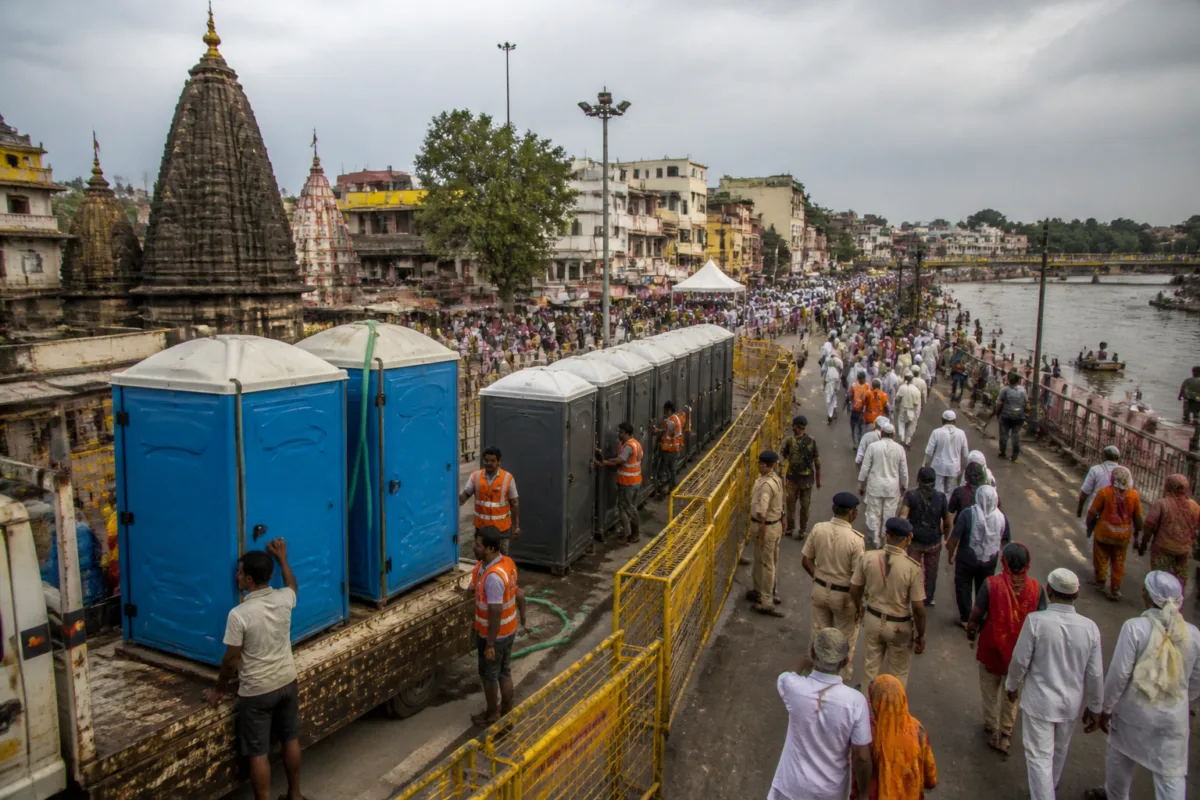
Alandi has prepared a coordinated public-safety and civic-management plan for the annual Kartiki Wari and the Sanjeevan Samadhi celebrations of Sant Dnyaneshwar Maharaj, including nearly 1,000 mobile toilets, 180 CCTV cameras, 400 additional sanitation workers and expanded medical support.
The preparations were reviewed at a coordination meeting held at the Alandi Municipal Council office on November 17 under the chairmanship of Sub-Divisional Officer Anil Daunde. Departments involved in managing the pilgrimage have been instructed to coordinate their work, with all major arrangements to be completed by November 30.
The security plan covers crowded areas around the temple, the darshan queue, major roads and the Indrayani riverfront. Around 180 surveillance cameras will be installed at important locations, with their feeds monitored from the Alandi police station. The administration also plans to deploy 400 barricades, watchtowers and continuous police patrols.
Special police deployment will begin on December 1 to manage crowds and respond to emergencies. Officials have also discussed the availability of National Disaster Response Force personnel and additional fire brigade vehicles. Traffic arrangements will be implemented at seven locations, while a drive to remove roadside encroachments is planned to keep key routes clear.
Medical preparedness includes 10 medical assistance booths across the town and the reservation of 30 beds for pilgrims at the rural hospital. Private hospitals have been asked to keep 40% of their bed capacity available for emergencies. Eleven ambulances, oxygen-supported beds and stocks of essential medicines are also being arranged.
Sanitation will be a central operational challenge during the pilgrimage. The administration plans to install nearly 1,000 mobile toilets and 700 community toilet seats, alongside the deployment of 400 additional cleaning workers. Special cleaning drives will cover the main approach roads, temple surroundings, darshan queue areas and river ghats.
A separate facility for women will operate through the Hirkani room, where around 5,000 sanitary pads will be stocked. Four water-filling points are also planned to provide drinking water access to pilgrims.
Road and pedestrian infrastructure forms another part of the preparations. The civic administration will repair potholes on the Wadgaon, Chakan, Markal and Charholi approach roads. Repairs to river-ghat steps and completion of the catwalk structure in the darshan queue area are also included in the plan.
The administration has separately directed departments to prevent sewage from entering the Indrayani river during the celebrations, particularly around the ghats that will receive large numbers of devotees. The instruction places wastewater control alongside crowd management and sanitation as part of the event’s civic responsibilities.
Officials have been asked to use lessons from previous Kartiki celebrations to improve coordination and maintain essential services throughout the pilgrimage period. The next formal milestone is the November 30 deadline for completing the assigned works, followed by the start of special police deployment on December 1.

