


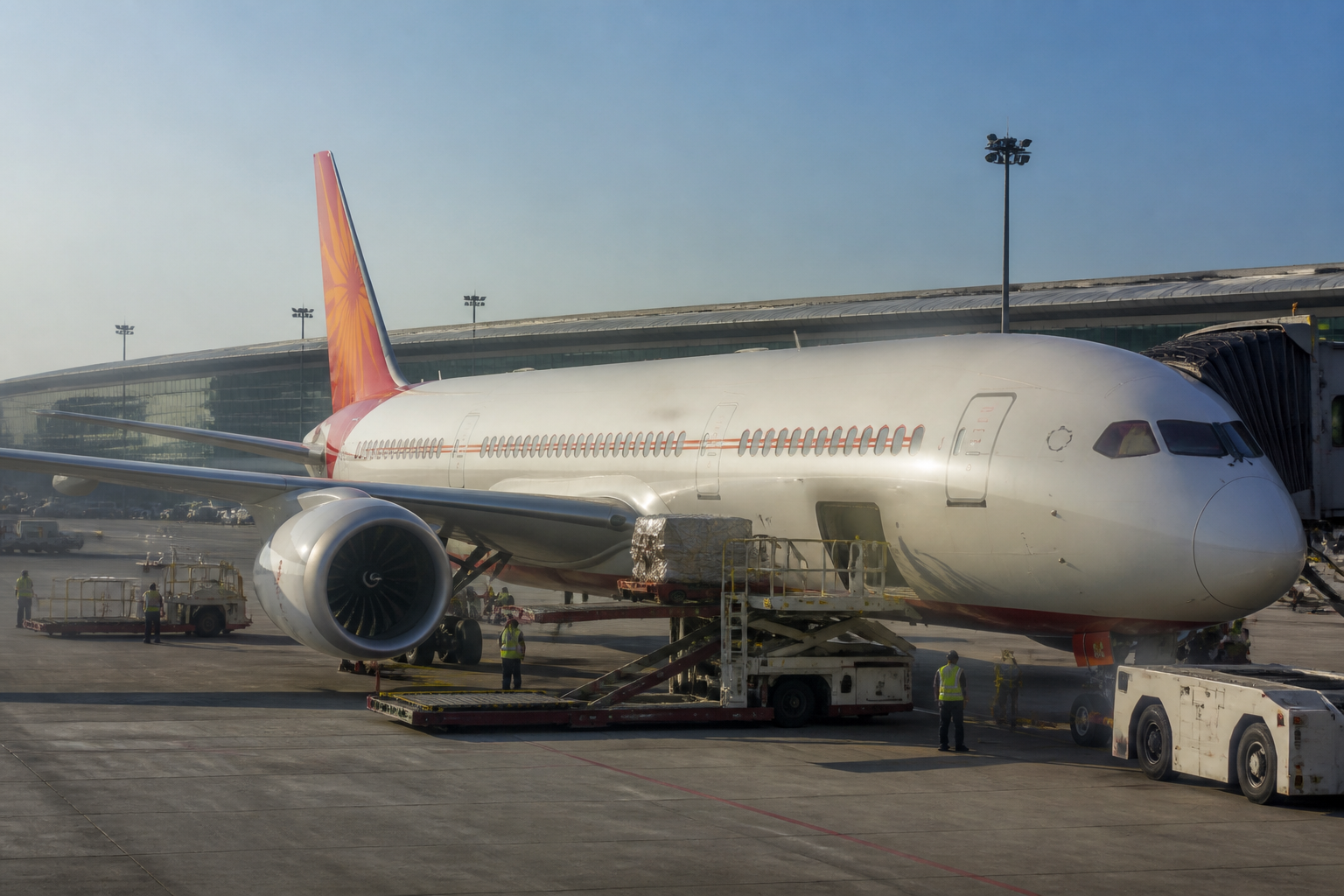
Air India’s new chief executive, Tewolde Gebremariam, takes charge at a moment when the airline’s transformation is entering its most demanding phase. More than four years after the Tata Group regained control of the former state-owned carrier, the group is reporting sharply higher losses, negative operating cash flow and a potential requirement for around $1.5 billion in fresh equity. The immediate leadership change therefore raises a larger question: can Air India finance the long process of rebuilding itself before the benefits of that investment appear in its financial results?
Gebremariam succeeds Campbell Wilson after more than a decade leading Ethiopian Airlines Group. Air India said his experience in airline transformation, operational excellence, safety and profitable expansion were among the reasons for his appointment. At Ethiopian, he oversaw the expansion of the carrier’s fleet, network and aviation infrastructure, as well as the development of businesses in cargo, maintenance and aviation training.
The Indian assignment, however, involves a different combination of financial, operational and institutional challenges. Air India is not only attempting to reduce losses. It is simultaneously renewing its fleet, refurbishing aircraft, upgrading technology and operational systems, expanding its workforce and technical capabilities, integrating businesses and building the capacity required to operate a larger international network.
That sequencing is central to the airline’s predicament. Spending less could slow the transformation and leave Air India dependent on ageing aircraft, legacy systems and inconsistent service. Spending more, meanwhile, increases the amount of capital required before improved reliability, stronger customer experience and network expansion can translate into sustainable earnings and cash generation.
The financial figures show how difficult that balance has become. Air India Group, comprising Air India and Air India Express, reported a combined net loss of Rs 22,238 crore in FY26, more than twice the Rs 10,859 crore loss recorded a year earlier. Group revenue declined to Rs 70,086 crore from Rs 76,754 crore. Operating cash flow moved from a positive Rs 5,447 crore in FY25 to a negative Rs 1,790 crore in FY26, a deterioration of more than Rs 7,200 crore in one year.
The negative operating cash flow represents an average cash burn of nearly Rs 5 crore a day. Other cash-flow activities helped the group end the year with a marginal Rs 119 crore increase in cash and cash equivalents, but that movement does not remove the pressure created by the underlying operations. The proposed equity requirement must cover not only day-to-day losses but also the capital spending needed to create a larger and more modern airline.
The balance sheet reflects the accumulated strain. Air India’s reserves deteriorated to negative Rs 33,147 crore at the end of FY26 from negative Rs 18,070 crore a year earlier. Total liabilities rose to Rs 1,10,452 crore from Rs 94,005 crore. The year was also affected by airspace closures, higher fuel prices amid the West Asia conflict, foreign-exchange fluctuations and the crash of AI171, according to the supplied report.
These factors matter because an airline’s transformation cannot be separated from the external environment in which it operates. Fuel prices, currency movements, airspace access and aircraft availability influence costs and network planning, while safety and reliability requirements impose non-negotiable operational obligations. Even a well-funded restructuring can therefore take longer when supply chains, aircraft deliveries or geopolitical conditions disrupt the plan.
Some elements of Air India’s programme are already visible. Refurbishment of its narrow-body domestic fleet has been completed, while the wide-body refurbishment programme is expected to continue until the end of FY28. The airline has also reported an improvement in customer satisfaction, measured through its Net Promoter Score. Those changes indicate progress on the customer-facing side of the transformation, but they represent only part of the work required.
The larger programme includes hundreds of aircraft pending delivery from Airbus and Boeing. New aircraft can improve reliability, fuel efficiency and the passenger product, but their arrival also creates new operating requirements. Air India will need pilots, cabin crew, engineers, maintenance capacity, training systems and technology capable of supporting the additional fleet. It will also need to deploy that capacity profitably through an expanding domestic and international network.
This is why fleet renewal can increase financial pressure before it improves financial performance. Aircraft have to be financed and operated before the revenue benefits of new routes or additional capacity are fully established. Existing aircraft, meanwhile, still require refurbishment and maintenance. Air India’s wide-body retrofit programme continuing through FY28 illustrates the overlap between maintaining the present network and preparing for future growth.
The airline’s new CEO is consequently inheriting a transformation that involves both a turnaround and a build-out. The first requires reducing operating losses and cash burn. The second requires sustained investment in aircraft, technology, people, training and service standards. The two goals are connected, but their financial effects do not arrive at the same time.
Tata Sons Chairman N Chandrasekaran has cautioned shareholders against expecting a rapid conclusion. In his message to Tata Sons’ FY26 annual report, he described Air India’s transformation as a five- to ten-year journey, given the condition in which the airline was inherited. He also said that every major airline had been built over decades rather than quarters.
That timeframe changes the way the proposed $1.5 billion should be understood. It is not simply a bridge covering a single year of losses. It is part of a multi-year effort to rebuild an airline whose fleet, systems, service processes, technical capabilities and organisational culture all require investment. Whether the amount is sufficient will depend not only on the present cash burn but also on the speed at which operating performance improves and further spending becomes necessary.
The ownership structure adds another layer of scrutiny. Tata Sons and Singapore Airlines are Air India’s two principal shareholders, with SIA holding a 25.1 percent stake following the merger of Vistara with the Indian carrier. In Singapore, Workers’ Party MP Kenneth Tiong raised questions about SIA’s exposure to Air India and whether future financial commitments could have implications for Temasek, SIA’s controlling shareholder.
Singapore’s official responses distinguished SIA’s commercial investment from Singapore government finances. Transport Minister Jeffrey Siow said in Parliament on September 8 that SIA’s investment in Air India had not affected its ability to provide essential air connectivity to Singapore. He said SIA financed investments from its own balance sheet and earnings and had not sought additional capital from shareholders to fund its investments in India.
SIA has separately said that its investments in India are funded through internal resources and that any request for additional capital from Air India would be evaluated by its board against the airline’s business strategy and SIA’s wider capital requirements. Temasek has supported the strategic rationale for the investment while emphasising that decisions are made by the boards and management teams of its portfolio companies.
The responses are important because political scrutiny of the investment is not the same as an indication that either SIA or Temasek intends to withdraw. Temasek has acknowledged that Air India’s transformation involves complex, multi-year operational and integration challenges and that results may not be linear in an industry affected by fleet cycles, airspace disruptions, geopolitical developments and fuel-price volatility.
For shareholders, the central test will be whether each round of capital produces measurable operational progress. A long transformation can be justified when investment is accompanied by improved reliability, stronger customer satisfaction, better fleet utilisation and a gradual reduction in losses and cash burn. Continued funding without visible improvement would invite greater scrutiny over the pace and economics of the restructuring.
The evidence supplied so far confirms the scale of the challenge but does not establish how quickly Air India can reach sustainable profitability. The airline has made progress in narrow-body refurbishment and customer satisfaction, while its wide-body programme, fleet deliveries, systems upgrades and workforce expansion remain ongoing. The next phase under Gebremariam will therefore be judged not by the appointment alone, but by whether the investments already made begin to translate into stronger operating and financial performance.
For Air India, the transformation’s five-to-ten-year horizon is both a planning framework and a financial warning. The airline must continue investing to become more competitive while reducing the cash losses generated by its current operations. The milestones to monitor are the pace of loss reduction, the recovery of operating cash flow, delivery and integration of new aircraft, completion of wide-body refurbishment through FY28 and the extent to which shareholders are asked to provide additional capital.
