


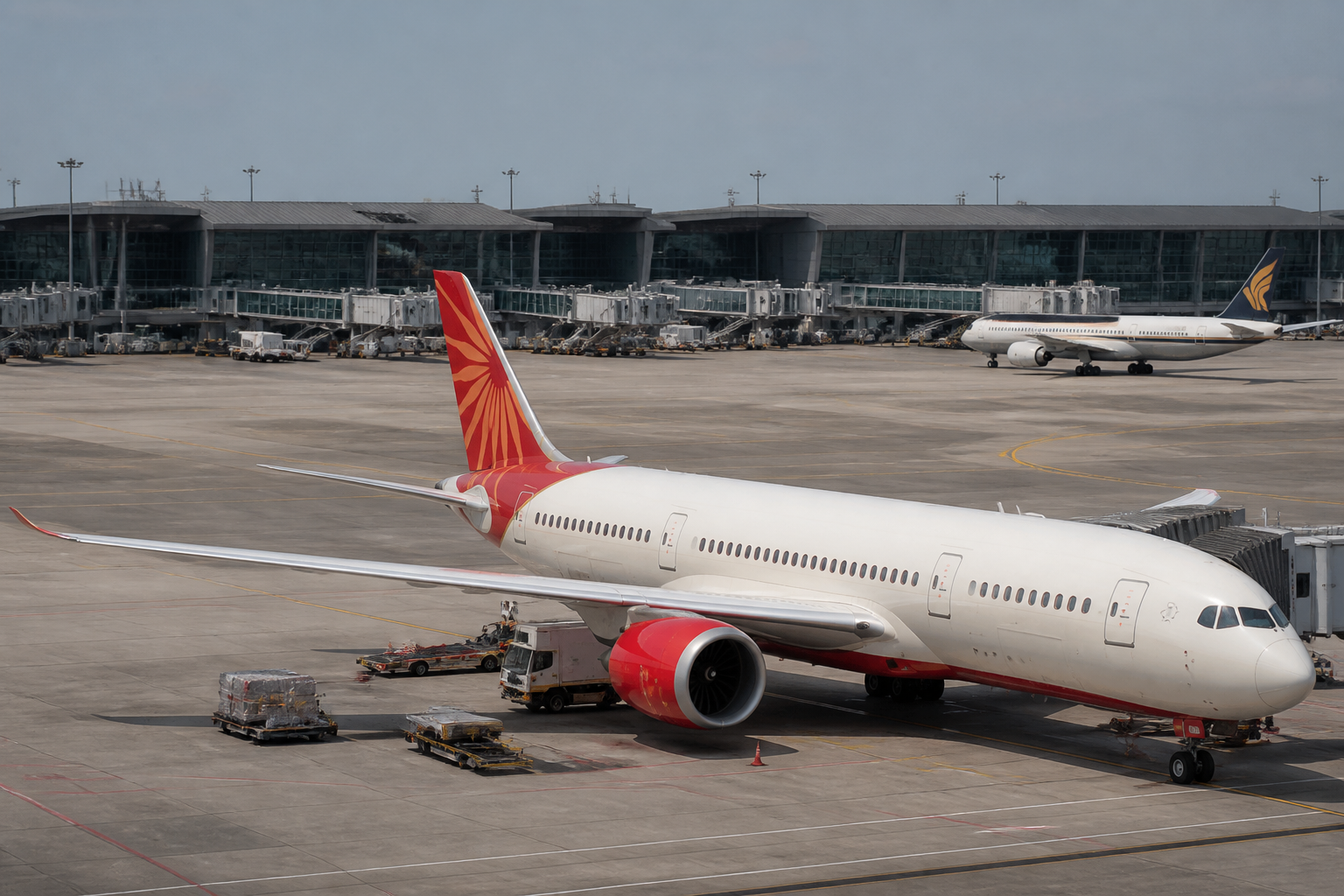
Singapore Airlines has defended its investment in Air India as scrutiny grows over the Indian carrier’s losses, funding needs and long-term turnaround. The defence, delivered in Singapore’s Parliament, is more than a response to a political question: it exposes the strategic logic behind a major cross-border airline investment and the limits of government responsibility when a state-linked company makes a commercial bet.
Singapore Transport Minister Jeffrey Siow said Singapore Airlines needs overseas expansion because the number of people travelling to and from the city-state is inherently limited. The airline, he said, finances its investments from its own balance sheet and has not sought additional capital from shareholders. Singapore Airlines separately said its investments in India have been and will continue to be funded through internal resources, subject to board approval and a disciplined capital allocation framework.
The immediate issue is Singapore Airlines’ 25.1% stake in Air India, acquired after the 2024 merger of Air India and Vistara. The investment was designed to link Singapore Airlines more closely with the Indian market and support a broader international network. It also placed the Singapore carrier inside one of the most complex airline restructuring exercises in the region.
Air India’s owners, Tata Sons and Singapore Airlines, have been seeking to overhaul the airline’s fleet, systems and network after its return to the Tata Group. The process has involved significant losses and operational challenges. Air India has sought about $1.5 billion in fresh equity from its owners, according to a Reuters report cited in the supplied material. The turnaround could take up to a decade, while Singapore Airlines has described it as a complex, multiyear programme that is not expected to proceed in a linear manner.
That combination of strategic opportunity and financial uncertainty explains why the investment has attracted political scrutiny in Singapore. Singapore Airlines is majority-owned by Temasek, the state investment company, although the airline is a listed company and its management decisions are presented as commercial matters. The debate has therefore focused on whether public-linked capital could ultimately be exposed to the cost of Air India’s transformation, and whether that exposure could affect Singapore Airlines’ ability to serve its home market.
Siow told Parliament that the investment’s eventual value would be for Singapore Airlines and its shareholders to assess. He said the current assessment was that the investment had not adversely affected the airline’s ability to serve Singaporeans. He also said that if Singapore Airlines sought additional capital from shareholders, that would be a commercial matter between the company and its shareholders rather than a decision for the government.
The distinction is important because Singapore Airlines’ rationale depends on treating international expansion as necessary to the carrier’s long-term business model. Singapore is a relatively small domestic market, and the airline cannot rely only on passengers travelling to and from the city-state. Overseas investments can provide access to larger markets, additional routes and connecting traffic. The Air India stake is consequently tied to a multi-hub strategy rather than only to the performance of one airline.
Air India gives that strategy access to India’s large aviation market, but the investment also carries the operational burden of rebuilding a legacy carrier. The supplied material identifies fleet, systems and network changes as central parts of the turnaround. Each of those areas requires capital, management capacity and coordination over several years. The merger with Vistara created a larger platform, but it also made the integration and transformation programme more extensive.
The available evidence does not establish whether Air India’s investment will ultimately generate the returns expected by Singapore Airlines. It does establish that the carrier and Singapore’s government view the investment through different but connected lenses. Singapore Airlines presents it as a long-term strategic commitment funded through internal resources and governed by its board. The government’s position is that the company must make responsible decisions, but that the investment itself remains a matter for the airline and its shareholders.
Singapore Senior Minister K Shanmugam has similarly said that Temasek expects Singapore Airlines to make responsible investment decisions, while leaving those decisions to the company. His comments underline the institutional structure behind the debate: Temasek is a major shareholder, but it is not being presented as an operating authority for Singapore Airlines or Air India.
The political scrutiny intensified after Workers’ Party lawmaker Kenneth Tiong questioned whether Temasek funds should be used to support the Indian carrier. He also asked whether Air India’s losses had been assessed against Singapore Airlines’ ability to provide essential transport services and whether possible funding requirements could affect the airline’s obligations as a designated carrier. These questions connect the investment to a broader public issue: the relationship between commercial airline expansion and the provision of essential national connectivity.
That relationship is particularly significant for Singapore Airlines because the company occupies both a commercial and national role. Its network supports Singapore’s position as an international aviation hub, while its financial decisions must still be made within a listed-company framework. The government’s response has been to separate the public interest in reliable air services from the company’s responsibility for investment decisions, at least unless the investment begins to affect the airline’s ability to serve Singaporeans.
The controversy has also produced a secondary governance problem. Shanmugam said police had been asked to examine racist comments that appeared online during the debate, including attacks directed at Temasek’s chief executive and senior management over their ethnicity. That response shows how quickly a discussion about capital allocation and airline strategy can become entangled with identity and public discourse. It does not change the financial questions surrounding Air India, but it has broadened the controversy beyond corporate performance.
For Air India, the immediate challenge remains execution. The owners are attempting a broad transformation while the airline faces losses and operational difficulties. The supplied material does not provide a detailed financial timetable, a final funding structure or specific performance milestones. It therefore cannot establish how much additional capital will be required, how quickly the turnaround will progress or when the investment might deliver returns.
What it does show is that Air India’s restructuring is now linked to the strategic calculations of another major international carrier. Singapore Airlines is not treating the investment as a short-term financial transaction. Its stated rationale rests on access to a larger market, international network expansion and the development of multiple hubs. That logic depends on Air India becoming a more capable and financially sustainable airline over time.
The case therefore raises a central question about cross-border airline partnerships: whether the long-term value of market access and network integration can justify the short-term costs of rebuilding a troubled carrier. Singapore Airlines’ answer is that overseas expansion is necessary and that the investment remains within its internal-resource and capital-allocation framework. The unresolved part is whether Air India’s transformation will produce the operational and financial improvement required to validate that strategy.
For now, the evidence confirms three facts. Singapore Airlines retains its 25.1% stake in Air India; it says current and future India investments will be funded from internal resources, subject to board approval; and Air India’s transformation remains a multiyear process involving significant losses, operational challenges and additional funding needs. The next developments to monitor are the owners’ response to Air India’s financing requirements, the progress of the turnaround and whether the investment begins to affect Singapore Airlines’ financial or public-service obligations.
