


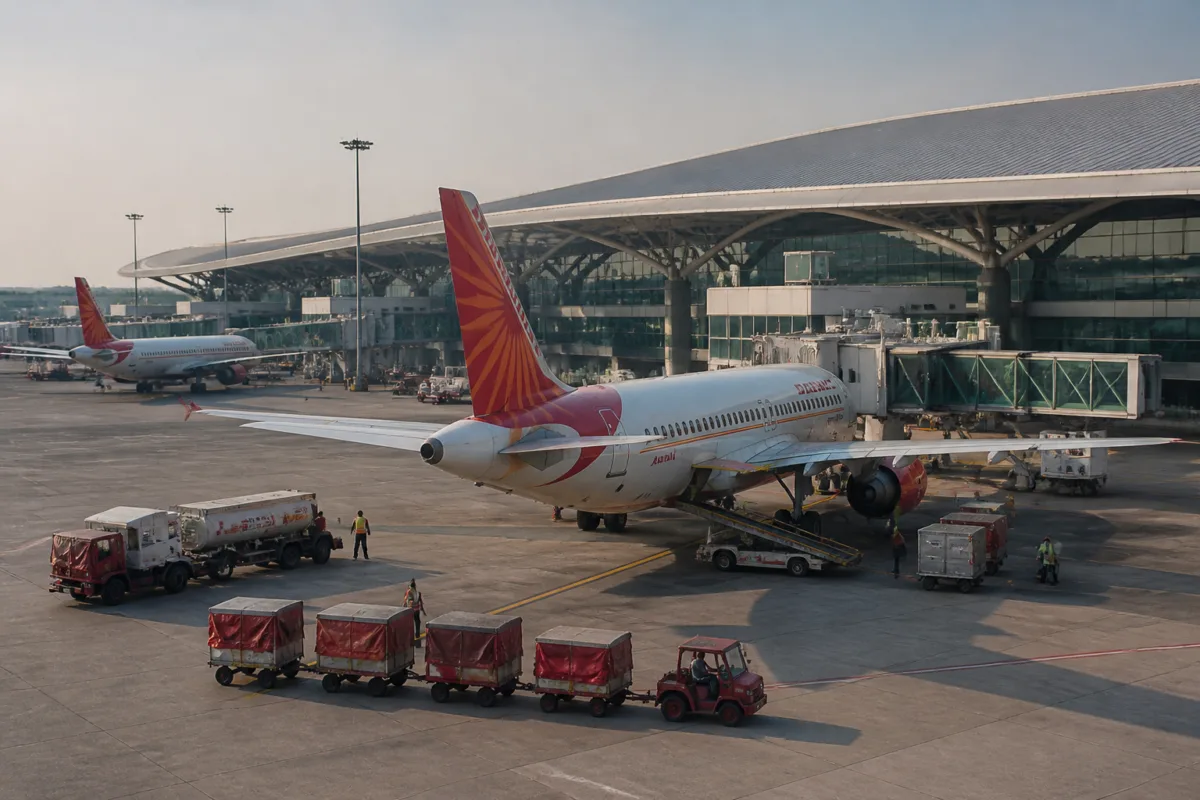
Air India is routing more westbound connecting traffic through Mumbai as it redesigns parts of its network to respond to regional airspace restrictions, while Delhi is expected to support more eastbound connections, according to a report by Moneycontrol citing comments from chief executive and managing director Tewolde Gebremariam.
The network changes form part of a wider effort to improve operational reliability, control costs and restore profitability. Addressing employees at a townhall on Wednesday, Tewolde said the airline had made progress over the previous three months, particularly in on-time performance, while baggage handling and customer service remained areas requiring further work.
The shift in connecting flows is intended to improve efficiency and reduce disruption. Tewolde said Mumbai was less affected by current airspace closures and could therefore handle more westbound traffic. Air India is also evaluating longer-term opportunities to develop multiple hubs across India, including in the south, although no specific locations or timelines were provided.
The airline’s network strategy is being pursued amid higher fuel costs and operational challenges linked to regional airspace restrictions. Tewolde said Air India could not control the external environment but could build an airline capable of remaining resilient during disruptions.
The chief executive also outlined a cost-transformation programme led by senior leaders. The airline has received more than 1,500 suggestions from employees on improving efficiency and reducing expenses. Tewolde said savings would need to come from both major initiatives and routine operational decisions, describing cost discipline as an ongoing organisational requirement rather than a one-time exercise.
Alongside cost reduction, Air India plans to pursue revenue growth through network optimisation, improved products and new business opportunities. Tewolde said October and November had been encouraging, with load factors improving in some areas and yields rising in others. He also said the airline’s overall revenue per available seat kilometre, or RASK, was increasing.
Air India and Air India Express are also being brought closer together under a “One Air India Group” structure. The airlines will continue to operate independently under separate Air Operator Certificates, with customer-facing, operational and regulatory functions remaining led by the respective AOCs. Enabling functions, including finance, human resources, information technology and centres of excellence, will increasingly be managed at group level.
The two carriers will retain different market positions. Air India will continue to focus on full-service aviation, while Air India Express will remain focused on the low-cost carrier segment. The airlines are expected to work together by combining their respective capabilities.
The group’s management structure is being revised as part of the integration. The Air India Management Committee has been recast as the Air India Management Team, with Air India Express chief executive Deepak Rajawat joining the team. Two new group-level roles are also being created: Group Strategy Officer and Chief of Training Academy. The latter role will bring the group’s flying academy, flight training organisations and technical training capabilities under unified leadership.
Tewolde said domestic operations at Air India and Air India Express were consistently recording on-time performance of more than 80 percent. Long-haul international performance had also improved, although it remained an area of focus. Overall Net Promoter Score rose to 38 from 35 a year earlier, while the domestic score increased to 51 from 48.
The airline has also reduced mishandled baggage rates, but transfer baggage and minimum connection time performance still require improvement. These factors will be important as Mumbai and Delhi handle more specialised connecting flows, particularly when passengers transfer between domestic and international services.
Tewolde said geopolitical tensions, airspace closures and elevated fuel costs continued to challenge the industry. He nevertheless pointed to India’s expanding aviation market and geographic position as opportunities for Air India to develop as a global hub carrier. The network changes and group integration will now need to translate into consistent reliability for passengers across flights, transfers and baggage handling.

