


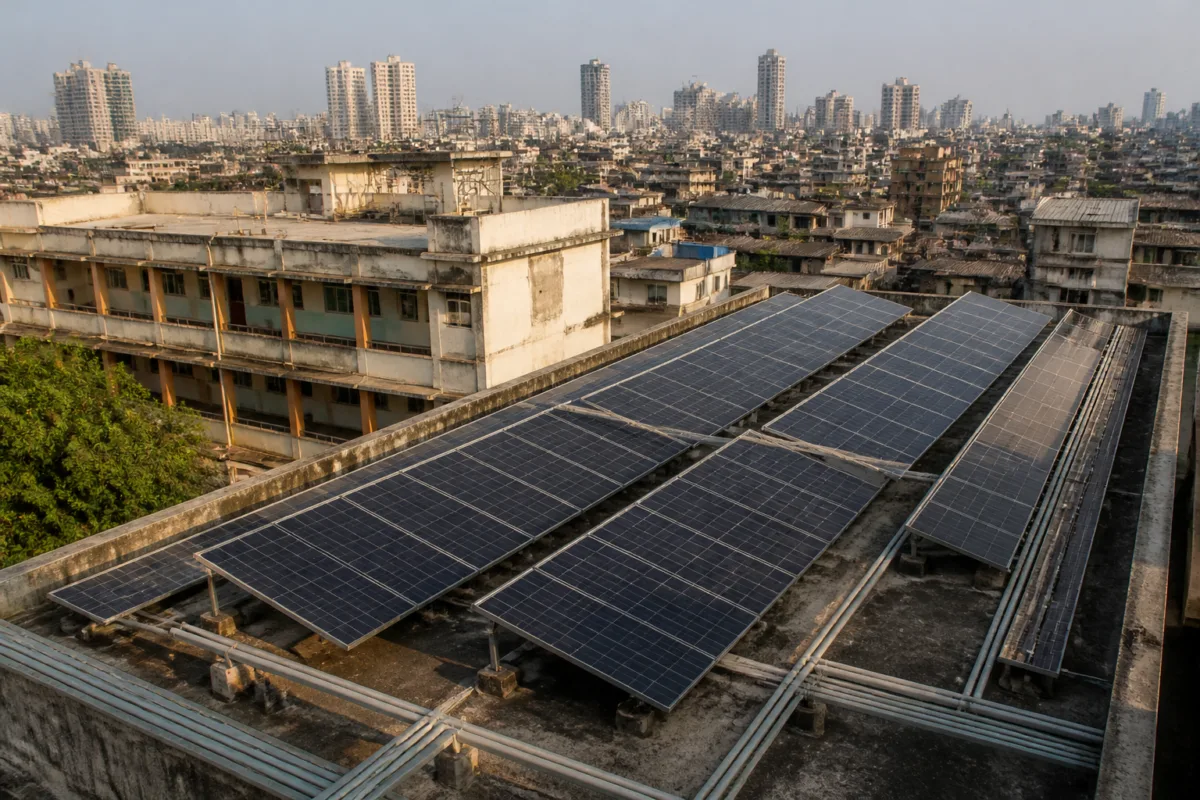
Solar installations at eight Brihanmumbai Municipal Corporation properties in Mumbai’s G-South ward reduced the properties’ combined electricity bills by 47.73 per cent between May and June 2026, according to a report by the Free Press Journal. The reported saving was ₹1.10 lakh in a single month.
The combined bill fell from ₹2,32,046 in May to ₹1,21,288 in June. Electricity consumption across the properties also declined from 23,701 units to 11,318 units, a reduction of 12,383 units during the same period.
The installations comprise 12-kW on-grid solar power systems at civic properties including Worli Crematorium, BMC schools and other municipal office buildings. Swapnaja Kshirsagar, assistant municipal commissioner of G-South ward, said the systems were intended to reduce electricity expenses, improve energy efficiency and lower the environmental impact associated with conventional power consumption.
The reported results indicate how rooftop solar can be used across different types of municipal buildings rather than being limited to large administrative facilities. Schools, offices and public service sites have regular electricity demand, making them potential locations for reducing the civic body’s reliance on grid power. Lower operating costs could also support more predictable spending on municipal facilities, although the report does not provide the installation cost, financing details or expected payback period.
The May-to-June comparison is an early performance indicator rather than evidence of long-term savings. Electricity use can vary between months because of weather, occupancy, operating hours and equipment demand. The available figures also do not specify how much electricity was generated by the solar systems, how much was consumed on site or whether excess power was exported to the grid.
The G-South ward plans to monitor the installations and explore expanding solar projects to other civic properties. Regular tracking of generation, consumption, maintenance requirements and financial savings will be important if the municipal corporation is to assess whether the model can be scaled across its wider property portfolio.
For residents, the immediate impact is indirect: the installations are located on public buildings, so the reported benefit is primarily a reduction in municipal operating costs and energy use rather than a change to household electricity bills. The longer-term public value will depend on whether the savings continue across different seasons and whether future projects publish comparable performance and cost data.

