


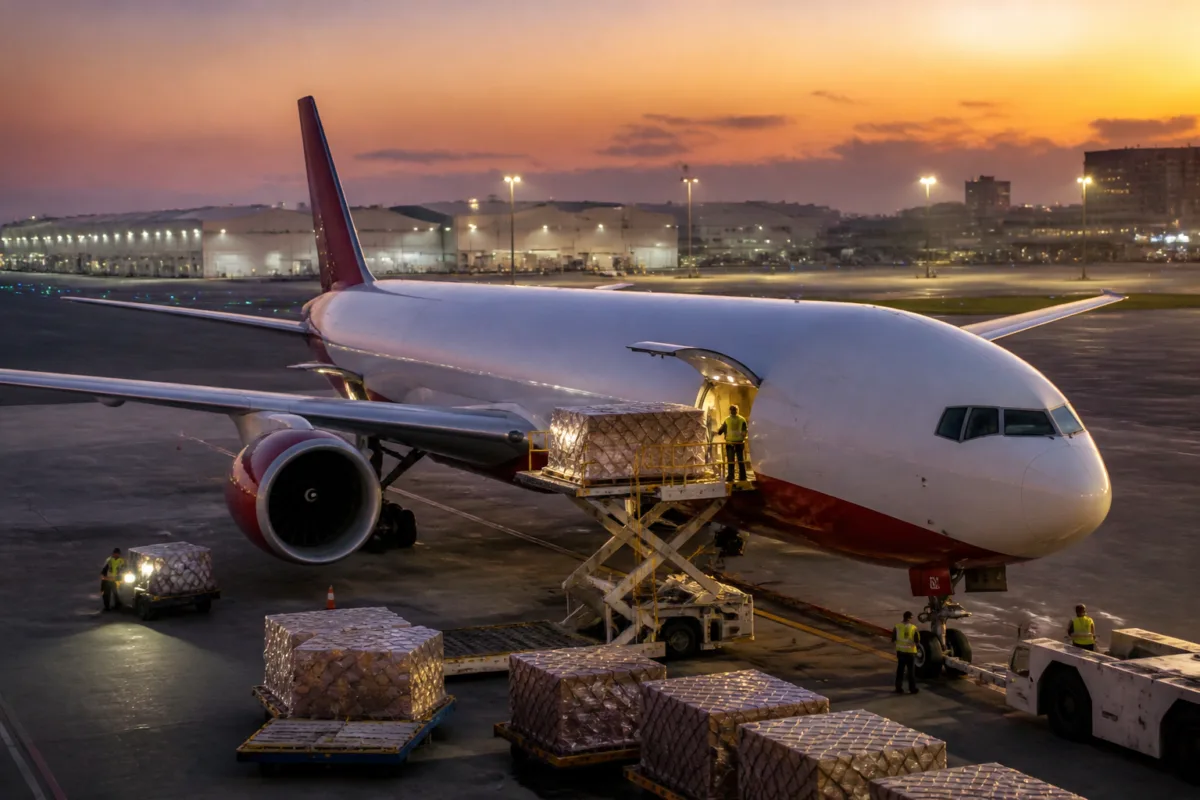
Air India Group is considering a dedicated freighter business as it seeks to expand beyond cargo carried in the lower-deck holds of passenger aircraft and capture a larger share of India’s growing air-freight market, according to Economic Times.
Chief executive Tewolde Gebremariam told employees that the group was exploring opportunities in the segment. The proposal would allow Air India to operate aircraft configured to carry goods on the main deck, potentially serving larger-volume or specialised shipments that cannot be handled as efficiently through passenger aircraft.
No decision on the fleet, investment, operating model or launch timeline has been reported. The group would need to determine whether to acquire new freighters, convert existing passenger aircraft or use leased capacity. It would also have to build the associated ground-handling, sales, logistics and network capabilities.
The consideration comes as Air India works through a difficult financial turnaround. Its consolidated net loss more than doubled to Rs 22,238.23 crore in FY26 from Rs 10,858.83 crore a year earlier, while revenue fell to Rs 71,869.94 crore from Rs 78,635.61 crore, according to the figures reported by Economic Times. Expenses rose to Rs 93,733.31 crore. Passenger numbers declined to 36 million from 43.8 million, and the passenger load factor fell from 85% to 81%.
The group is targeting Rs 6,000 crore in savings as its new chief executive focuses on profitability, cost control and operational discipline. A freighter operation could provide another revenue stream, but it would also add aircraft, fuel, maintenance, crew and airport-handling costs to a business already under pressure to improve returns.
The market case is supported by the expansion of India’s air-cargo traffic. Provisional Directorate General of Civil Aviation data cited in the report showed domestic scheduled airline cargo rising 24% to about 978,000 tonnes in FY26. International cargo increased 20.6% to 2.13 million tonnes, taking the combined volume to approximately 3.11 million tonnes.
Demand is being supported by e-commerce, pharmaceuticals, electronics, manufacturing, perishables and other time-sensitive exports. Foreign airlines continue to carry a substantial share of freight moving into and out of India, leaving potential room for domestic carriers to expand their international cargo presence.
Dedicated freighters differ from passenger aircraft because they can carry cargo on the main deck and be scheduled around freight demand rather than passenger timetables. That flexibility could support higher-volume movements and more predictable cargo connections, provided the operator can secure sufficient loads and maintain high aircraft utilisation.
Indian carriers have already begun developing this market. Economic Times reported that IndiGo combines belly-hold capacity with dedicated freighters and transported 438,147 tonnes of cargo in calendar 2025, an 11% increase from the previous year. Internationally, Emirates Sky Cargo operated 13 Boeing 777 freighters at the end of FY26 and moved 2.4 million tonnes during the year, generating revenue of 16.2 billion dirhams, according to the report.
For Air India, the central challenge would be creating an integrated cargo network rather than simply adding aircraft. That would involve linking airport handling, freight sales, customs-related processes, logistics partners and international routes. The group would also need to assess how a freighter network could complement its passenger hubs and existing overseas connections.
The proposal therefore represents a strategic option, not a confirmed expansion. Its commercial viability will depend on cargo volumes, route economics, aircraft utilisation and the capital required to establish the operation. Until Air India discloses a fleet plan and investment framework, the possible freighter business remains part of the group’s broader effort to diversify revenue while managing the costs of its turnaround.

