


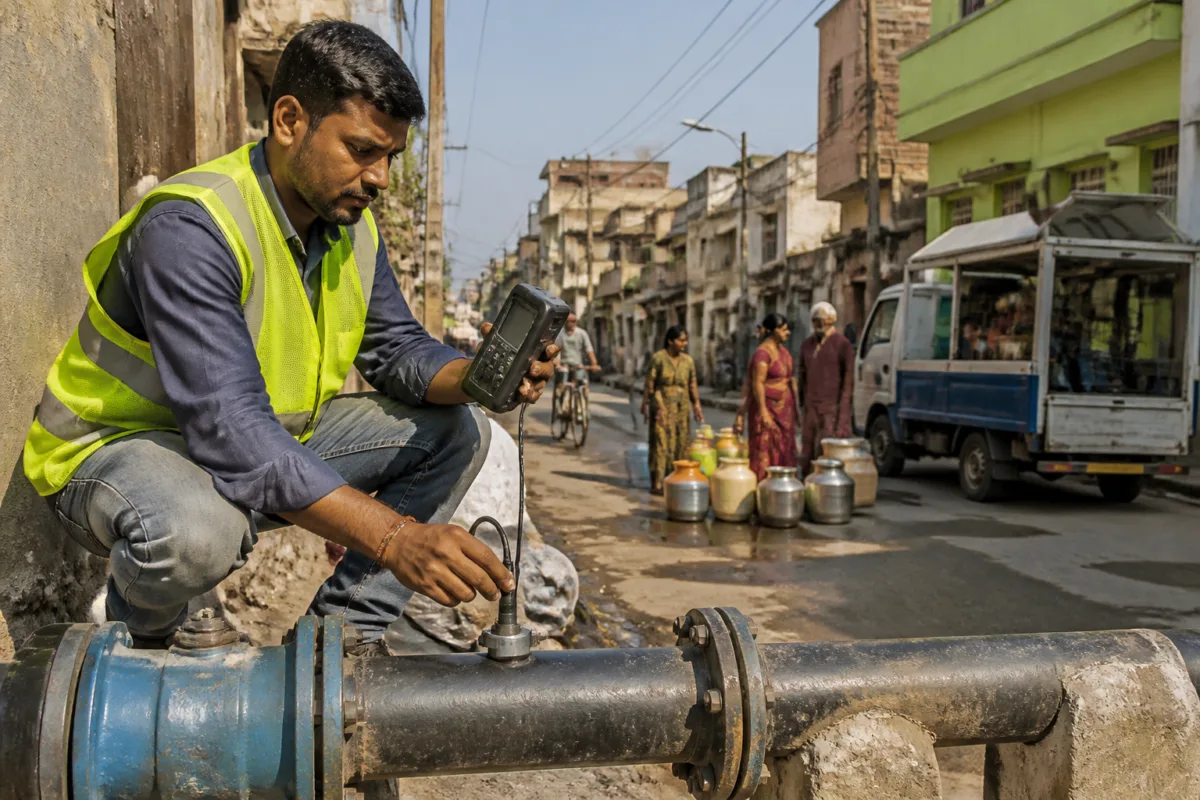
Ahmedabad’s water supply system has come under fresh scrutiny after municipal councillors raised complaints of inadequate quantity, low pressure and polluted drinking water in different parts of the city during a standing committee meeting on October 23. The committee chair has directed the engineering department to check water flow with flow meters wherever complaints are received.
Standing committee chair Kamleshbhai Patel said most parts of Ahmedabad receive treated Narmada water, but councillors continue to receive complaints that supply is either insufficient or delivered at low pressure. Complaints of polluted water reaching households were also raised before the committee, according to a report by Nav Gujarat Samay.
The direction comes as the Ahmedabad Municipal Corporation strengthens its response to water-related complaints received from residents, legislators and elected representatives. An unnamed additional city engineer told the publication that the municipal commissioner had introduced a new process two or three days before the committee meeting to address such complaints.
Under the process, complaints registered through the civic body’s CCRS system are being prioritised. Teams from the water project department, water operations department and the relevant zonal and ward engineering offices are expected to visit the complainant’s home early in the morning, following the commissioner’s instructions.
The municipal engineering department has identified several possible causes for uneven supply and water-quality complaints. According to officials quoted in the report, the use of motors to draw water is a major factor in some cases. Engineers said that unauthorised or excessive suction through motors can affect the availability of water to other households and may also contribute to pollution entering drinking-water lines.
Old and deteriorated pipelines in housing societies and informal settlements are another reported concern. Leakage from ageing lines can create conditions in which polluted water enters the network, particularly where supply lines are damaged or exposed. Unauthorised connections were also cited as a separate problem requiring action by the engineering teams in the relevant zones and wards.
The complaints highlight the difference between bulk-water availability and reliable household-level delivery. The civic administration has said that sufficient Narmada water is available for Ahmedabad and that much of the city’s supply is treated before distribution. However, the complaints raised at the standing committee indicate that the last-mile network, local pressure conditions, pipeline quality and household-level pumping practices can determine whether residents actually receive safe water in adequate quantity.
The flow-meter checks ordered by the committee are intended to establish whether complaints are linked to low pressure, local distribution failures or other network conditions. The municipal commissioner’s complaint-response process will also require coordination between the central water departments and zonal and ward engineering officials.
The civic engineering department is responsible for investigating and addressing the reported causes in the affected areas. Further action will depend on the results of site inspections and flow measurements conducted after residents register complaints through the municipal system.

