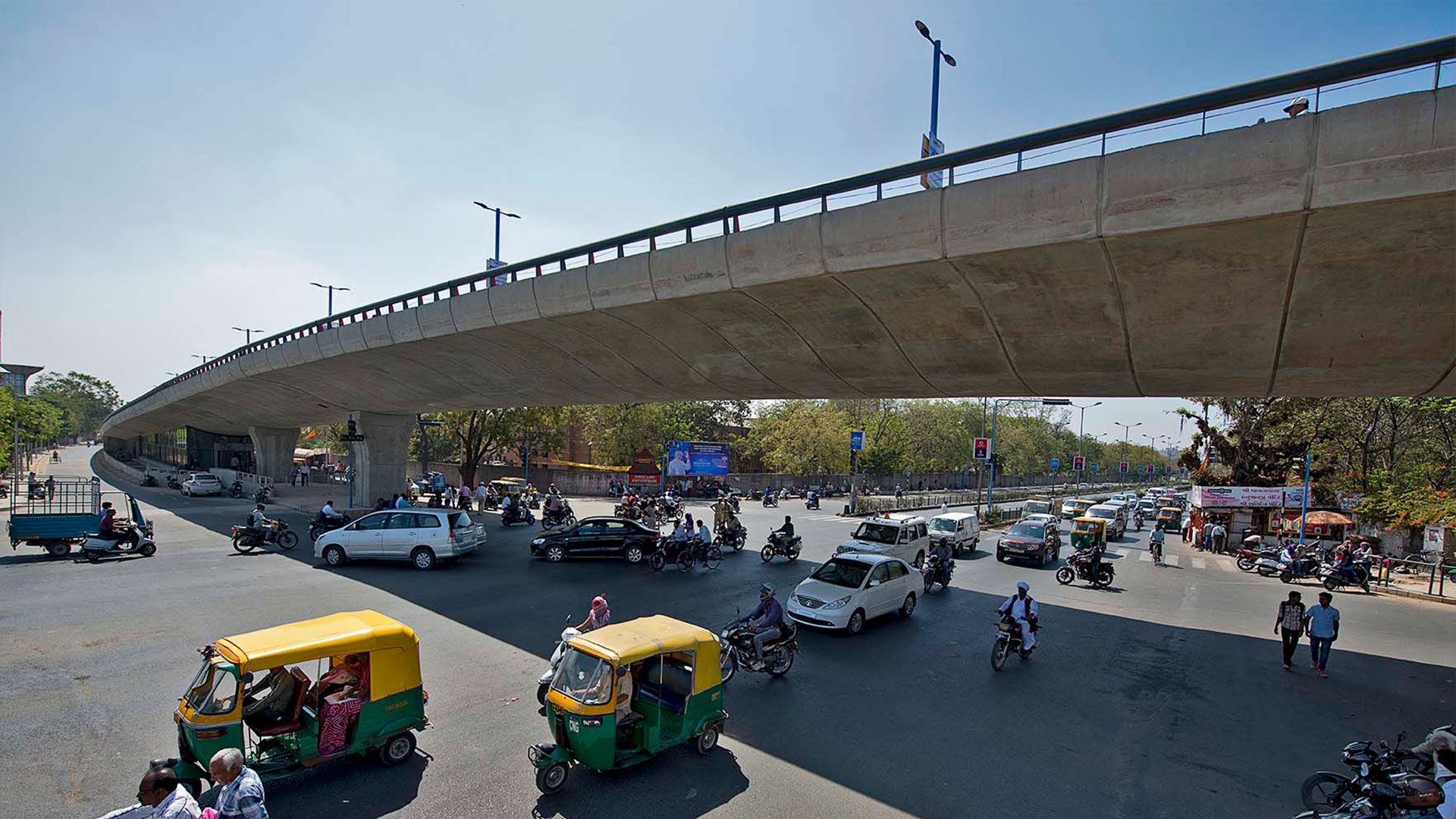
Ahmedabad Vadaj Flyover Could Reshape West Traffic
Ahmedabad’s Vadaj Junction is moving closer to a major traffic redesign as the long-delayed flyover project enters its final construction phase. The four-lane structure is intended to separate through-traffic from junction movements and improve connections between Ashram Road, Ranip and Gandhi Ashram. Its impact will extend beyond shorter journeys, potentially influencing how western Ahmedabad handles future growth and development.
The Vadaj flyover was originally approved as part of a wider junction improvement project involving a flyover and an underpass. The civic project was estimated at about ₹106.52 crore at the approval stage, while subsequent reporting has put the project cost at around ₹107.86 crore. The original schedule has also slipped, underlining the difficulty of building major infrastructure while keeping one of Ahmedabad’s busy corridors operational. The main elevated corridor is around 735 metres long and is designed to carry traffic towards Ranip. A separate connection towards Gandhi Ashram is also part of the current construction works. In July, the Ahmedabad Municipal Corporation was undertaking girder-launching work for a 41-metre span on the Gandhi Ashram side, with construction being carried out at night to limit disruption to daytime traffic.
The scale of the intervention reflects the importance of Vadaj Junction to daily mobility. Earlier project estimates indicated that the improvement could benefit roughly 1.75 lakh commuters, while more recent reports have placed daily traffic affected by the corridor at around 1.5 lakh vehicles. Such volumes make the junction a significant test of Ahmedabad’s ability to expand road capacity without simply transferring congestion to neighbouring intersections. For residents, the real measure of success will therefore be what happens at street level. Faster vehicle movement will have limited value if pedestrian crossings, bus access, junction safety and last-mile connectivity remain weak.
Urban planners increasingly stress that flyovers work best when integrated with the wider transport network rather than treated as standalone traffic solutions. The Vadaj flyover could eventually reduce delays along an important western Ahmedabad corridor, but its longer-term value will depend on how surrounding roads, public transport and pedestrian infrastructure evolve alongside it. The project also highlights the need for better delivery timelines and coordinated urban planning as Ahmedabad continues to expand.