


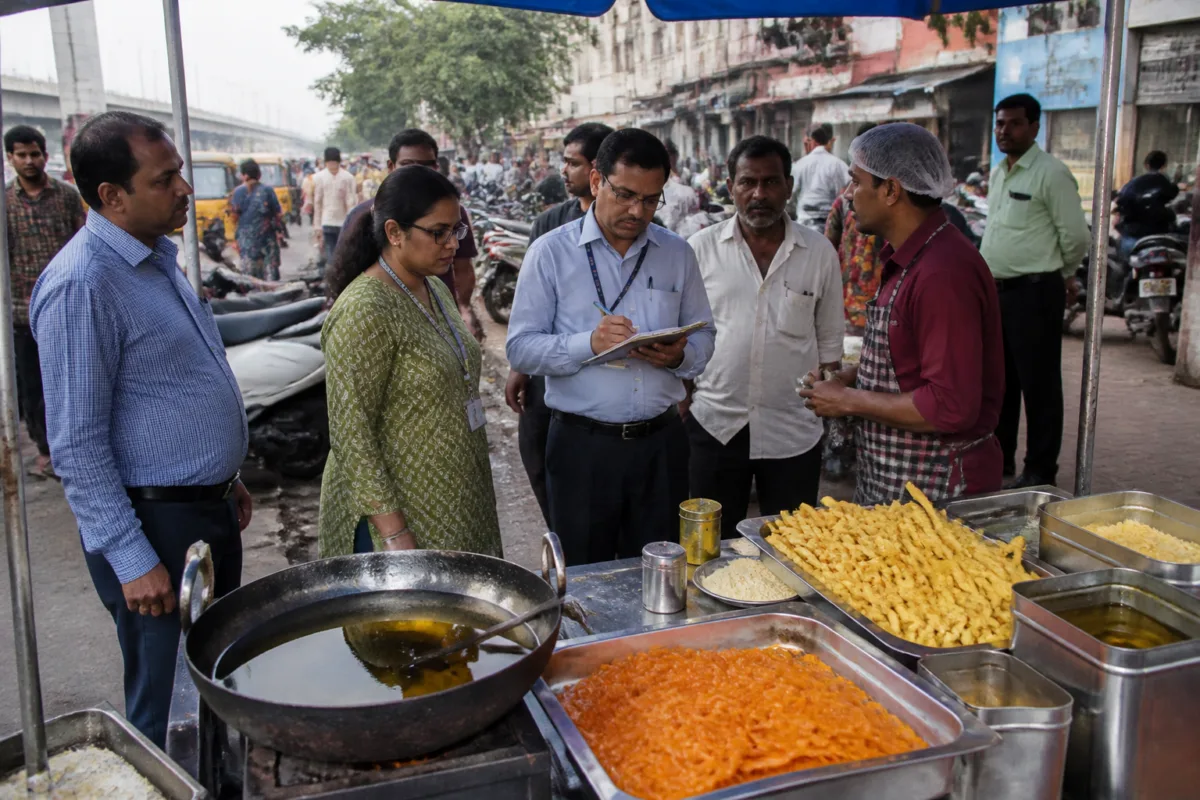
The Ahmedabad Municipal Corporation’s food department collected samples from more than 50 fafda-jalebi stalls across the city during the Dussehra rush, checking food ingredients, cooking oil quality and compliance with food-safety registration requirements. The samples have been sent for laboratory testing, with legal action promised against vendors found violating the rules.
The inspection drive began late on the night before Dussehra and continued through the festival day as large crowds gathered across Ahmedabad to buy the traditional festive foods. Municipal food teams visited small and large stalls operating in different parts of the city, including temporary setups where vendors were preparing and selling fafda and jalebi.
Officials checked whether vendors had registration or certification from the Food Safety and Standards Authority of India (FSSAI). The teams also examined the quality of oil being used to fry fafda, as well as jalebi batter, colouring agents and other raw materials used by the stalls. The municipal food department said the collected samples had been forwarded for laboratory examination.
The laboratory reports will determine whether any of the inspected businesses breached food-safety rules. According to the food department, vendors found in violation will face legal action after the test results are received. The source report did not specify the number of samples collected, the names of the inspected businesses or the expected date for the laboratory findings.
The enforcement drive also exposed a separate civic-management problem around the temporary food stalls. The report said that stalls had been erected on public roads, footpaths and parking areas outside private shops. Customers’ vehicles were parked around several outlets, creating traffic congestion and inconvenience for motorists and other residents.
While the food department teams were described as active across the city’s zones, the report criticised the municipal estate department for failing to act against the roadside and footpath encroachments. It said estate teams did not take visible action against the temporary structures, even as the stalls and vehicle parking affected movement on busy stretches.
The episode places two municipal responsibilities side by side: protecting consumers from unsafe food and managing the public space used by seasonal commerce. In this case, the food department’s inspection process has moved to the laboratory stage, while action relating to stall locations, parking and obstruction remains unclear. The next formal step is the release of the laboratory reports and any legal action that follows against vendors found to have violated applicable requirements.

