


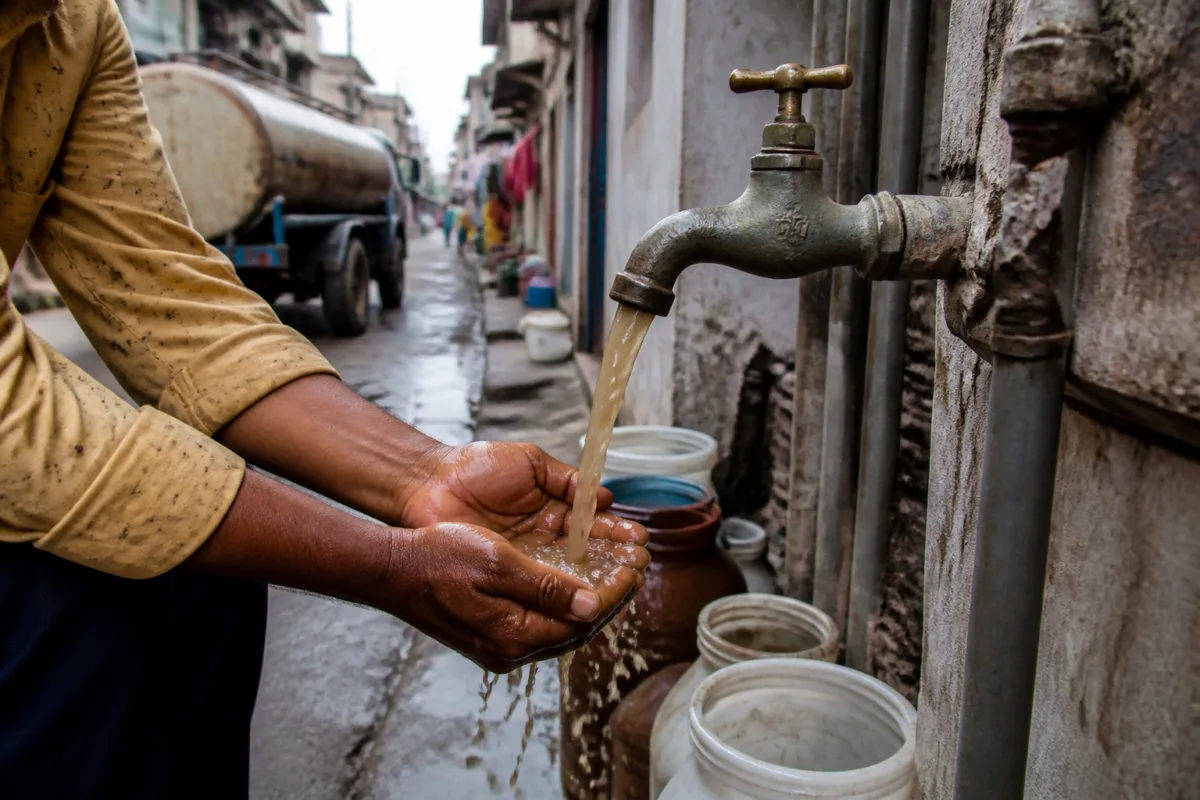
Residents in two parts of Ahmedabad’s eastern zone have reported serious disruptions to drinking-water access, including allegedly contaminated tap water in Behrampura and a two-day stoppage of water tankers near Ramol’s Garudiya Tekra. The complaints raise concerns about the reliability of basic water services for low-income households, but the supplied report does not include municipal test results or an official confirmation of contamination.
In Behrampura’s Santoshnagar area, residents said they had been receiving muddy water resembling sewage for around two months. The complaints reportedly relate to Chamunda Mata Chowk ni Chali, Chand Shahid Masjid ni Chali and nearby settlements, where municipal water is distributed in the morning and evening.
Residents told Gujarat Samachar – Ahmedabad that the water’s appearance and quality had made it unsafe for drinking and household use. The report said some residents had complained of water-borne and skin-related illnesses after using the water. These health claims remain allegations in the supplied material; no medical records, health department assessment or laboratory findings have been cited.
The reported problem also highlights the financial pressure created when households must purchase water. According to the report, many families in the area cannot easily afford to buy drinking water and therefore may have to continue using the supplied water despite their concerns. Residents have demanded that the municipal administration provide clean and regular water and organise medical camps in response to the reported illnesses.
Residents also alleged that officials had been collecting water samples but had not resolved the underlying problem. The report does not identify the sampling agency, provide the dates or locations of the tests, or disclose their results. It also does not establish whether the reported discolouration is linked to sewage ingress, damaged pipelines, inadequate disinfection or another cause.
A separate water-supply disruption was reported near Garudiya Tekra in Ramol, where residents of a nearby informal settlement had been receiving drinking water through municipal tankers. According to the report, the tankers had stopped operating for two days, leaving residents without that alternative supply. The disruption was reported shortly before the Diwali festival, when households were seeking continuity in basic services.
The two complaints involve different service arrangements: piped distribution in Santoshnagar and tanker supply near Ramol. Together, they show how interruptions in either networked supply or emergency water provision can leave vulnerable communities with few alternatives. However, the supplied report does not establish whether the incidents are connected or whether they reflect a wider citywide water-quality problem.
The municipal administration’s response, including any inspection, remedial work, water-quality test results, tanker-restoration schedule or public-health intervention, has not been provided. Independent confirmation from the Ahmedabad municipal authorities and relevant health officials is required to establish the extent and cause of the reported contamination and illness. Residents have asked the administration to restore regular tanker operations near Ramol and ensure clean water distribution in both affected areas.

