


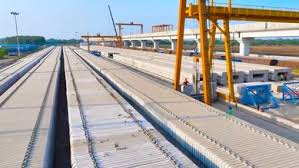
Ahmedabad is at the centre of a major infrastructure transformation as the Mumbai–Ahmedabad High-Speed Rail project enters an advanced but closely watched phase. Government data indicates 61% physical progress on the 508-km corridor up to June, while a separate railway assessment has put overall completion at around 80%. The differing measurements highlight the complexity of tracking a project where civil structures, tracks and railway systems are advancing at different speeds.
The distinction matters for Ahmedabad because the city is expected to play a major role in the corridor’s operations and regional economic network. The high-speed line could strengthen connections between Gujarat’s largest urban centre and other commercial hubs, potentially changing business travel patterns and supporting wider regional development. Nearly ₹90,966 crore had reportedly been spent by June, compared with an original project estimate of ₹1.08 lakh crore. More than 350 km of viaduct construction and roughly 450 km of pier work have been reported, alongside progress on tunnels, bridges, stations, track beds and electrification. However, the remaining expenditure cannot be assessed simply by comparing money spent with the percentage of physical work completed. Different construction packages have different costs and technical complexity. Underground works, railway systems, testing and commissioning can require significant investment even after major civil structures are finished.
The project is expected to begin passenger services on an initial Surat–Bilimora section in 2027, with further sections planned to open progressively. The entire corridor has been associated with a later completion target. Whether those milestones are achieved will depend on the integration of civil construction with track installation, power supply, signalling, telecommunications, rolling stock and safety testing. For Ahmedabad, the value of the project will ultimately depend on more than speed. High-speed rail needs strong links with the city’s existing metro, conventional railway stations, buses and road network. Efficient interchange facilities could help passengers complete journeys without depending heavily on private vehicles.
The corridor could also influence development around Ahmedabad and other connected cities. Better regional accessibility can attract investment and employment, but unmanaged growth around stations could increase land pressure and traffic. Coordinated land-use planning will therefore be important as the network moves towards operations. The contrasting progress figures should not automatically be interpreted as evidence of a delay or cost overrun. They may reflect different definitions, reporting periods and work components. The more important question is whether the remaining construction, systems integration and testing can be delivered within the approved financial and operational framework. For Ahmedabad, the project now enters a critical stage where construction progress must translate into a safe, reliable and well-integrated transport service.
Also Read: Hyderabad Kottayam Special Trains Announced For Onam
Ahmedabad Bullet Train Progress Raises Cost Questions
