


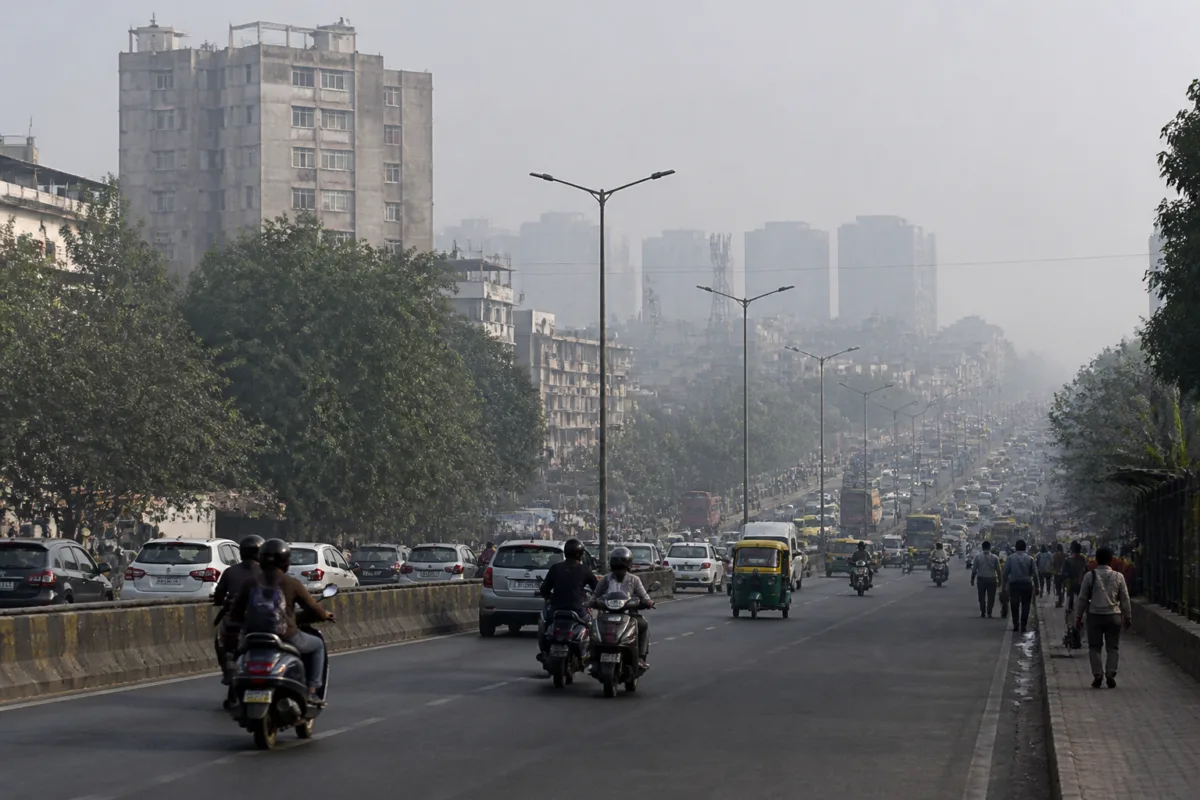
Ahmedabad AQI levels crossed 150 in several parts of the city on November 13, with Sola recording the highest reading at 189, while Rajkot saw pollution levels fall across most monitored areas, according to a report by Sandesh – Ahmedabad.
The sharp contrast places Ahmedabad’s air quality in the moderate-to-poor range described in the report, with Chandkheda recording an AQI of 181. Other Ahmedabad areas also reported elevated readings: Maninagar recorded 170, Anandnagar 165, Bopal 161 and Isanpur 150.
The readings indicate that pollution was not confined to one neighbourhood in the city. Sola and Chandkheda were identified as the most polluted locations among the areas listed, while multiple other parts of Ahmedabad also remained above an AQI of 150.
Sandesh reported that people with respiratory illnesses, children and older residents had been advised to take precautions because of the rising pollution levels. The report did not specify the pollutants responsible for the readings or provide details of the monitoring stations, measurement period or any immediate response from Ahmedabad civic authorities.
Rajkot recorded a different trend. Air quality in most parts of the city remained between AQI 90 and 159, with Jam Tower reporting the highest reading at 159. The report said Railnagar Junction Plot recorded the cleanest air among the areas covered.
Pollution levels also declined in several prominent Rajkot locations, including Race Course, Trikona Baug, Amul Circle and Bhaktinagar. The improvement brought relief to residents, although the reported AQI of 159 at Jam Tower shows that air quality remained uneven across the city.
The contrasting readings underline how air quality can vary significantly between cities and between neighbourhoods within the same urban region. However, the supplied report does not establish the causes behind Ahmedabad’s increase or Rajkot’s decline. Further updates from the relevant monitoring authorities would be needed to determine whether the changes represent a short-term fluctuation or a sustained trend.

