


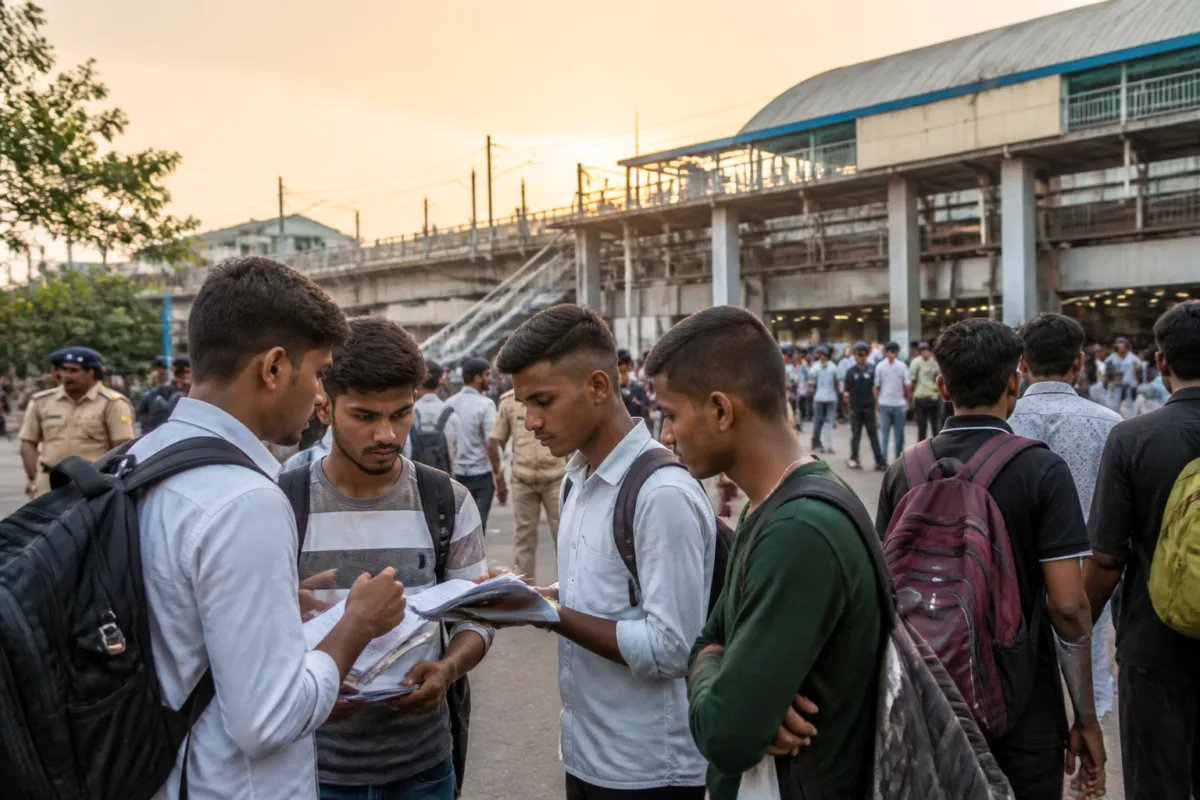
The Centre’s decision to extend Agniveer service opportunities from four to six years has been welcomed by aspirants in Telangana, but the reform arrives alongside an unresolved reminder of how sharply the original Agnipath announcement affected a major transport hub. While the revised arrangement offers more time for training, service and another chance at permanent enrolment, the chargesheet in the June 2022 Secunderabad railway station rioting and arson case is still pending.
Under the arrangement approved by the Union Cabinet, the 75 per cent of Agniveers who are not selected for regular enrolment after their initial four-year tenure will be offered an additional two-year engagement. At the end of six years, those who are willing and meet the prescribed selection criteria will receive another opportunity to be considered for regular enrolment in the Armed Forces.
The immediate significance for aspirants is continuity. The original four-year period created a defined point at which most recruits would leave the Armed Forces without regular enrolment. The revised arrangement adds two years to that period and creates another formal opportunity for eligible recruits to seek permanent service. Aspirants quoted by Deccan Chronicle said this would provide more time to demonstrate their capabilities, gain experience and build a permanent military career.
Arjun, an aspirant, said the additional two years would provide greater continuity and security to recruits who are not selected after their initial tenure. He also said the possibility of being considered for permanent service at the end of the extended period could encourage Agniveers to maintain discipline, commitment and professional excellence. His response reflects the importance of time within a selection system: a longer period of service gives recruits more opportunity to establish their performance, although the revised arrangement does not make permanent enrolment automatic.
The distinction between extended service and regular enrolment is central to understanding the change. The additional opportunity remains subject to prescribed selection criteria, and the arrangement described in the report does not state that all recruits completing six years will be absorbed into the permanent cadre. The reform therefore changes the length and structure of the opportunity without removing the selection process.
The changes also include enhanced remuneration, improved Seva Nidhi benefits and seniority provisions, according to the report. Pravina M., another aspirant, said these measures recognised the dedication and sacrifices of young soldiers. The response indicates that the debate around Agniveer service is not limited to the length of the tenure. It also concerns the financial package available to recruits and the status they carry during and after their service.
For young people considering military recruitment, these provisions have a direct livelihood dimension. A longer engagement can mean more time within a formal institutional system, while improved financial benefits can affect the value of the service period for those who do not enter regular service. However, the supplied report does not provide the revised remuneration amounts, the precise Seva Nidhi calculation, or the detailed seniority rules. Those details will be important to assess the practical effect of the reform beyond the announcement itself.
The response from Colonel Dr Srinivasa Rao Sunkara, retired and convenor of the Telangana BJP Ex-Servicemen Cell and chairman of The Soldiers Youth Foundation, presents the changes as recognition of feedback from young soldiers and the Armed Forces. He said an Agniveer would no longer be viewed merely as a four-year recruit, but as a trained soldier with the possibility of continuing towards a permanent career. He also said the reforms could encourage more young men and women to join the Army, Navy and Air Force.
The reference to women Agniveers adds another dimension to the policy. Pravina welcomed what she described as growing opportunities for women and said participation should expand across branches and roles, subject to service-specific requirements. The report does not specify the number of women recruits, the branches involved or the roles being opened. It does, however, show that the response to the revised arrangement is being viewed through questions of access and participation as well as tenure and benefits.
The policy’s urban significance is visible in the events that followed the original announcement. In June 2022, protests against the Agnipath scheme turned violent at Secunderabad railway station, where rioting and arson were reported. More than 50 people were arrested and charged in connection with the violence. The railway station is not simply a backdrop to the case: it is a critical public transport space where disruption can affect passengers, railway operations, public safety and the wider city’s functioning.
The case remains at the investigation stage described in the report. The Secunderabad Government Railway Police is investigating, and a chargesheet has yet to be filed. Investigators seized several mobile phones belonging to aspirants and sent them to the Forensic Science Laboratory to examine communications between them and Avula Subba Rao, the owner of Sai Defence Academy. The investigation concerns allegations that he instigated the violence; the supplied material does not establish those allegations as proven.
This unresolved legal process matters because the 2022 protests and the 2026 policy response are linked by the same institutional question: how recruitment rules, public communication and administrative accountability interact when a policy affects large numbers of young people. The new arrangement addresses some concerns raised by aspirants about service continuity and benefits, but it does not by itself resolve questions surrounding the earlier unrest or the pace of the investigation.
The contrast is therefore important. On one side, the Centre has modified the service structure by adding a two-year engagement for eligible Agniveers who are not selected for regular enrolment after four years. On the other, the legal consequences of the protest that followed the original announcement remain incomplete, with the chargesheet still pending according to the report. One process demonstrates policy adjustment; the other shows the continuing administrative work required after a major public-order incident.
The revised arrangement also places greater importance on the institutions responsible for selection, service management and communication. The opportunity for another round of permanent enrolment will depend on the prescribed criteria and how those criteria are applied at the end of the six-year period. The report does not provide the number of recruits who will be eligible, the size of the permanent intake or the timetable for the additional selection process. Without those details, the extent of the change cannot yet be measured in terms of actual absorption into regular service.
Similarly, the practical value of enhanced remuneration, Seva Nidhi benefits and seniority provisions will depend on their implementation. The announcement, as described in the report, identifies the areas of change but does not set out the full operating rules. For aspirants and their families, those rules will determine whether the revised arrangement provides predictable financial security or mainly extends the period of uncertainty before a final career decision.
The Telangana reactions show why recruitment policy cannot be treated only as a defence-sector matter. Aspirants approach the system as a route to employment, training, social mobility and long-term security. Their responses also show how the design of a national policy is experienced locally, through coaching centres, recruitment communities, families and public institutions such as railway stations. When expectations are disrupted, the effects can move quickly from an administrative announcement into public spaces and transport networks.
The evidence supplied here confirms three developments: the service opportunity for the affected group is being extended from four to six years; another opportunity for regular enrolment is being created for those who meet the criteria; and aspirants in Telangana have responded positively to the changes. It also confirms that the Secunderabad railway station case remains without a filed chargesheet, despite arrests, charges and forensic examination of seized phones.
What remains unclear is how the revised benefits will be calculated, how many Agniveers will receive the additional engagement, how the second permanent-enrolment opportunity will operate and when the Secunderabad investigation will reach the chargesheet stage. Those administrative and legal milestones will determine whether the reform becomes a more predictable pathway for recruits and whether the unresolved consequences of the 2022 protests move towards closure.

