


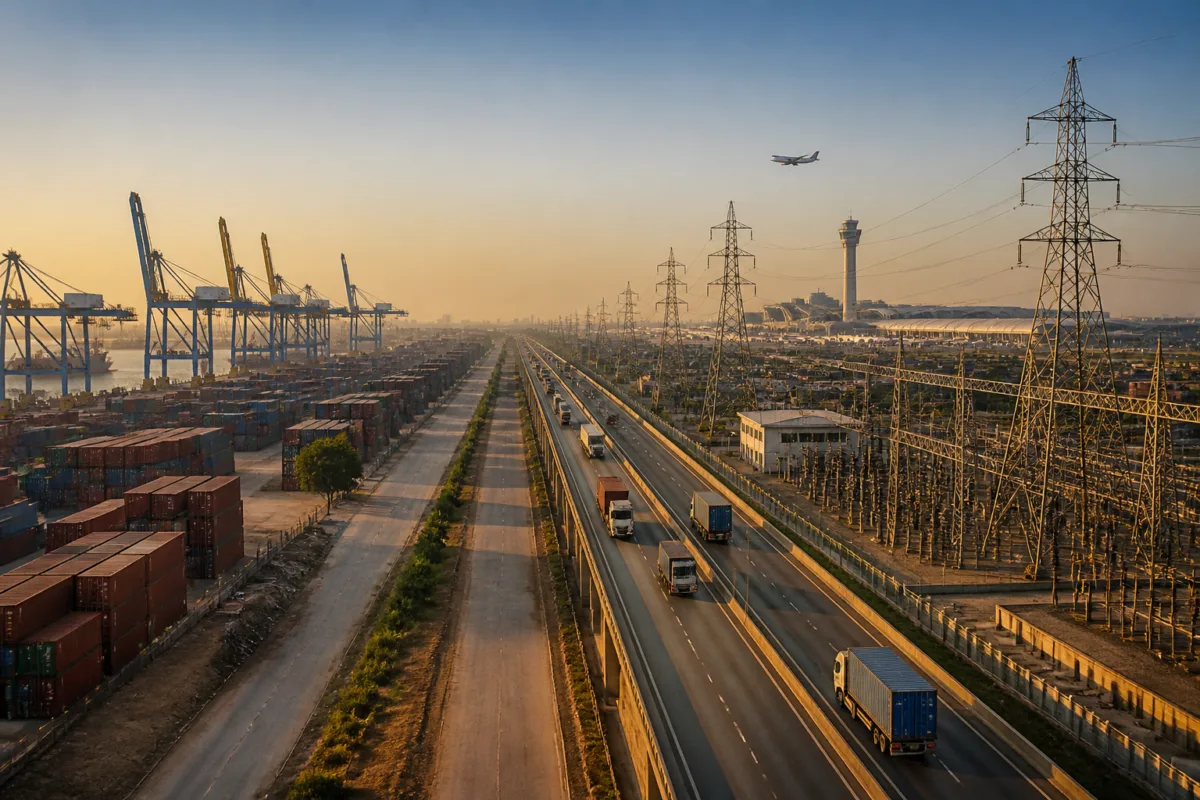
The Adani Group plans to invest more than $120 billion over the next five years across energy, transport, logistics and related businesses, a spending programme that could significantly expand the infrastructure assets controlled by one of India’s largest conglomerates.
Pranav Adani, a director at Adani Enterprises and nephew of group chairman Gautam Adani, told Fortune India that the group expects to invest about $120 billion, or more than $20 billion annually, across its businesses. The comments were reported on Tuesday and published by The Hindu BusinessLine.
About 70% of the planned investment is expected to go into energy, while around 20% will be allocated to transport and logistics. The remaining 10% is earmarked for business adjacencies including cement, copper and aluminium, according to the report.
The proposed allocation places energy at the centre of the group’s next expansion cycle. Adani’s existing infrastructure interests include ports, airports, power and renewable energy, alongside other businesses. The planned spending therefore cuts across several systems that shape how Indian cities and industrial regions move people, goods and electricity.
The transport and logistics component is expected to account for about $24 billion of the total planned investment if the broad allocation is applied to the stated figure. The group’s port and airport interests, together with logistics operations, give the proposed spending an infrastructure footprint that extends beyond individual projects and into the movement of commodities, passengers and freight.
The group said the investments would help double its asset base to ₹18 lakh crore, equivalent to $191.64 billion, over five years. It also estimated that core earnings, measured as earnings before interest, taxes, depreciation and amortisation, would rise to between ₹2.6 lakh crore and ₹3 lakh crore during the period.
The figures indicate the scale at which large private conglomerates are participating in India’s infrastructure build-out. Energy projects can influence the availability and cost structure of electricity, while transport and logistics assets affect the links between production centres, ports, airports and urban markets. The report, however, does not provide project-wise details, locations, construction schedules or financing plans for the proposed expenditure.
The announcement also spans materials and industrial inputs. Investments in cement, copper and aluminium would connect the group’s infrastructure expansion to the supply chains required for construction, power networks, transport systems and large urban developments. The stated allocation suggests that the group intends to combine core infrastructure assets with businesses supporting their construction and operation.
Adani Group companies have been expanding across infrastructure and energy, with investments in ports, airports, power and renewable energy. The new plan extends that expansion over a defined five-year period, but the supplied report does not specify how much of the proposed capital expenditure will be funded through internal accruals, debt, equity or partnerships.
Adani Group did not immediately respond to a Reuters request for comment, according to the report. The next stage will depend on the identification of individual projects, the release of detailed investment plans and the execution timelines for the proposed energy, transport, logistics and industrial ventures.

