


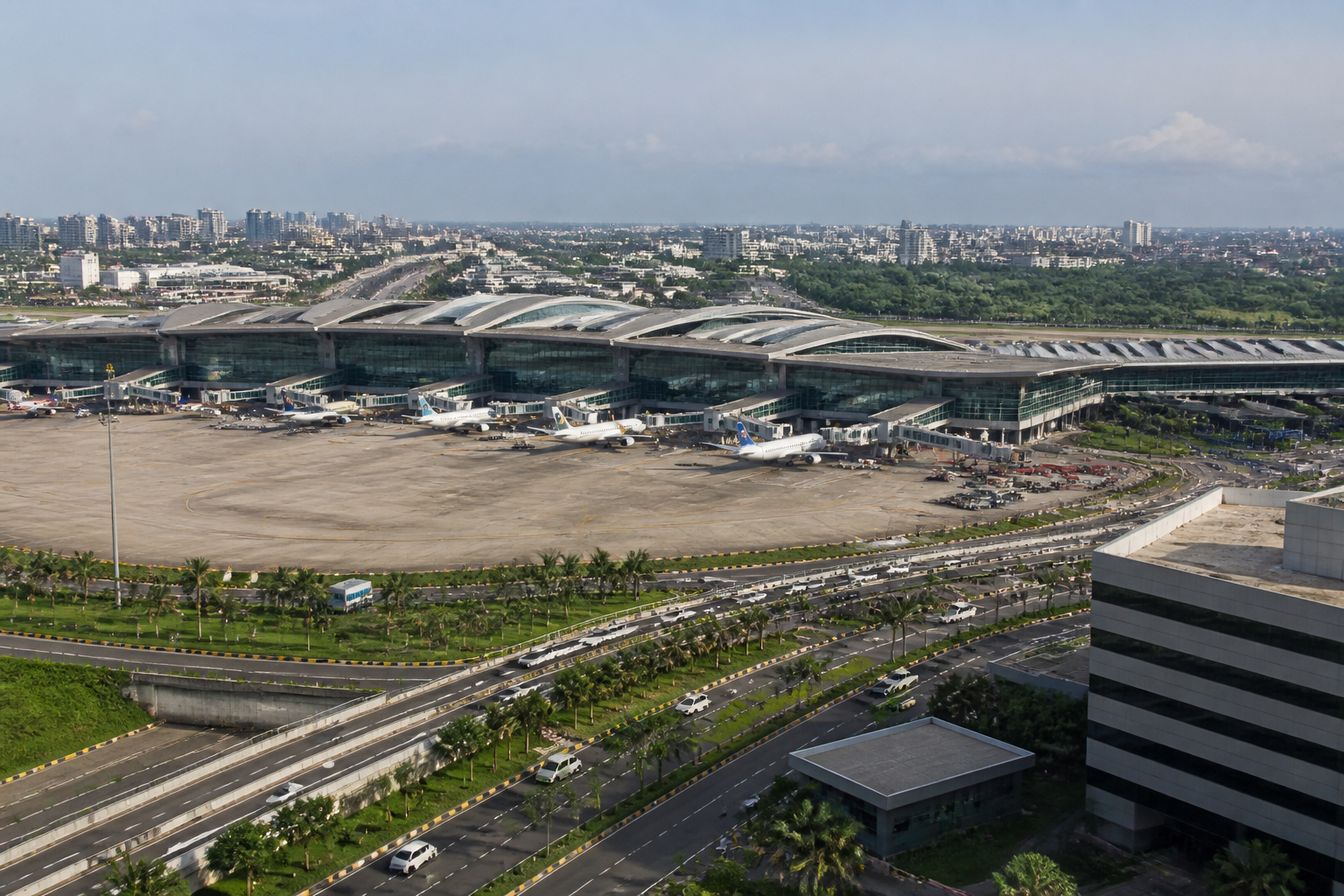
Adani Airports is combining a large institutional equity raise with a plan to expand airport capacity, develop mixed-use districts around its terminals and selectively pursue opportunities outside India. Taken together, the moves point to an airport strategy that treats aviation infrastructure not only as a transport asset, but also as a platform for urban development and commercial activity.
The immediate trigger is a binding agreement under which Adani Airport Holdings Limited (AAHL), the airports arm of the Adani Group, will raise Rs 9,825 crore, or about $1 billion, in primary equity from Alpha Wave Global, Premji Invest, Temasek and funds managed by BlackRock. The transaction values AAHL at a pre-money equity valuation of about $18 billion. The investors will subscribe to new shares in three tranches, with the final tranche expected to be completed by July 2027. Once all three tranches are completed, they are expected to hold approximately 5.54% of AAHL.
The company currently operates eight airports in India, according to the supplied material, with combined annual capacity of about 120 million passengers. It plans to raise that capacity to approximately 200 million passengers over the next five years. The equity proceeds are also intended to support airport modernisation, integrated Adani Airport City developments and the expansion of passenger-facing and other non-aeronautical businesses, including ground handling.
That allocation is significant because it connects three different layers of airport development. The first is the conventional infrastructure requirement: terminals, related facilities and capacity upgrades needed to handle more passengers. The second is the city-side development planned around the airports. AAHL has said that roughly 22 million square feet of mixed-use development is planned in the first phase of its Airport City ecosystems. The third is the commercial layer, where services beyond air travel are expected to contribute to the performance of the airport platform.
The proposed model places airports within a wider urban system. An airport is a point of arrival and departure, but it also occupies a large and strategically located piece of land, connects to regional transport networks and can attract offices, hospitality, retail, logistics and other activities. The supplied company statements describe city-side developments as economic catalysts in major urban centres. The available material does not provide a detailed land-use plan, transport integration plan or project-wise construction schedule for the proposed 22 million square feet. Those details will be important in determining how the Airport City concept affects surrounding urban areas.
AAHL’s expansion plans also illustrate the financial demands of airport infrastructure. The company is seeking to increase capacity by about two-thirds, from 120 million to 200 million passengers annually, while investing in related commercial assets. This is not simply an increase in terminal throughput. It involves coordinating infrastructure modernisation with land development, passenger services and operating businesses. The three-tranche structure, with the final tranche due by July 2027, means that the funding commitment is staged rather than delivered in one instalment.
Jeet Adani, a non-executive director of AAHL, said the funds would primarily be used to expand the company’s footprint in India, according to the Financial Times report cited by Moneycontrol. He also told the newspaper that the company would pursue overseas opportunities “very selectively” and focus on opportunities “of size and relevance”. The distinction matters: the reported international ambition is not presented as a broad overseas acquisition programme, but as a selective search for opportunities alongside a predominantly India-focused investment plan.
The first international opportunity identified in the supplied material is Sicily’s main airport, for which the company submitted a bid earlier this year. The Financial Times also reported that the Adani Group was exploring a bid for Associated British Ports, described in the report as Britain’s largest port operator. The latter would be the group’s first investment in the United Kingdom if completed. The material does not establish that either opportunity has resulted in a completed acquisition or operating mandate. Both should therefore be understood as reported or explored opportunities, not confirmed expansion outcomes.
The financial transaction follows Adani Enterprises’ Rs 15,000 crore qualified institutional placement in July 2026, described in the supplied material as the largest QIP by a non-financial corporate in India. The two transactions are presented as evidence of continued access to domestic and global institutional capital. For AAHL, that access provides a funding base for a capital-intensive expansion programme. It also brings a group of financial investors into the ownership structure at a time when the company is seeking to scale its airport portfolio and related businesses.
The investment model raises a broader question about how airport projects are financed and monetised. Passenger charges and aviation operations remain central to an airport, but the company’s stated priorities show an effort to broaden the platform. Ground handling, retail and other passenger-facing services can sit alongside terminal operations, while mixed-use development creates a separate city-side revenue and land-use component. The supplied material does not provide revenue projections or a breakdown of the expected contribution from these businesses, so the relative importance of each segment cannot yet be assessed.
The capacity target also needs to be read alongside the question of access. Increasing annual airport capacity does not by itself explain how passengers will reach terminals, how road and public transport systems will handle additional traffic, or how surrounding districts will absorb new commercial development. The source material confirms the capacity and mixed-use targets but does not provide details of associated road, rail, metro, bus or utility investments. Those links will determine whether airport expansion functions as an integrated urban development programme or primarily as an expansion of aviation assets.
AAHL chief executive Arun Bansal said the company intended to build what he described as the world’s largest airports platform. He attributed the ambition to growth opportunities in Indian aviation, rising consumer spending power and the momentum of city-side developments. Jeet Adani similarly linked air connectivity with trade, tourism, employment and regional development. These are company statements about the expected economic effects of expansion, rather than independently established outcomes in the supplied material.
The institutional structure behind the expansion is equally important. AAHL is a subsidiary of Adani Enterprises, while the new investors will subscribe through binding agreements covering both share issuance and shareholder arrangements. Legal and financial advisers named for the transaction include Cyril Amarchand Mangaldas, AZB & Partners, JSA Advocates and Solicitors, TT&A Advocates and Solicitors, Jefferies India, SBI Capital Markets and Ernst & Young. The presence of multiple financial and legal advisers reflects the scale and complexity of the capital transaction, although the supplied information does not detail governance rights or investor-specific conditions.
For Indian cities, the emerging airport-city model creates an overlap between transport planning, real estate development and infrastructure finance. Airport expansion can generate demand for supporting services and surrounding development, but it also requires decisions about land use, access, utilities and the relationship between airport authorities and municipal institutions. The source material establishes AAHL’s intended investment priorities, but it does not set out how those priorities will be coordinated with local planning authorities or public infrastructure agencies.
What is clear is that AAHL is pursuing expansion on two connected fronts. In India, it plans to increase airport capacity from about 120 million to 200 million passengers annually over five years while developing around 22 million square feet of mixed-use space in the first phase of its Airport City programme. Internationally, it is considering opportunities selectively, including the reported Sicily bid. The Rs 9,825 crore equity raise provides the announced capital framework for this strategy, with the final tranche scheduled for completion by July 2027.
What remains uncertain is the delivery sequence, the project-level allocation of funds, the status of overseas bids and the extent to which airport-city plans will be integrated with wider urban infrastructure. Those are the developments that will show whether AAHL’s expansion becomes primarily a larger airport network or a broader urban platform built around aviation assets.
