


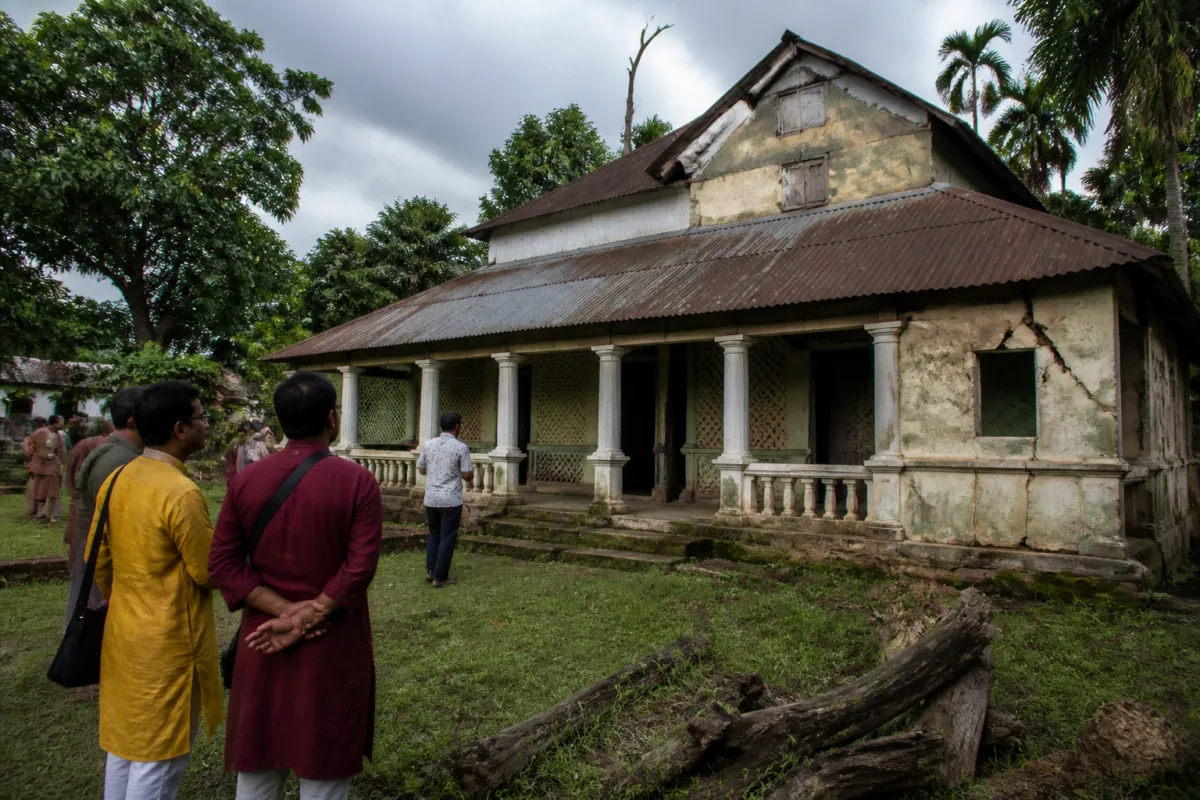
The ancestral home of Bhawaiya singer Abbasuddin Ahmed in Balarampur, Cooch Behar district, has become the focus of renewed demands for heritage conservation after cultural enthusiasts highlighted its deteriorating condition during a birth-anniversary event on Tuesday.
The property, located in Balarampur under the Tufanganj subdivision, has an ageing tin roof, damaged walls and a fragile structure that cultural figures say is at risk of collapse. The appeal for preservation was made during a Bhawaiya music festival organised near the singer’s ancestral home to draw attention to the site and its cultural significance.
Educationist Dipak Roy, singer ‘Gidal’ Nazrul Islam and Greater Cooch Behar Peoples Association general secretary Bangshibadan Barman attended the programme along with others. The event featured performances of Bhawaiya music, a folk tradition associated with the rural life of North Bengal and the Rangpur region.
Roy, a former vice-chancellor, said Abbasuddin had played an important role in taking the cultural identity of North Bengal and Cooch Behar to audiences beyond the region. “Protecting his ancestral home is our duty and responsibility. I appeal to everyone to come forward to preserve this historic property,” he said.
The old meeting room at the property, locally known as the “dari ghar”, is still standing but has also deteriorated considerably. Nazrul Islam said the programme was held at the site to ensure that the condition of the property received wider attention.
“Abbasuddin Ahmed was a legendary figure in Bhawaiya music. People have a deep emotional connection with his legacy, and efforts continue to keep his music alive. However, the question remains whether we will be able to preserve the place associated with his life. We organised this event here to ensure that the issue receives wider attention,” he said.
Abbasuddin Ahmed remains one of the best-known voices associated with Bhawaiya music, nearly 67 years after his death. Through gramophone recordings, he helped take the folk melodies of North Bengal to a wider audience. He also sang other forms of folk music, including Bhatiali, Jari, Sari, Murshidi and Bicchedi, and was recognised for his renditions of songs written by rebel poet Kazi Nazrul Islam.
There is some confusion over whether this year marks Ahmed’s 125th or 127th birth anniversary. The disagreement over the anniversary count has not diminished the continuing cultural importance attached to his birthplace and the house associated with his memory.
Barman said preserving the site had become essential because it represents a tangible link to the region’s musical history. “Abbasuddin Ahmed embodied the melodies of north Bengal, the joys and sorrows of its people, and the living history of its folk traditions. His songs continue to be sung across generations. If the house associated with his memory collapses one day, we will lose a tangible witness to our cultural history,” he said.
The cultural groups involved in the event are seeking wider attention to the property’s condition and urging the state government to take steps to preserve the ancestral home.

