


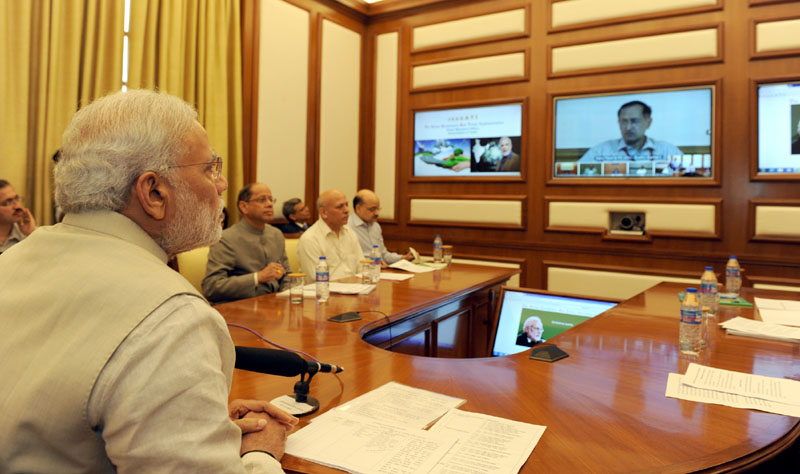
India’s urban governance architecture is undergoing a structural shift as the PRAGATI Platform continues to influence how housing and infrastructure projects are monitored and delivered nationwide. Designed to bring multiple layers of government onto a single decision-making interface, the mechanism has emerged as a key institutional lever at a time when cities are absorbing unprecedented population growth and capital investment.
Urban India now supports nearly half the country’s population, with city systems under mounting strain from housing shortages, mobility bottlenecks, water stress, and informal employment vulnerability. Against this backdrop, PRAGATI urban governance has increasingly shaped the pace and coordination of flagship housing and infrastructure programmes, according to officials involved in project monitoring and implementation reviews. The platform integrates central ministries, state governments, and district administrations through a digital dashboard that tracks milestones, funding flows, and execution delays. Senior administrators note that this has reduced the fragmentation that traditionally slowed large public works, particularly in housing delivery and multi-agency infrastructure projects. The model prioritises time-bound resolution of issues ranging from land acquisition to inter-departmental approvals, improving predictability for public agencies and contractors alike. Housing has remained a recurring focus area. Government data indicates that over one crore urban homes have been approved under national housing schemes, with a significant proportion already delivered. Urban planners point out that sustained oversight has helped accelerate completion rates while keeping affordability and service access central to planning outcomes.
For rapidly growing metropolitan regions, this has implications for reducing informal settlements and improving climate resilience through planned, serviced housing stock. Beyond housing, PRAGATI reviews have tracked large-scale transport, logistics, and urban services projects valued at over Rs 2 lakh crore. Several high-value assets have already been commissioned, while others remain under active execution. Infrastructure economists observe that consistent monitoring improves capital efficiency by limiting cost overruns and ensuring that stalled projects are escalated early, rather than becoming long-term fiscal liabilities. The platform has also intersected with livelihood-focused urban schemes supporting informal workers and micro-entrepreneurs. Financial inclusion initiatives for street vendors, reviewed periodically, have expanded access to working capital in dense urban markets, reinforcing economic resilience at the neighbourhood level. Experts argue that such interventions are essential for balancing infrastructure expansion with inclusive growth, particularly in lower-income city precincts.
As preparations begin for Union Budget 2026, policymakers and market participants are closely watching whether the PRAGATI urban governance framework is further institutionalised across climate adaptation, mass transit, and affordable rental housing. With cities expected to anchor India’s economic growth over the next decade, the effectiveness of coordinated, technology-led oversight may determine how equitably and sustainably that growth unfolds.
Also Read: Mumbai Property Market Balances Growth And Caution
PRAGATI Platform Drives Housing And Infrastructure Execution
