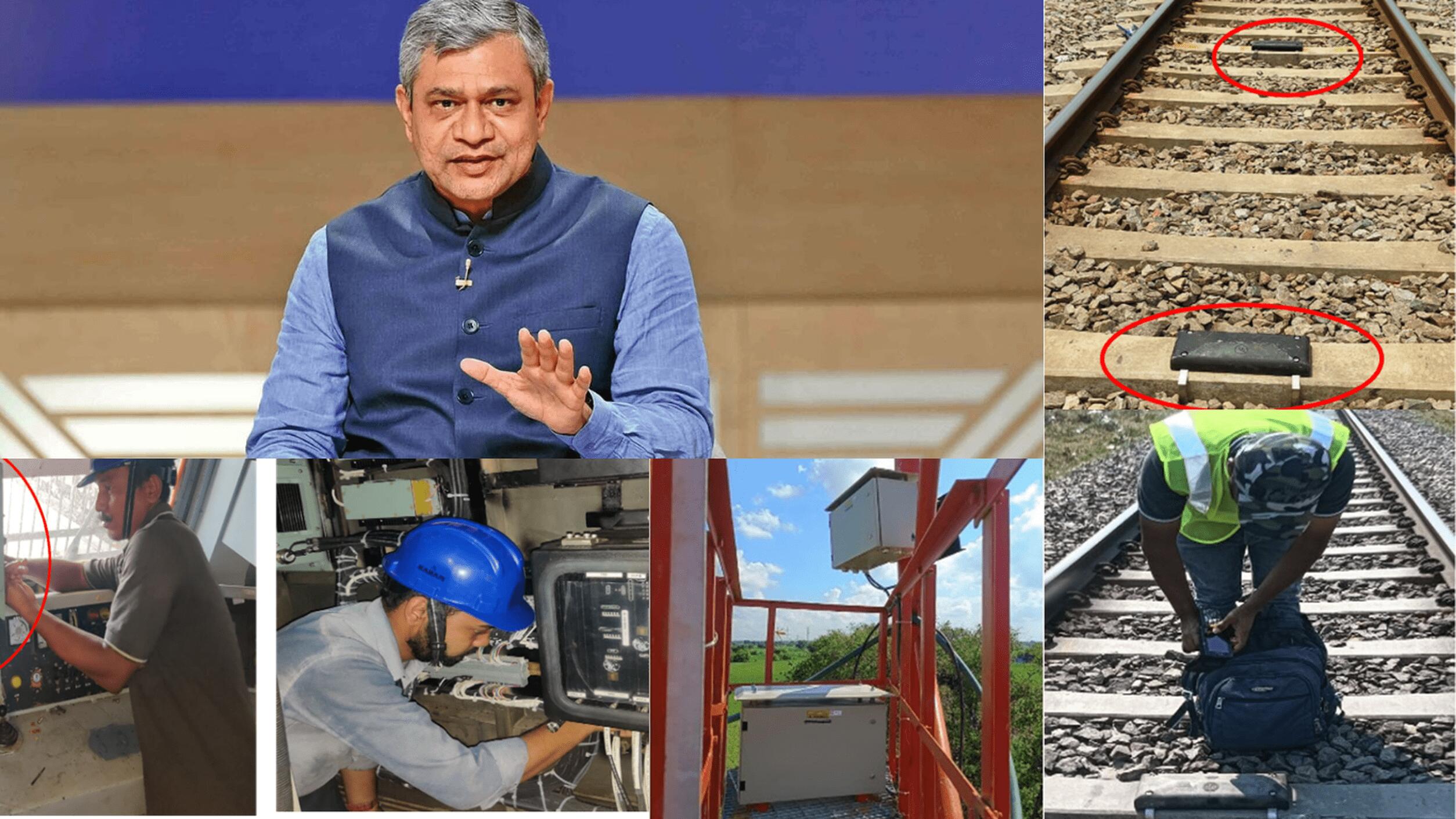
Kota Railway Division closed 2025 with a significant milestone in India’s rail safety journey, becoming the first division in the country to fully deploy the Kavach 4.0 automatic train protection system on a critical stretch of the Delhi–Mumbai railway corridor. The 549-kilometre protected route between Mathura and Nagda marks a decisive step towards safer, smarter and more reliable rail operations on one of India’s busiest economic arteries.
Railway officials described the completion of Kavach 4.0 installation as a transformational upgrade for both passenger and freight movement. The indigenous system is designed to prevent collisions, automatically apply brakes in case of human error, and continuously monitor train speed and signal adherence. Industry experts say its deployment on a high-density corridor reflects a broader shift towards technology-led risk mitigation across India’s transport infrastructure.
According to officials overseeing operations, Kota Division has effectively created the country’s longest continuous Kavach-protected railway corridor. Extensive trials were conducted at speeds of up to 160 kilometres per hour, with onboard systems installed across more than 80 electric locomotives. The successful testing phase has reinforced confidence in the system’s reliability under high-speed and high-traffic conditions.
Beyond safety, 2025 proved to be a strong operational year for the division. Kota emerged as a testing ground for next-generation rolling stock, hosting multiple high-speed trial runs of Vande Bharat sleeper trainsets. Trials conducted across different sections validated track geometry, overhead equipment, signalling systems and protection mechanisms, underscoring the division’s readiness for future semi-high-speed services. Operational efficiency also improved markedly. The division recorded industry-leading punctuality levels, topping national rankings during peak months and sustaining high on-time performance through most of the year. Transport analysts note that improved signalling, disciplined operations and technology integration often deliver economic gains alongside better passenger experience.
Financially, the division reported robust revenue generation driven by freight loading, passenger services and enforcement activities. Officials highlighted that consistent freight movement along the Delhi–Mumbai axis plays a crucial role in supporting regional manufacturing and logistics ecosystems, while improved punctuality enhances commuter trust in rail-based mobility. Infrastructure upgrades extended beyond tracks and trains. Under national station redevelopment initiatives, several stations within the division were modernised with accessible design, improved lighting, organised parking and locally inspired architecture.
Digital ticketing, QR-based payments and parcel management systems were expanded to streamline user experience and reduce transaction friction.
Urban mobility specialists view Kota’s progress as a template for aligning rail modernisation with sustainable city goals. Safer rail corridors reduce accident-related emissions, encourage modal shift from road to rail, and support inclusive, low-carbon transport networks. As India accelerates infrastructure investment, the Kota model illustrates how technology, governance and execution can converge to deliver resilient and people-centric mobility systems.
Kota Becomes First To Install Kavach 4.0 On Delhi Mumbai Rail Route