


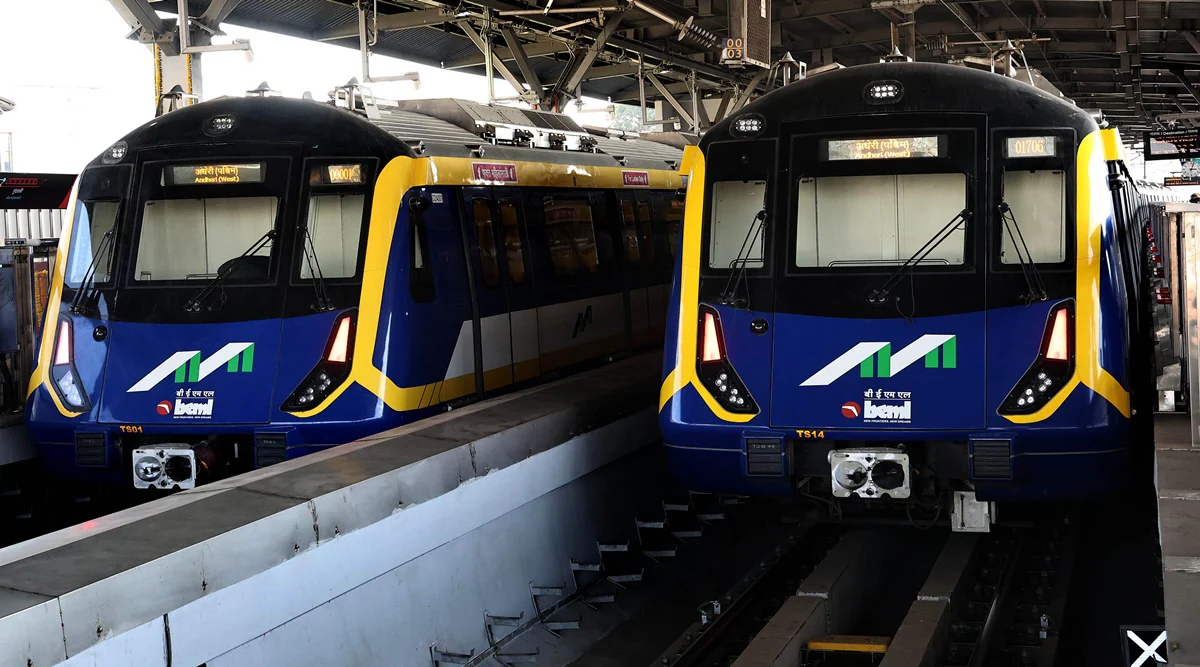
Mumbai’s Metro Line 7, connecting Dahisar East to Gundavali (Andheri East), has rapidly become a gamechanger for commuters navigating the notoriously congested Western Express Highway corridor. Spanning 16.5 kilometres with 13 elevated stations, the Red Line has slashed commute times while offering reliable interchange options with other metro routes.
Commissioned in two phases, the line has enhanced accessibility for lakhs of daily travellers from the city’s north-western suburbs to key employment hubs in Andheri and beyond. The first stretch from Dahisar East to Aarey was operational from April 2022, while the full corridor to Gundavali was opened in January 2023. End-to-end travel now takes only 35 minutes, a significant improvement over the 60 to 90-minute road commute during peak hours. According to metro officials, the frequency of trains during peak hours is approximately every six minutes, which has helped maintain a smooth passenger experience. Off-peak service stands at 9 to 10.5 minutes between trains. Additional rakes introduced in July 2025 have further enhanced capacity, with 24 rakes now deployed across the route.
Line 7 integrates efficiently with other city metro lines. At Dahisar East, it links with Line 2A, while Gundavali station connects to the Metro Line 1 via a pedestrian foot-over bridge, allowing seamless east-west movement across the metropolis. Future expansion plans include a direct airport link via Line 7A and connectivity to Mira-Bhayandar through Line 9, which are expected to further enhance network reach and commuter convenience. A senior metro official noted that these interchanges are crucial for ensuring hassle-free travel. Footbridges, elevated walkways and signage have been installed at key nodes like JVLR, Gundavali and Dahisar to support multi-line connectivity.
The benefits are already evident. An IIT-B study revealed that 81 percent of riders using Metro 7 save an average of 26 minutes per trip, while 63.5 percent of respondents rated the service as very good. In July, Lines 2A and 7 collectively recorded their highest single-day ridership with 3.01 lakh commuters. Though the fare structure ranges between Rs 10 to Rs 60, affordability combined with frequency and connectivity has positioned Metro 7 as a preferred alternative to road travel, particularly among office-goers and students. The system’s digital-first ticketing options—including mobile apps, WhatsApp-based booking, and smart cards—have further enhanced commuter convenience.
The line also serves major residential zones like Borivali, Kandarpada and Goregaon East, as well as institutional and commercial districts such as SEEPZ and National Park. For many in the western suburbs, what was once a gruelling, multi-modal journey is now a seamless, comfortable metro ride. Metro Line 7 exemplifies the transformation of Mumbai into a city with modern, sustainable and equitable transport systems. Its expansion and integration into the larger metro network mark a significant stride towards reducing carbon emissions and building climate-resilient infrastructure for the financial capital.
Also Read : Pune Metro Records Highest Monthly Ridership in July 2025
