


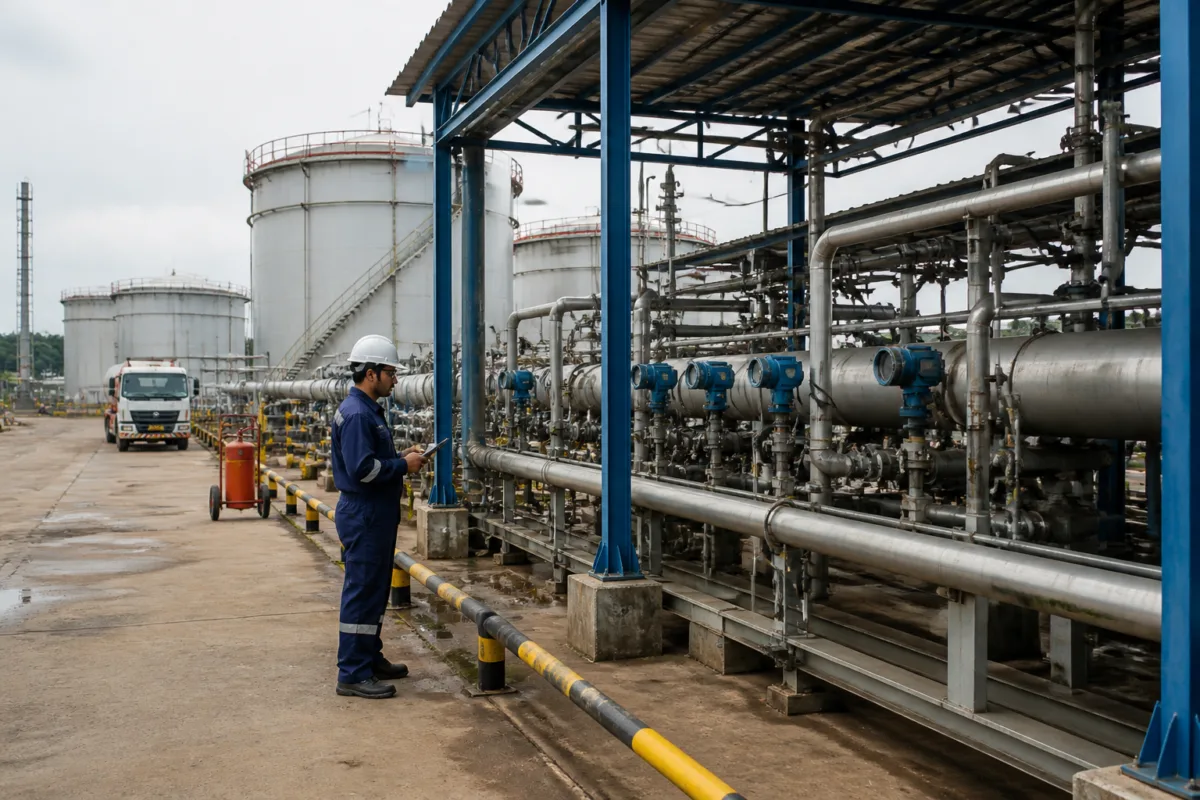
Karnataka’s legal metrology department has issued a show-cause notice to Indian Oil Corporation Limited’s terminal at Devanagonthi near Bengaluru after an inspection found deviations in ethanol and petrol measurements used for fuel blending.
The action is part of the state government’s enforcement drive over alleged blending of ethanol in petrol beyond the mandated 20% E20 limit. According to Deccan Herald, recent state findings had reported ethanol levels of up to 31.2% in some retail fuel samples, although oil marketing companies have refuted those allegations.
During a surprise inspection on November 25, officials tested mass flow meters at the Devanagonthi terminal. At Bay No. 9, one meter recorded an excess delivery of 14 litres of ethanol for every 3,000 litres measured. The same system recorded a short delivery of between 4 and 6 litres of Motor Gasoline per 3,000 litres.
A second mass flow meter at Bay No. 4 showed an excess ethanol delivery of 3 litres for every 3,000 litres. The department said the deviations exceeded permissible limits under the Legal Metrology Act, 2009, and its associated rules.
The findings place measurement accuracy at the centre of the dispute. Fuel terminals use metering systems to control and record the quantities of petrol and ethanol blended before distribution. Errors in those systems can affect the stated fuel composition, transaction records and the commercial interests of consumers and dealers, according to the department.
Authorities have directed IOCL to suspend commercial transactions through the affected measuring systems until their accuracy and statutory compliance are formally re-established. Terminal management has also been given seven days to submit a written explanation.
The response must detail the root causes of the errors, previous calibration and maintenance records, and proposed corrective measures. The department warned that an unsatisfactory response could lead to penal and departmental action under the Legal Metrology Act without further notice.
The notice does not, by itself, establish the cause of the metering deviations or confirm that all fuel supplied from the terminal exceeded the E20 limit. Those questions will depend on IOCL’s response, further technical checks and any subsequent regulatory action. The immediate public-interest issue is whether the affected equipment is accurately calibrated and whether fuel composition and quantity records can be reliably verified before commercial transactions resume.

