


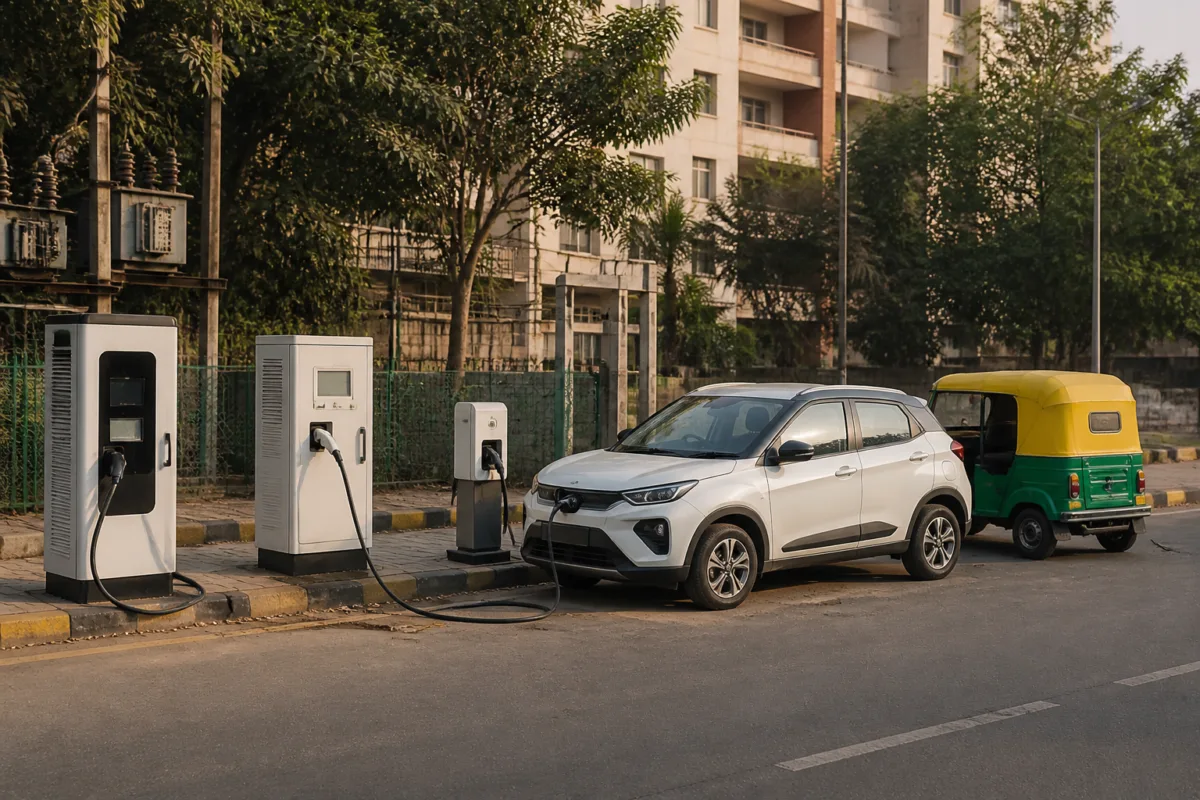
Delhi is preparing to add 540 public electric vehicle chargers at 180 locations under an estimated Rs 62-crore project, as the capital builds charging capacity ahead of a phased shift towards electric vehicles.
Delhi Transco Limited, the government’s nodal agency for EV charging infrastructure, has begun selecting operators to install and manage the facilities under the Centre’s PM E-DRIVE scheme, according to an official document cited in a report by Millennium Post.
Each proposed site will have three types of charging units. A 12-kW charger will serve electric two-wheelers and three-wheelers, while a 60-kW unit will cater to electric cars and N1-category goods vehicles. The plan also includes a 120-kW fast charger. Each unit will have two charging guns, allowing two vehicles to charge at the same time.
The 180 locations have been divided into two packages. The first will largely cover northern and western Delhi, while the second will include southern, eastern and New Delhi areas. Identified locations in Central Delhi include clusters around Inderlok, Pratap Nagar, Shahi Idgah, Kamla Market and Lok Nayak Jai Prakash Hospital. Two sites have also been identified at Rajghat.
The expansion is tied to requirements under the Delhi EV Policy 2026. From January 1, 2027, new registrations of three-wheelers and N1 goods carriers will be restricted to electric vehicles, followed by a similar requirement for two-wheelers from April 1, 2028. The proposed charging network is intended to support the expected increase in electric vehicles as these requirements take effect.
The project would also contribute to the Commission for Air Quality Management’s target of establishing 32,062 EV charging points in Delhi by December 2029. The report does not specify how many of the proposed 540 chargers will count towards that target or provide a detailed schedule for construction and commissioning.
Under PM E-DRIVE, the Centre has earmarked Rs 2,000 crore for public fast-charging infrastructure, including an 80 per cent capital subsidy on eligible upstream infrastructure costs. Delhi’s proposed investment therefore combines city-level deployment with central support for charging infrastructure.
For residents and commercial operators, the distribution of chargers across vehicle categories and parts of the city will be significant. The project’s stated design is intended to serve private electric vehicles as well as three-wheelers and goods carriers, which will face earlier electrification requirements. The final public benefit will depend on the selection of operators, the availability and reliability of the chargers, and the completion of the identified sites.

