


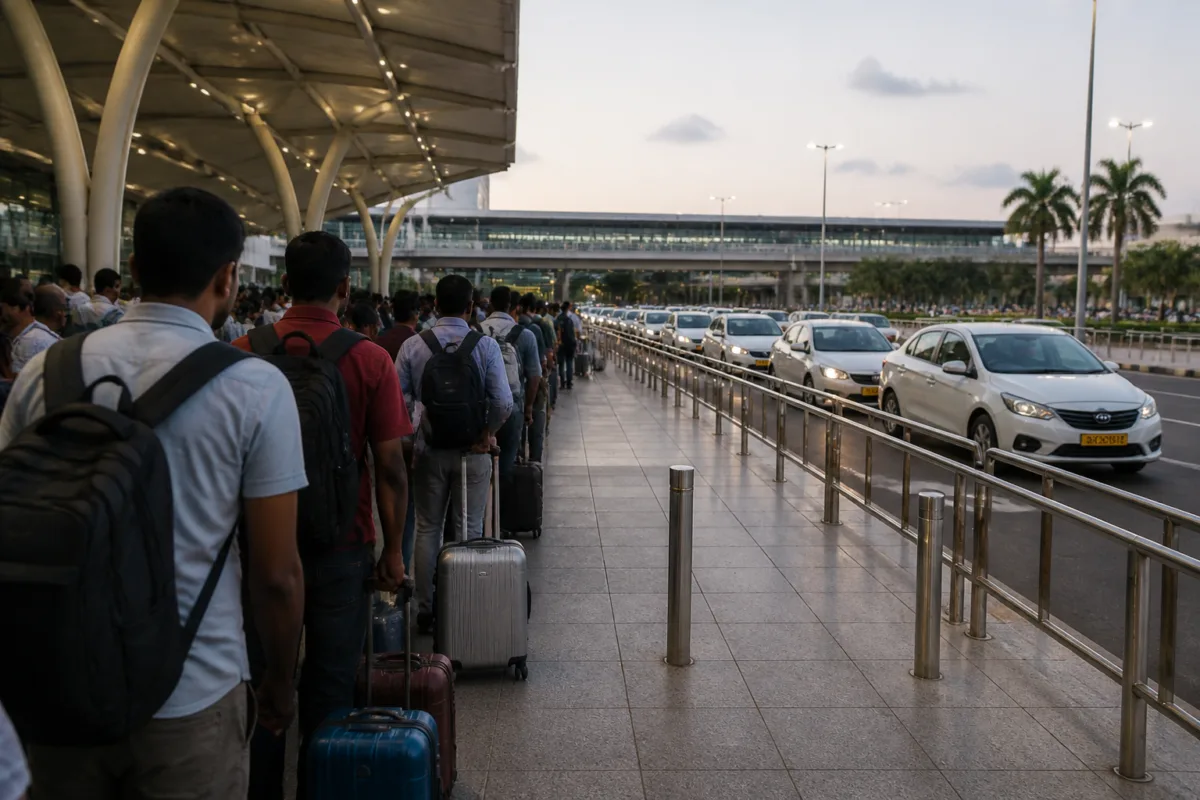
Bengaluru’s Kempegowda International Airport is facing a mismatch between passengers waiting for cabs and drivers waiting in parking areas, with passengers and cab unions alleging that ride-hailing platforms are restricting access to pickup zones and contributing to higher fares.
The allegations come as cab delays and operational problems continue at the airport. Bangalore International Airport Limited, the operator, has nine authorised cab partners, including KSTDC, Mega Cabs, Uber, Uber Black, Ola, Quick Ride, OHM Electric Cabs and WTI.
G Narayana Swamy, president of the Karnataka Chalakara Okkuta, alleged that hundreds of drivers were sitting idle in the P7 parking zone after being told by aggregators that pickup areas were full. He said passengers were nevertheless facing long queues with few vehicles visible at the designated pickup points. Swamy also claimed that some platforms were deliberately creating this situation to push up fares.
The claims have not been independently established. They point, however, to an accountability gap in an airport transport system where passengers may have limited visibility into vehicle allocation, queue management and fare-setting decisions.
Swamy said more than 5,000 cabs operate at the airport. Drivers told Deccan Herald that passenger traffic, especially at the international terminal, had declined amid tensions in West Asia and disruptions to air travel. Many drivers now wait two to three hours for a single trip.
Airport sources said Kempegowda International Airport was handling about 700 air traffic movements a day, compared with 840 previously, after the impact of tensions in West Asia. The lower traffic levels provide one explanation for idle vehicles, but they do not by themselves explain why passengers and drivers report being separated from one another during peak periods.
Cab driver Altaf Hameed said passengers had told him they waited 40 to 60 minutes for a vehicle. He said drivers were unable to enter the pickup zone until they received a green signal through an app, adding that business had been weak for six to eight months. Other drivers said low platform payouts discouraged them from accepting airport trips.
Passengers also described problems at booking kiosks. One traveller from Goa said at least 60 people were waiting at the Uber kiosk around 7pm on a recent evening. Quick Ride had one pre-booked SUV, while drivers at the Namma Yatri kiosk said only SUVs were available. She eventually booked an Ola cab after waiting 25 minutes.
Another passenger, Rashi Reddy, said her assigned driver refused the trip because he wanted a destination closer to the airport. She said another driver asked for an additional fare after she had waited about 45 minutes. Such accounts raise questions about how passengers can report refusals, extra-fare demands or category substitutions when the airport kiosks do not provide a clearly visible, common accountability mechanism.
The operational constraints are not limited to the number of vehicles inside the airport. A premium cab operator said it deployed about 800 vehicles across both terminals, with most demand concentrated at Terminal 1. The operator said trips took a minimum of three hours, reducing availability during the evening peak, and that it was exploring fleet expansion through associate partners.
Uber said it had expanded pickup zones to accommodate demand. The company said its airport operations did not depend on a fixed number of vehicles and that a balanced marketplace required matching supply with demand. BIAL and Ola did not respond to Deccan Herald’s queries, while Namma Yatri declined to comment.
The competing explanations show why airport cab operations require more than additional vehicles. Lower air traffic, long trip durations, driver payouts, app-based entry controls and uneven demand can all affect availability. For passengers, the immediate issue is whether the system can provide a predictable booking, a transparent fare and a reliable way to challenge a refusal or extra charge.
Without common, publicly visible information on queue status, vehicle availability, pickup access and complaints, passengers are left to navigate separate platform kiosks and rules. The reported experience at KIA suggests that the airport’s transport system needs clearer coordination between the operator, authorised cab companies and aggregators, even though the allegations of deliberate fare inflation remain unconfirmed.

