


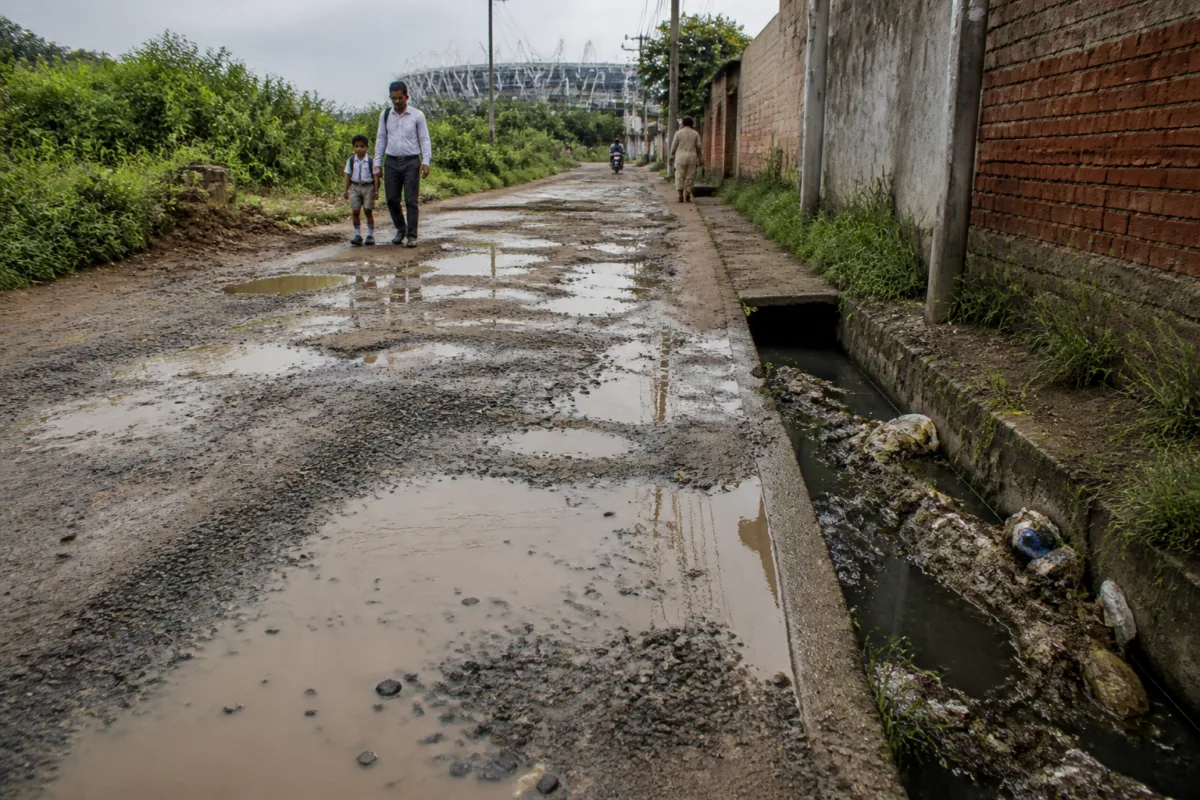
A deteriorating road in Karala village in outer Delhi is causing daily problems for pedestrians, commuters and schoolchildren, with deep potholes and stagnant dirty water making the route difficult to use.
The affected stretch connects the main Karala Road with the Urban Extension Road-2 through the stadium area. According to a report by Jagran, the road serves a population of about 20,000 and remains busy during the morning and evening periods. A school is also located along the route, increasing the impact on children and families who use it.
The road’s condition has worsened because of prolonged lack of repairs and inadequate drainage. Water collects in the potholes, leaving users to choose between navigating damaged sections or passing through standing water. The report said the road was constructed by the Irrigation and Flood Control Department.
Residents Joginder Mathur and Anand Mathur said there had been discussion that funds would be approved for the road, but construction had not started. Other villagers alleged that they had received assurances without a permanent solution.
The drainage problem extends beyond the road itself. A large drain built by the Public Works Department on the route from Karala towards Sultanpur village was reported to be blocked. A PWD official told Jagran that work on the drain was under way and that it would be fully cleaned, with a permanent solution promised soon.
Residents said the standing dirty water had become a daily inconvenience. “The road is in very poor condition. People face problems every day because dirty water remains on it,” resident Rohtas Mathur said, according to the report. He added that the issue had been raised several times without a permanent remedy.
Another resident, Samme Mathur, said the road and drain problems had continued for a long time and were affecting schoolchildren as well as other pedestrians. He called for the road to be rebuilt and the drain cleaned.
Karala councillor Manisha Jasbir said the road work could not proceed because funds were unavailable. She said construction could begin once the budget was received.
The case illustrates how road maintenance and drainage failures can combine to create a wider access problem. Repairing the carriageway without restoring drainage would leave the route vulnerable to recurring waterlogging, while drain work alone would not address the potholes and damaged surface. The immediate public-interest question is therefore not only when the road will be rebuilt, but whether the road and drainage works will be coordinated.
The report does not specify the estimated project cost, the sanctioned budget, the responsible road-maintenance authority for the current repair, or a confirmed completion date. Those details will be important for residents seeking to track whether the promised drain cleaning and proposed road construction lead to a lasting improvement.

