


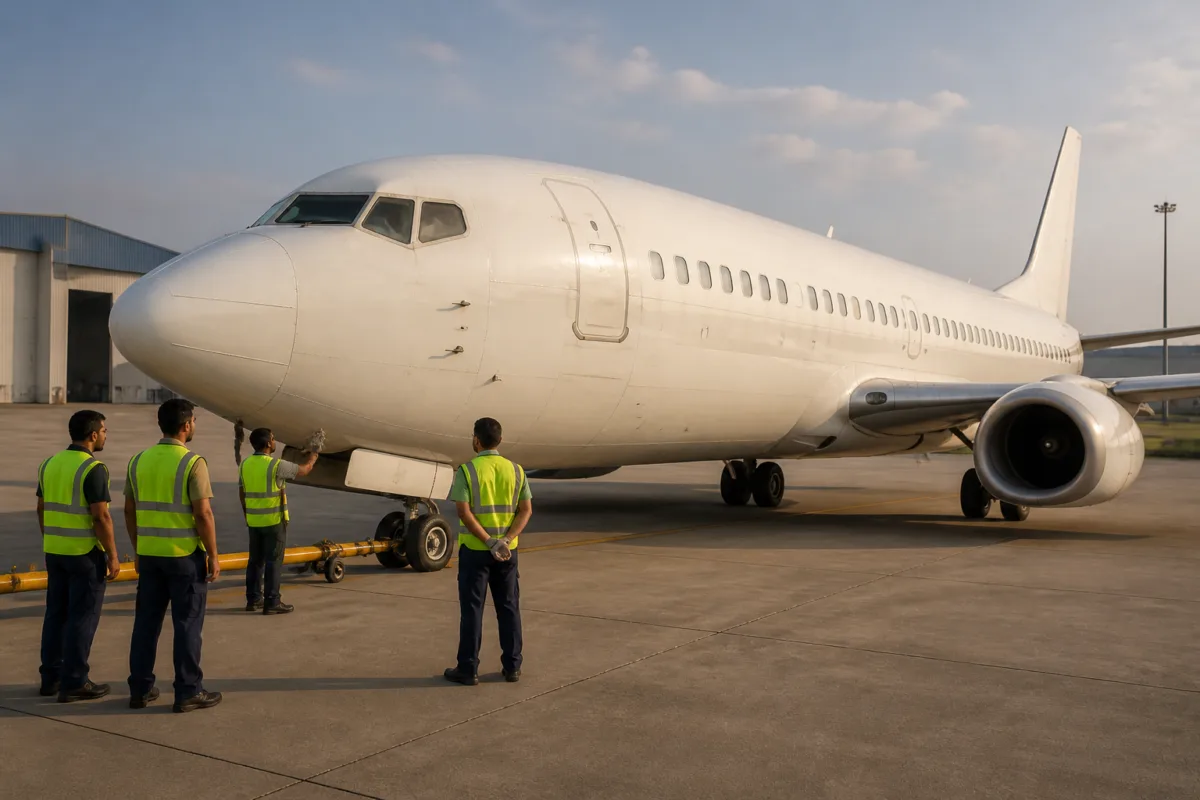
Bengaluru aircraft recovery training is receiving a new physical resource after a retired Boeing 737-200 was moved from Kolkata and restored for use at Kempegowda International Airport. Bangalore International Airport Limited (BIAL) will deploy the aircraft for on-site disabled-aircraft recovery and training, according to PTI.
The aircraft, named “Phoenix”, was unveiled on November 18 following an engineering and logistics exercise that lasted approximately three months. PROMQT MRO, an aircraft dismantling and relocation platform, said it handled the project for BIAL.
The Boeing 737-200 had remained grounded at Kolkata airport for more than a decade after being retired from service, the company said. Relocating it required the dismantling of major structural components in Kolkata, specialised heavy-haul road transport to Bengaluru and precision reassembly at a purpose-built site.
After the airframe reached Bengaluru, engineers carried out aircraft levelling, exterior repainting and restoration of the flight deck and passenger cabin. The work was intended to prepare the aircraft for realistic recovery exercises rather than return it to flying service.
BIAL is developing the Aircraft Recovery Training School in collaboration with German aircraft recovery specialist KUNZ. The facility is designed to give aviation professionals practical exposure to procedures for dealing with disabled aircraft.
PROMQT MRO Director Arun Kashyap described the relocation as a complex aviation engineering project involving planning, specialised technical expertise, precision handling and coordination across multiple disciplines.
The project brings together airport preparedness, specialist training and heavy logistics. A full-scale aircraft can provide a more realistic setting for recovery exercises than classroom instruction or smaller training aids, although PTI did not provide details of the school’s course capacity, operating schedule or the number of professionals expected to train there.
The reuse of the retired airliner also gives the project a sustainability dimension. PROMQT MRO said repurposing the aircraft avoided scrapping it and represented a model for sustainable aviation infrastructure development in India. The report does not provide an assessment of the material savings or environmental benefits, so those outcomes remain unquantified.
For airport operators, disabled-aircraft recovery is closely linked to maintaining operational readiness and coordinating technical, safety and logistical responses. The Bengaluru facility’s stated purpose is to strengthen practical exposure to those procedures. Its longer-term value will depend on how regularly the aircraft is used, how training is integrated with airport emergency planning and whether similar assets are developed elsewhere.

