


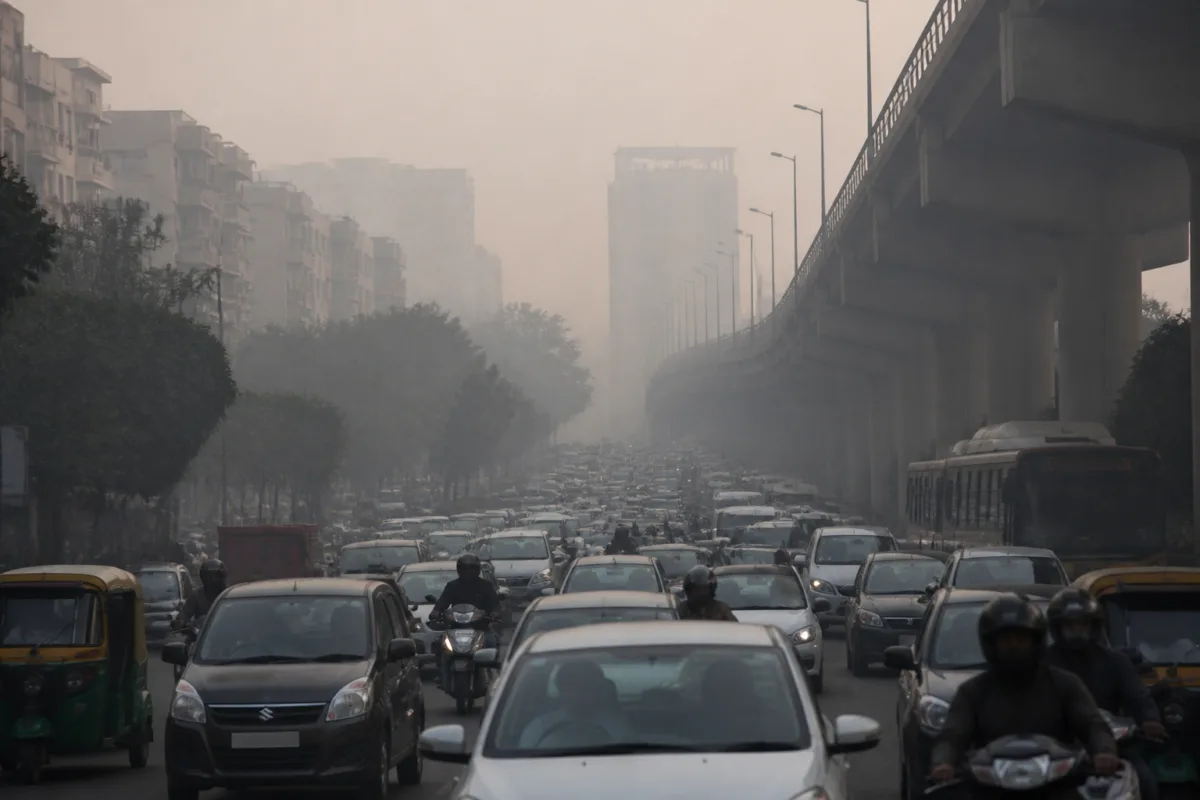
Delhi’s air quality may deteriorate further over the next six days, with several parts of the capital already recording pollution levels in the ‘very poor’ category, according to a report by Live Hindustan. The city’s average AQI was reported at around 236 on Sunday, while the Central Pollution Control Board recorded an average of 265 on Saturday.
Fifteen areas recorded AQI levels above 300 on Saturday. DTU recorded the highest reading at 362, followed by North Campus at 360 and Siri Fort at 352. The Cantonment area recorded the lowest AQI among the locations cited, at 80.
The report said air quality was expected to remain around the same level for the following two days before possibly worsening to the ‘very poor’ category over the next six days. It also said Delhi’s air quality had remained poor since the beginning of October, although weather conditions had kept pollution levels lower than in previous years.
According to an assessment by the air-quality early warning system, vehicle emissions accounted for the largest share of Delhi’s PM2.5 pollution on Saturday, at 33.1 per cent of the pollution load. Organic aerosols contributed 16.5 per cent, while biomass burning—including crop residue, wood and cow-dung fuel—accounted for 13.9 per cent.
The report also cited doctors and a survey on children’s health. It said 86 per cent of children surveyed reported that polluted air was affecting their health, 44 per cent had visited a doctor for pollution-related symptoms and about 55 per cent had missed school because of illness.
The Commission for Air Quality Management has set a target of reducing PM2.5 and PM10 levels across the National Capital Region by 15 to 20 per cent in 2027 compared with 2026. NCR states, districts and municipal corporations have been directed to submit annual action plans by 5 December. The plans are to include pollution-control measures and assign accountability to relevant officials.

