


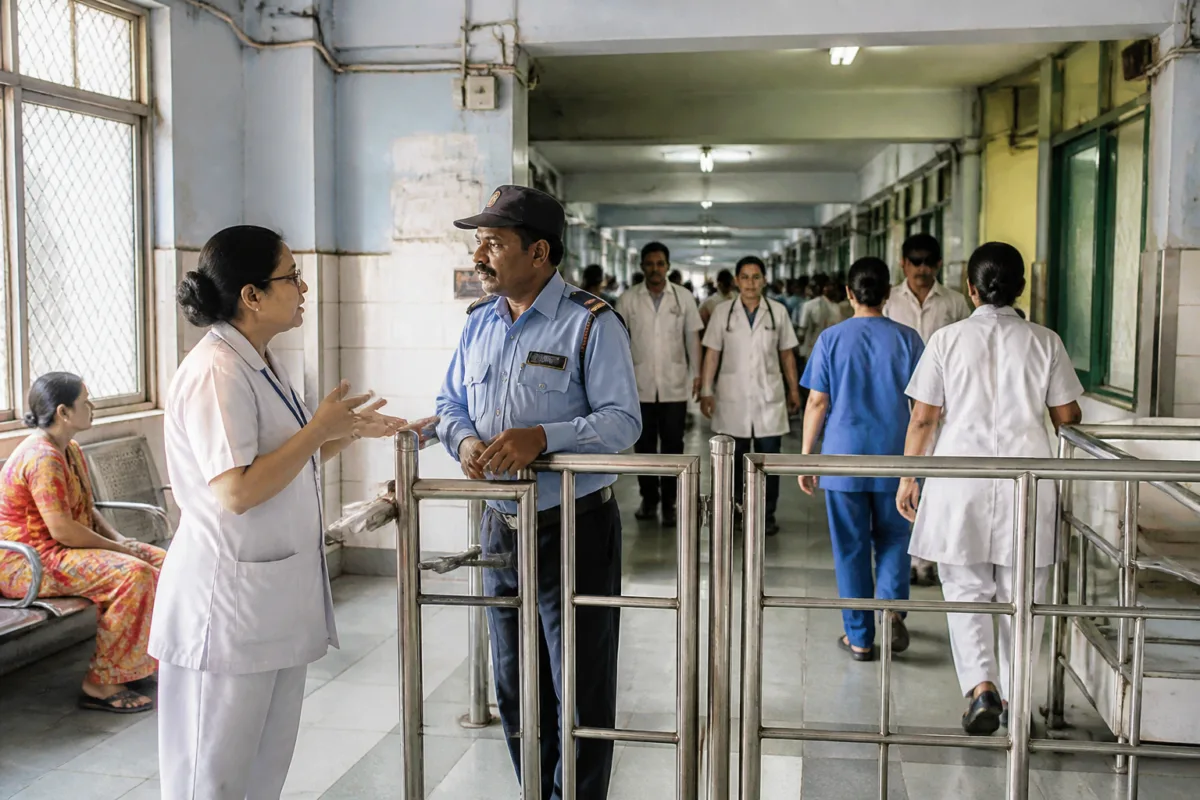
West Bengal’s health department has directed district magistrates, superintendents of police and police commissioners to strictly enforce a 2009 law intended to protect doctors, nurses and other healthcare workers in government hospitals, citing a continuing rise in attacks on health personnel.
The directive was issued on Friday after an incident at Kolkata Medical College on Wednesday involving healthcare workers. The document, as reported by Anandabazar, does not name Kolkata Medical College. It instead sets out the broader need to apply the existing law to improve safety for people working in the state’s public healthcare system.
The move followed a press conference by the state health minister on Thursday, during which the government expressed regret over two teacher-doctors being attacked during a gherao, or protest blockade. The minister’s comments did not publicly address the Kolkata Medical College incident in detail, prompting criticism from doctors and medical students there, according to the report.
Aniket Mahato, a doctor leader of the Medical Service Centre and one of the prominent faces of the RG Kar movement, criticised the government’s approach. He said issuing a directive would not be enough and called for legal action against people allegedly visible carrying bricks and bamboo during the incident at the medical college. His comments were reported by Anandabazar.
The Association of Health Service Doctors welcomed the government’s initiative but questioned whether it would be implemented consistently. Its general secretary, Utpal Bandyopadhyay, said the law should also be applied in hospitals where doctors, nurses and other healthcare workers had been attacked during the previous six months.
The directive therefore places responsibility on both civil and police authorities, while leaving its practical enforcement to be demonstrated at government hospitals across West Bengal. The report does not provide details of new security staffing, surveillance systems, access controls or a specific implementation timetable. The immediate test will be whether the existing legal framework produces action in hospitals beyond the latest incident.

