


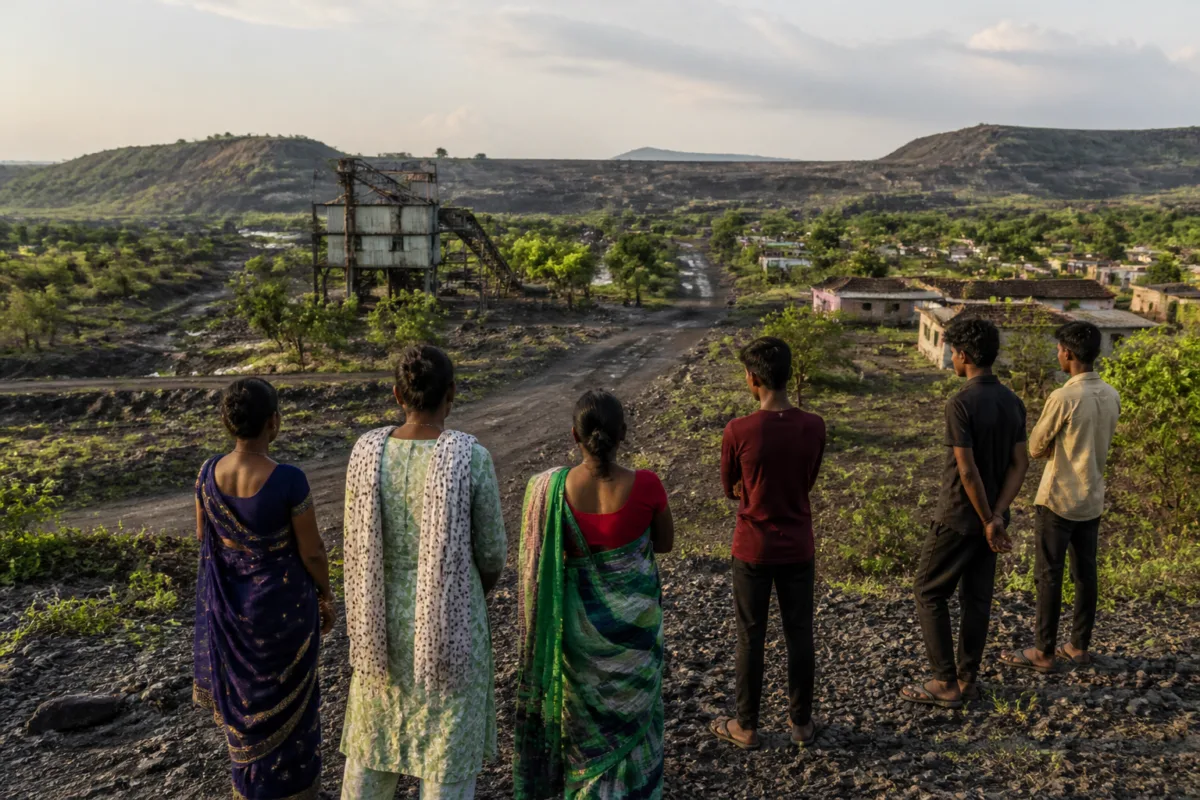
Coal mine closures are reshaping livelihoods and local economies beyond the formal mining workforce, but communities affected by the transition have had little reported influence over how former mine land and infrastructure will be used, according to a new study by the International Forum for Environment, Sustainability and Technology (iFOREST).
The report, Redeveloping Coal Mine Land: A Community-Centric Framework for Mine Repurposing, is based on 36 focus group discussions involving 254 participants across Manikpur in Chhattisgarh’s Korba district, Mahan in Surajpur and Ghugus in Maharashtra’s Chandrapur district. It was released in Raipur on Thursday.
Among the 228 participants covered by discussions on livelihood effects, 222, or 97.4%, reported adverse consequences after mine closures. The reported effects extended from job losses to reduced business for shops, transporters and other enterprises connected to mining activity. Informal workers, farmers, traders and families dependent on mining-related income were also identified as affected groups.
The study’s findings point to a planning problem that begins after extraction ends. Residents reported attending Gram Sabha, Panchayat and ward meetings, but none of the participants in the relevant discussions said that mine closure or the future use of mining land had been discussed in those forums. This indicates a gap between existing local meeting structures and decisions about the reuse of large, economically significant land parcels, although the report does not assess the legal status of individual mine-closure plans or the role of specific government agencies.
Residents wanted former mine land and related infrastructure to support alternative employment rather than remain unused. Their priorities varied by location. At Mahan, education and skilling centres were a major preference, followed by agriculture and allied activities and industrial or commercial development. At Manikpur, agriculture and allied activities ranked first, followed by other employment-generating uses.
The consultations also recorded demand for a meaningful community role in redevelopment decisions. The report said 95.6% of participants covered by the relevant discussions were part of groups expressing the need for a real say in deciding the future use of mine land. It highlighted the need to include women, tribal communities and young people in planning processes.
The recommendations focus on making Gram Sabhas the primary consultation forum, creating mine-level committees with community representatives and giving local residents priority in employment and skilling opportunities linked to redevelopment. If adopted, these measures would place consultation and local economic recovery alongside the physical reuse of closed mining sites.
The study does not establish whether these recommendations have been accepted by authorities or identify a confirmed timetable for redevelopment in the three areas. That unresolved implementation question is significant: without a formal process connecting closure plans, land-use decisions, employment programmes and local consultations, communities may continue to experience the economic effects of mine closure without having a defined role in shaping what follows.

