


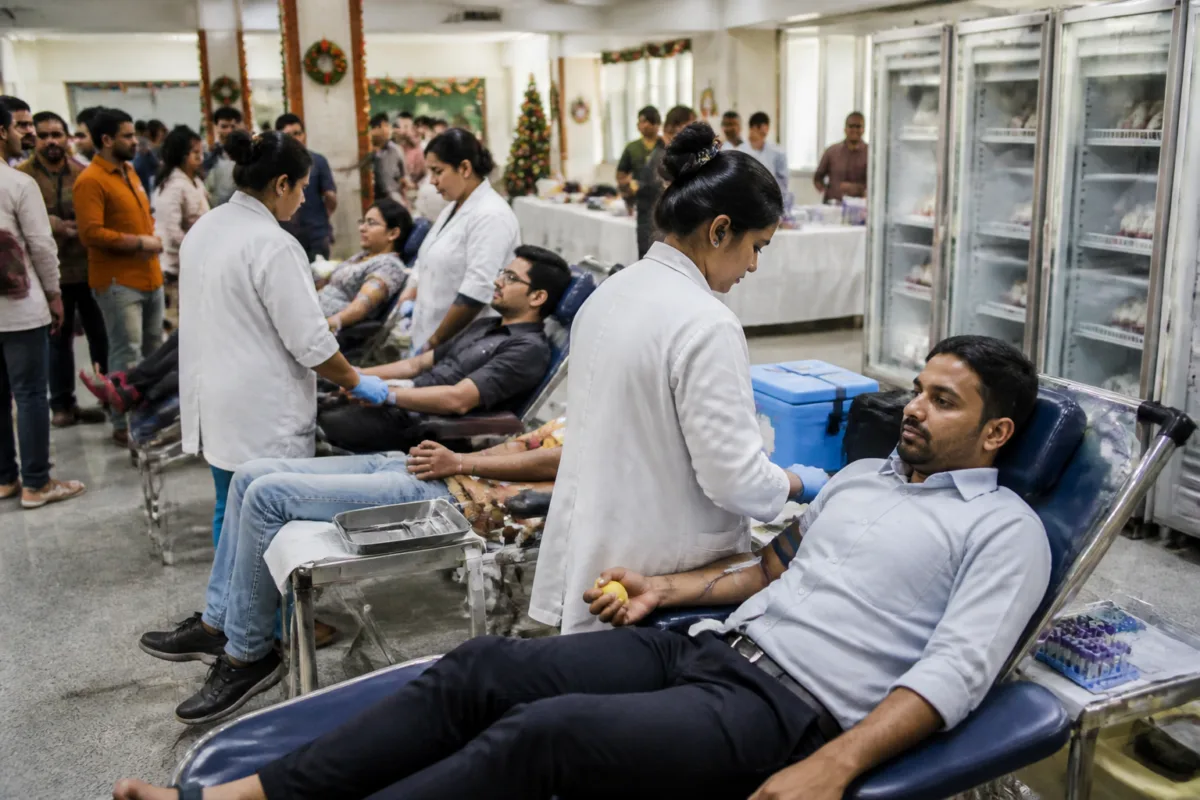
Mumbai’s public hospitals are facing a severe blood shortage during the holiday season, with KEM, Sion, Nair and Cooper hospitals among the facilities affected as residents leave the city and donation numbers fall. The shortage is making it harder for families to arrange blood for emergency patients and has also led to planned procedures being postponed, according to hospital officials and doctors cited by the Times of India.
The pressure is particularly acute at high-volume public hospitals, which serve large numbers of patients every day. At Tata Memorial Hospital, a family seeking blood for a patient who underwent a partial hysterectomy for Grade A cancer had to search for a donor after a volunteer was disqualified at the last moment because of high blood pressure.
The hospital subsequently received a strong response after its director, Dr C S Pramesh, appealed for donations on social media. Pramesh said the hospital collected 200 units of blood on Sunday through donation camps and in-house donations, against a daily requirement of about 100 units. Housing societies have also committed to hosting blood donation camps on their premises over the coming days and weeks.
Families at other public hospitals have faced similar difficulties. The family of 28-year-old Praitik Ahire, who was admitted to Sion Hospital after his haemoglobin level fell below 5 points, searched across the city for blood, the report said.
KEM Hospital currently has about 100 units of blood after a camp held a few days earlier. An official said the hospital requires between 100 and 200 units a day, while the latest camp collected 30 units fewer than usual. Another donation camp is scheduled in the coming days.
The pattern has become an annual problem in Mumbai during the holiday season, when travel and extended weekends reduce participation in donation drives. The immediate impact is felt by patients who need transfusions as part of emergency treatment, cancer care, surgery or other hospital procedures. The shortage also shifts the burden of locating donors onto families, who often have to coordinate searches across multiple facilities while dealing with an ongoing medical crisis.
The episode has also highlighted the uneven nature of public communication during shortages. Anil Gare, who previously handled blood banks at public hospitals, said appeals by senior hospital leaders can help bring donors to camps. He questioned why similar appeals are not routinely made by hospital deans or the Brihanmumbai Municipal Corporation commissioner.
A doctor at a BMC hospital blood bank said service rules restrict employees from disclosing hospital data. According to the doctor, appeals of this nature would need to come from within the BMC administration. The comments point to a coordination problem in which hospitals may have immediate information about their stocks and requirements, but lack a consistently visible public mechanism for communicating shortages and mobilising donors across the city.
Pramesh said efforts would be made to create a national donor registry that could help hospitals contact people willing and able to donate when shortages emerge. In Mumbai, hospitals and housing societies are expected to hold additional donation camps over the next few days and weeks, while KEM has another camp scheduled shortly.

